
To cool a hot bedroom more effectively, improve airflow by ensuring vents and registers are unobstructed and clean. Open windows at night for natural cross-ventilation, and use fans to circulate air evenly around the room. Ceiling or oscillating fans help distribute cool air and prevent hotspots. Proper airflow reduces reliance on your HVAC, improves comfort, and supports long-term system efficiency. If you want to discover more simple yet powerful airflow tips, keep exploring these strategies.

Get home appliances delivered free with Prime
- Fast, free delivery on millions of items
- Prime Video, Amazon Music and more included
- Member-only deals all year
Key Takeaways
- Improving ventilation and opening windows at night can significantly lower bedroom temperatures naturally.
- Using ceiling or oscillating fans enhances air circulation, making hot bedrooms feel cooler without extra cooling.
- Ensuring vents and registers are unobstructed boosts airflow, preventing hotspots and increasing cooling efficiency.
- Cross-ventilation creates a steady flow of fresh air, reducing reliance on air conditioning in hot bedrooms.
- Regular maintenance of filters and vents supports optimal airflow, helping to cool hot bedrooms more effectively.
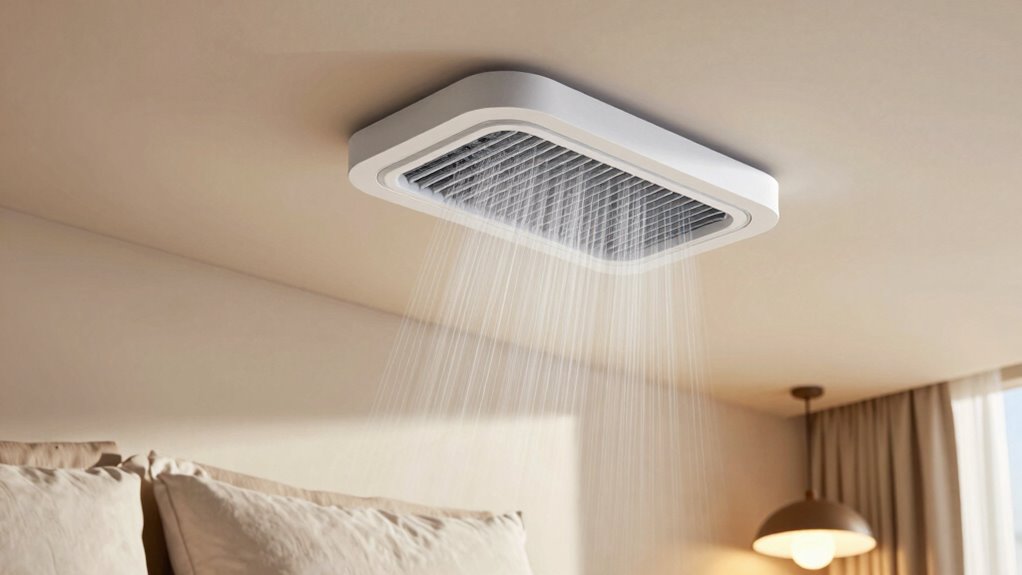
If your bedroom becomes uncomfortably hot at night, improving airflow can make a noticeable difference. When air isn’t circulating properly, your HVAC system has to work harder to maintain a comfortable temperature, which not only wastes energy but also reduces HVAC efficiency. By enhancing airflow, you help your system operate more smoothly, leading to better cooling and significant energy savings. A well-ventilated room allows cool air to reach all corners, preventing hotspots that make you restless and sweaty.
One of the simplest ways to improve airflow is to use fans strategically. Placing a ceiling fan in the room can create a gentle breeze that helps distribute cool air evenly. If you don’t have a ceiling fan, a portable oscillating fan near your bed can do the trick. The key is to keep air moving, so it doesn’t stagnate and heat up. Adjusting your fan’s direction and speed can optimize airflow without adding to your energy bill. Fans are inexpensive, easy to use, and don’t put extra strain on your HVAC system.
Using fans strategically keeps air moving and prevents hotspots, boosting comfort and energy efficiency.
Another effective method involves checking your vents and registers. Ensure they’re open and unobstructed, allowing air to flow freely into your bedroom. Sometimes furniture or curtains block vents, reducing airflow and making it harder for your AC or heater to do its job. Cleaning dust from vents and filters also supports better airflow, which is essential for maintaining HVAC efficiency. When your system doesn’t have to work overtime to compensate for blocked or dirty vents, you save energy and prolong the lifespan of your equipment. Regular maintenance of your ventilation system can also improve indoor air quality by reducing dust and allergens circulating in your space.
Additionally, improving airflow can be as simple as opening a window during cooler nights. Natural ventilation can supplement your HVAC system, reducing its workload and lowering energy consumption. Cross-ventilation, where fresh air enters from one side of the room and exits from the other, encourages a steady airflow that cools your space naturally. Proper airflow enhances comfort and can significantly reduce reliance on mechanical cooling, especially in mild weather, where it can provide a revitalizing change from mechanical cooling. Improving airflow efficiency helps create a more comfortable environment while conserving energy and maintaining a healthy indoor atmosphere.
Products Worth Considering

Blueair Blue Pure 511i Max Smart Air Purifier

Bose SoundLink Plus Portable Bluetooth Speaker, Black

Ring Alarm 14-Piece Wireless Security System Kit
As an affiliate, we earn on qualifying purchases.
Frequently Asked Questions
Does This Airflow Fix Work for All Types of Bedroom Layouts?
Yes, this airflow fix works for most bedroom layouts, but its effectiveness varies based on your room’s design. It improves airflow efficiency and enhances bedroom ventilation, making hot spots cooler. For ideal results, consider room size and furniture placement, as these factors influence airflow. Adjustments might be necessary for very irregular layouts or large rooms, but overall, it provides a significant boost to airflow and comfort.
How Long Does It Take to See Results After Implementing?
You’ll likely notice improved airflow efficiency and bedroom comfort within a few days of implementing the fix. While some bedrooms might see quicker results, it generally takes about 2-3 days for significant change. Keep in mind that consistent airflow improvements gradually balance temperatures, so patience helps. With this fix, you’ll enjoy cooler, more comfortable nights sooner than you might expect.
Can This Fix Reduce Overall Energy Bills?
Yes, this airflow fix can reduce your overall energy bills by improving cooling efficiency. When airflow improves, your AC doesn’t have to work as hard, leading to energy savings. It’s a cost-effective solution because it requires minimal investment and maintenance. Over time, you’ll notice lower electricity costs, making it a smart move for both comfort and savings. This simple fix enhances cooling and boosts your home’s energy efficiency.
Is Professional Installation Necessary for Optimal Results?
Professional installation isn’t strictly necessary, but it can optimize airflow and guarantee safety. If you’re comfortable with DIY projects, you might try some alternatives like adjusting vents or adding fans. However, consider the cost comparison: DIY fixes are cheaper upfront but might not be as effective or durable. For the best results and long-term savings, investing in professional installation is wise, especially if you want consistent, efficient airflow.
Will This Airflow Fix Affect Other Rooms in the House?
Yes, this airflow fix can impact other rooms by improving air quality and reducing hot spots. You might notice better ventilation, which helps circulate fresh air throughout your house. However, it could also slightly increase noise levels if the system becomes more active. Overall, it benefits your entire home’s comfort and air quality, but keep an eye on noise and airflow balance to avoid any inconvenience.
Conclusion
By improving your airflow, you can substantially reduce the heat buildup in your bedroom. Implementing simple fixes like strategic fans or vents can make a noticeable difference—sometimes lowering temperatures by up to 10°F. Don’t overlook these easy adjustments; they could be the key to cooler, more comfortable nights. With nearly 80% of homeowners experiencing better sleep after optimizing airflow, it’s clear that a simple fix can truly transform your hot bedroom into a restful retreat.