When comparing smart thermostat learning algorithms, you’ll find that rule-based systems are simple and quick to set up but less flexible with changing routines. Machine learning methods, like neural networks and decision trees, adapt better over time by analyzing factors like weather and habits, offering more personalized comfort and energy savings. While more complex, these algorithms improve with ongoing data, making them ideal for ongoing efficiency. To discover which approach suits your needs best, keep exploring the options available.
Key Takeaways
- Rule-based algorithms use predefined triggers, offering simplicity but less adaptability to routine changes.
- Machine learning algorithms analyze multiple data points, enabling personalized and continuously improved temperature adjustments.
- Rule-based systems are quick to implement but may struggle with complex or evolving routines.
- Machine learning models require more data and processing power but provide better flexibility and long-term optimization.
- The choice depends on user needs: simplicity and reliability versus adaptability and energy efficiency.
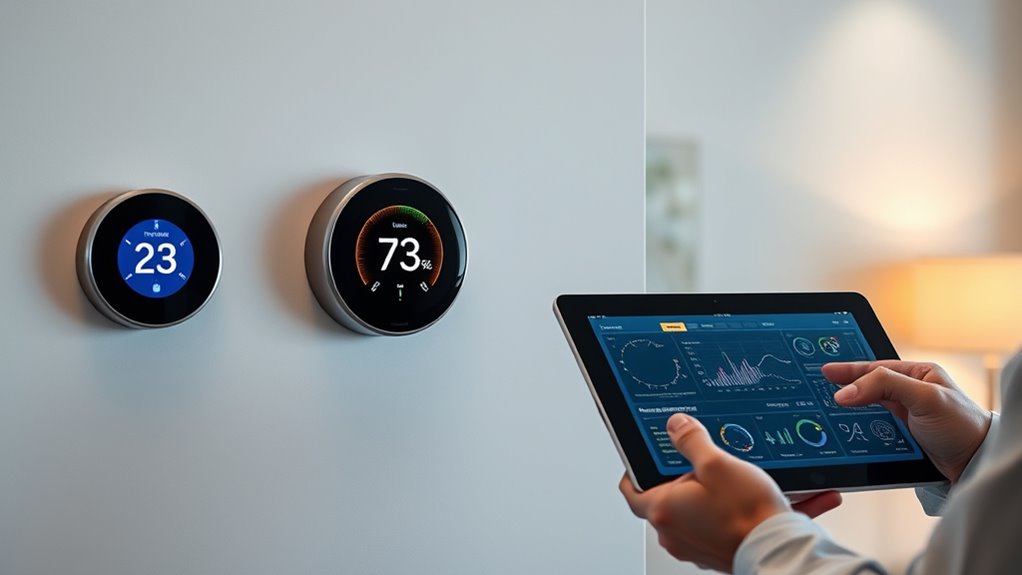
Have you ever wondered how modern smart thermostats automatically adjust your home’s temperature to match your routines? It’s all thanks to their advanced learning algorithms, designed to optimize comfort while saving energy. These algorithms analyze your habits and preferences to create a personalized schedule that minimizes unnecessary heating or cooling. The primary goal is to enhance energy efficiency, reducing your utility bills without sacrificing comfort. By learning from your behavior, such as when you leave or return home, the thermostat can make automatic adjustments that align with your daily patterns. This user personalization not only provides a more comfortable environment but also helps you take control over your energy consumption.
Smart thermostats use learning algorithms to personalize settings and boost energy efficiency seamlessly.
Different smart thermostats employ various types of learning algorithms, each with unique strengths. Some use rule-based systems, which rely on predefined triggers like time of day or occupancy sensors to adjust temperature settings. These are simple and reliable but may lack the nuance needed for more complex routines. More sophisticated models incorporate machine learning techniques, such as neural networks or decision trees, allowing them to recognize deeper patterns over time. These algorithms analyze multiple data points—like weather forecasts, time of day, and your schedule—to refine their predictions continuously. As a result, they become increasingly effective at delivering tailored comfort while minimizing energy waste.
When comparing these algorithms, consider how they balance energy efficiency and user personalization. Rule-based systems are straightforward and quick to implement, but they might not adapt well to sudden changes in your routine. Machine learning algorithms, on the other hand, excel at adapting to variations, learning from new data to optimize performance. They can detect subtle shifts in your habits, adjusting their strategies to maintain comfort and save energy. However, these advanced algorithms typically require more data and processing power, which can impact device cost and complexity. Additionally, understanding the angle and orientation of your solar panels can influence the overall efficiency of your energy systems, highlighting how various factors contribute to optimized performance. Furthermore, the integration of cloud computing enables these algorithms to process vast amounts of data more effectively and update their models in real-time.
Ultimately, the best smart thermostat learning algorithm is the one that aligns with your lifestyle and priorities. If you prefer simple, reliable adjustments, a rule-based system might suffice. But if you want a truly personalized experience that continuously improves over time, a machine learning-based approach offers significant advantages. By comparing these algorithms, you can better understand how each one works to maximize energy efficiency while delivering the comfort you desire. The key is to choose a system that learns your routines, adapts intelligently, and helps you reduce your carbon footprint—all while making your home more comfortable. Additionally, integrating AI-driven insights can further improve overall system performance and energy savings.

R.W.FLAME 60" Recessed and Wall Mounted Smart Electric Fireplace, Alexa/WiFi Enabled, APP Control with Multiple Sound Modes, Remote Control with Timer, Adjustable Flame Colors and Speed
- Smart Control Options: Touch, remote, app, Alexa, Google Assistant
- Customizable Flame Effects: 12 flame patterns, adjustable colors and speeds
- Energy Efficient & Quiet: Overheat protection, low noise, precise temperature control
As an affiliate, we earn on qualifying purchases.
Frequently Asked Questions
How Do Learning Algorithms Impact Energy Savings Over Time?
Learning algorithms impact your energy savings over time by enabling behavior adaptation and improving algorithm efficiency. As the system learns your habits, it adjusts heating and cooling schedules accordingly, reducing unnecessary energy use. Over time, this tailored approach means you save more, because the thermostat becomes smarter at maintaining comfort while minimizing waste. Your consistent interactions help the algorithm refine its efficiency, making your home more energy-efficient and cost-effective over the long run.
Are Some Algorithms Better for Specific Climate Zones?
Imagine you’re sailing through different climate zones, like a modern-day explorer. Some algorithms excel in climate adaptability, adjusting quickly to temperature swings, while others handle complex patterns with ease. For your home, choosing an algorithm with the right balance of climate adaptability and complexity ensures ideal comfort and energy savings. In colder regions, simpler algorithms might suffice, but in areas with unpredictable weather, more advanced ones are better suited.
How Secure Is Data Collected by Smart Thermostat Algorithms?
You might wonder how secure your data is when smart thermostat algorithms collect it. While they aim to optimize comfort, concerns about data privacy remain. Manufacturers often implement encryption, but the level of Algorithm transparency varies, so you can’t always see how your data is used. To protect yourself, choose brands that prioritize data privacy and clearly explain their data collection and security practices.
Can Users Customize or Override the Learning Process?
You can usually customize or override the learning process through manual adjustments, giving you better user control. Most smart thermostats allow you to set preferred temperatures or turn off automatic learning features if you prefer to manage your settings yourself. This flexibility helps you maintain comfort while still benefiting from the device’s adaptive features. So, your ability to influence the thermostat’s behavior guarantees it aligns with your lifestyle and preferences.
What Are the Costs Associated With Different Learning Algorithms?
Imagine choosing a vehicle for your journey; some cost more but offer smoother rides. Similarly, different learning algorithms have varying costs. You’ll want a cost analysis that considers algorithm complexity—simpler algorithms often cost less upfront but may lack accuracy, while complex ones might require more computational power and energy. Your choice impacts long-term savings and performance, so weigh the costs against the benefits carefully.

EUHOMY 50 Inch Electric Fireplace Wall Recessed and Wall Mounted with Adjustable Flame Color, Fireplace Heater with Remote Control, Linear Fireplace with Timer, Touch Screen, Log & Crystal, 750/1500W
- Package Includes: Logs, crystals, manual, hardware, support
- Installation Options: Recessed or wall-mounted design
- Design & Compatibility: Black tempered glass, fits various rooms
As an affiliate, we earn on qualifying purchases.
Conclusion
In the world of smart thermostats, choosing the right learning algorithm is like picking the perfect compass for your journey. Each algorithm guides your home’s temperature with unique precision, making your living space feel just right. As you explore these options, remember that the best choice adapts seamlessly to your habits, turning your thermostat into a silent, dependable partner. With the right algorithm, your comfort becomes a smooth, effortless tide flowing through every season.

GE 6,000 BTU Electronic Window Air Conditioner, Cools Rooms up to 250 sq ft, Digital Controls with Remote, Energy Saver Mode, 24Hr Timer, Easy Install Kit Included, White
- Cooling Capacity: Cools rooms up to 250 sq ft
- Adjustable Air Direction: Two-way air direction and modes
- Quiet Operation: 52-56 dBA noise levels
As an affiliate, we earn on qualifying purchases.