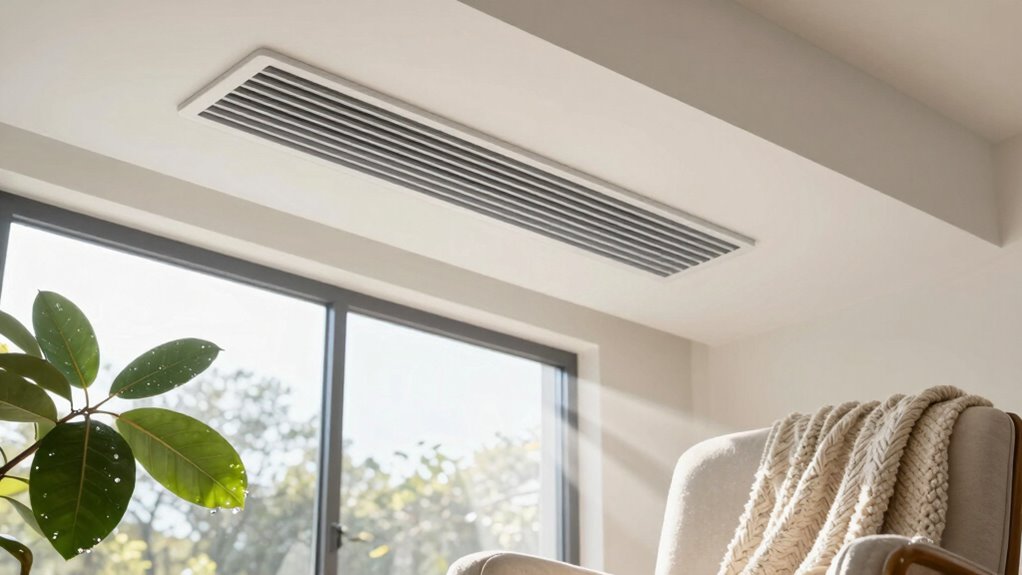

Forced-air homes respond well to better humidity management because these systems efficiently circulate air through ducts, allowing you to add or remove moisture evenly. They help improve comfort, air quality, and energy efficiency by maintaining ideal humidity levels. Proper humidity control reduces mold, dust mites, and pollutants, making your home healthier. With the ability to integrate humidifiers and dehumidifiers, your system easily adjusts for seasonal needs. Keep exploring to discover how you can maximize these benefits.
Key Takeaways
- Forced-air systems circulate air evenly, allowing precise control of humidity levels throughout the entire home.
- Integration of humidifiers and dehumidifiers into ductwork ensures consistent humidity management.
- Proper humidity balance improves HVAC efficiency by reducing strain and energy consumption.
- Controlled humidity enhances comfort, air quality, and reduces indoor pollutants and allergens.
- Seasonal humidity strategies optimize system performance and indoor environment health year-round.

Have you ever wondered how to keep your home comfortable and healthy during seasonal changes? If you have a forced-air heating and cooling system, you’re in a good position because these systems respond well to better humidity management. Proper humidity control isn’t just about comfort; it directly impacts indoor air quality and energy efficiency, making your home healthier and more cost-effective to operate.
Effective humidity management enhances comfort, air quality, and energy efficiency in homes with forced-air systems.
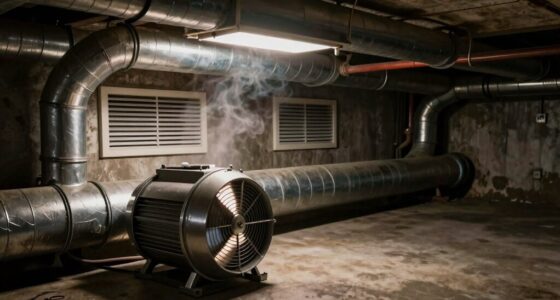
In a forced-air home, the air circulates through a network of ducts, which means you have a great opportunity to manage humidity levels throughout your living space. When humidity is balanced—neither too dry nor too damp—you create an environment that feels more comfortable and reduces the likelihood of mold growth, dust mites, and other indoor pollutants. Maintaining *ideal* humidity levels enhances indoor air quality, helping you breathe easier and reducing allergy symptoms. Plus, when the air isn’t overly dry, your skin and respiratory passages stay hydrated, which improves overall comfort.
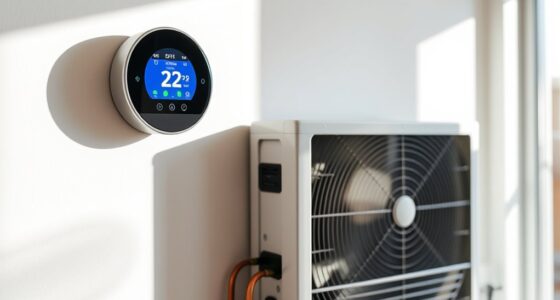
Controlling humidity also boosts your home’s energy efficiency. When humidity levels are balanced, your HVAC system doesn’t have to work as hard to heat or cool your space. High humidity makes the air feel warmer than it actually is, causing you to lower your thermostat and use more energy. Conversely, low humidity can make a home feel cooler, prompting you to increase the thermostat, which again wastes energy. By managing humidity effectively, you can set your thermostat at a more comfortable temperature and let your system run more efficiently, saving you money on energy bills.
Forced-air systems lend themselves well to humidity control because you can incorporate humidifiers or dehumidifiers directly into the ductwork. These devices allow precise adjustments, ensuring consistent humidity levels across your entire home. When your system is properly maintained and humidity is kept in check, your heating and cooling become more effective and predictable. During winter, a humidifier adds moisture to prevent dry air, which can cause discomfort and static electricity. In summer, a dehumidifier reduces excess moisture, preventing mold and making your home feel cooler without cranking up the air conditioning. Proper humidity management can also help extend the lifespan of your HVAC equipment by reducing strain caused by excessive moisture or dryness. Additionally, integrating moisture control devices can support indoor air quality by reducing pollutants and allergens that thrive in unbalanced humidity conditions. This also helps in maintaining building integrity, preventing damage caused by excess moisture.
In essence, a forced-air home responds so well to better humidity management because of its centralized airflow and the ability to integrate moisture control devices seamlessly. This combination improves indoor air quality, making your home healthier and more comfortable. It also enhances energy efficiency, helping you save money while enjoying a stable, pleasant environment all year round. With a little effort in balancing humidity, your forced-air system can deliver *ideal* performance, ensuring your home remains cozy, safe, and efficient no matter the season. Proper humidity control is essential for maintaining a healthy indoor environment.

AprilAire 500M Whole-House Humidifier, Manual Compact Furnace Humidifier, Large Capacity Whole-House Humidifier for Homes up to 3,600 Sq. Ft., White
- Made in the USA: Designed and manufactured in the USA by AprilAire
- Large Coverage Area: Covers up to 3,600 sq. ft.
- High Capacity: 12 gallons per day
As an affiliate, we earn on qualifying purchases.
As an affiliate, we earn on qualifying purchases.
Frequently Asked Questions
How Does Humidity Affect Energy Efficiency in Forced-Air Homes?
Humidity directly impacts energy efficiency in forced-air homes by affecting your comfort levels and heating or cooling needs. When you use humidity sensors, you can better control moisture levels, reducing the workload on your HVAC system. This leads to energy savings because your system doesn’t have to work as hard to maintain ideal conditions. Proper humidity management prevents overuse of energy, making your home more efficient and comfortable year-round.
Can Humidity Control Reduce Indoor Allergens in Forced-Air Systems?
Sure, controlling humidity in your forced-air system can turn your home into a sneeze-free zone. By maintaining ideal humidity levels, you’ll suppress indoor mold growth and dust mites, those tiny pests that thrive in damp environments. Less mold and fewer dust mites mean fewer allergies and better air quality. So, yes, managing humidity isn’t just about comfort—it’s your secret weapon against indoor allergens lurking in every corner.
What Types of Humidifiers Are Best for Forced-Air Heating Systems?
For forced-air heating systems, whole house solutions are your best bet because they evenly distribute humidity throughout your home. Portable units can work for targeted areas but may struggle to maintain consistent levels. Whole house humidifiers integrate directly with your furnace, providing consistent moisture that improves comfort and air quality. Choose a system that matches your home’s size and needs for ideal humidity control and allergy reduction.
How Often Should Humidity Levels Be Monitored in These Homes?
You should check humidity levels regularly, ideally using humidity sensors to guarantee moisture control stays ideal. Aim to monitor at least once a week, especially during seasonal changes when humidity fluctuates. Consistent monitoring helps prevent issues like mold or dry air, keeping your home comfortable and healthy. Adjust your humidifier settings as needed based on sensor readings, maintaining a steady, comfortable humidity level for your living space.
Are There Any Safety Concerns With Humidity Management in Forced-Air Homes?
Managing humidity in forced-air homes is like walking a tightrope—you need balance to avoid risks. If humidity gets too high, indoor mold can develop, and structural damage may occur. Conversely, too low humidity can cause dryness and discomfort. Properly controlling humidity minimizes these risks, but always make certain your system is properly maintained. Regular monitoring helps prevent safety concerns, keeping your home healthy and safe from mold and damage.

Waykar 158 Pints Crawl Space Dehumidifier with Remote Control and Pump, Dual Duct HVAC Commercial Whole-House Dehumidifier for Basement, Industry Water Damage Unit – 5-Year Quality Coverage
- High Capacity Water Extraction: Extracts up to 158 pints daily
- Large Coverage Area: Covers up to 7,500 sq. ft.
- Adjustable Humidity Control: 10% to 90% RH adjustment
As an affiliate, we earn on qualifying purchases.
As an affiliate, we earn on qualifying purchases.
Conclusion
Think of your forced-air home as a delicate dance partner, responsive and adaptable. When you master humidity control, you’re guiding this dance with finesse, turning a potentially chaotic rhythm into a smooth, graceful waltz. By managing moisture levels, you’re not just improving comfort—you’re orchestrating a symphony of cozy, healthy living. With each measured breath, your home becomes a sanctuary, where air flows in harmony, and every moment feels just right.

GoveeLife Dehumidifier for Home 4,500ft², 50 to 137 Pints, 2.0Gal Bucket
- Smart Control Compatibility: App, voice, and touch control
- Remote Operation: Control via app when away
- Voice Assistant Support: Compatible with Alexa, Google, IFTTT
As an affiliate, we earn on qualifying purchases.
As an affiliate, we earn on qualifying purchases.

Temperature Humidity Sensor Transmitter 12V-36VDC IP68 for HVAC Greenhouse Humidifier Dehumidifier Air Conditioning Industrial Use
- Sensor Type: Digital integrated temperature and humidity sensor
- Output Signal: Stable 4-20mA current output
- Protection Level: IP68 multi-layer waterproof design
As an affiliate, we earn on qualifying purchases.
As an affiliate, we earn on qualifying purchases.