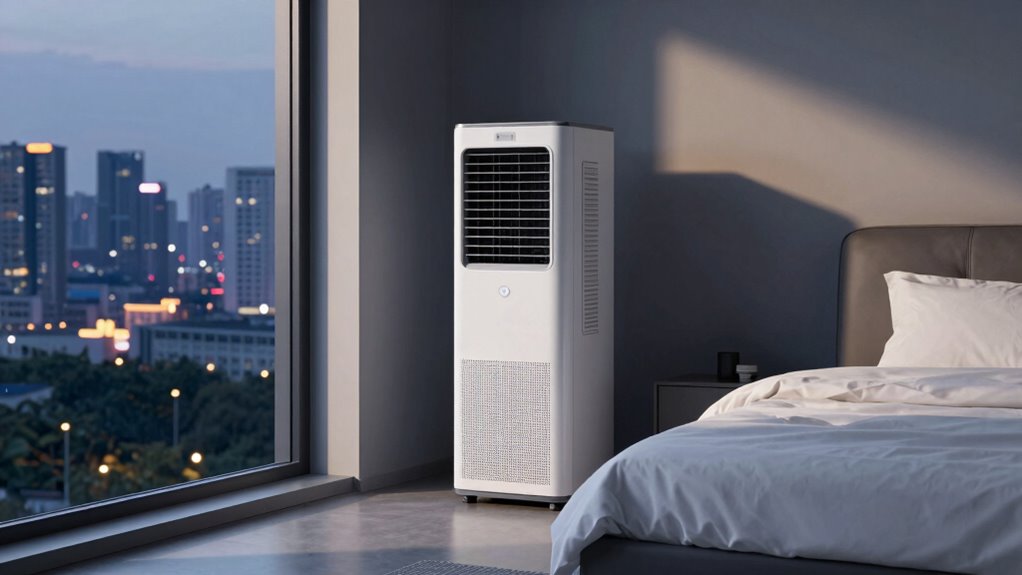
Cooling upstairs is more challenging because heat naturally rises, making it warmer and harder to cool effectively. Portable ACs work harder and cycle more often in this space, especially if insulation isn’t ideal or windows let in too much heat. Your expectations should be adjusted, as these units can’t match the efficiency of built-in systems. If you keep exploring, you’ll discover ways to improve your setup and get better results upstairs.

Get home appliances delivered free with Prime
- Fast, free delivery on millions of items
- Prime Video, Amazon Music and more included
- Member-only deals all year
Key Takeaways
- Heat naturally rises, making upstairs areas warmer and harder to cool effectively.
- Limited insulation and window placement increase heat gain, reducing portable AC efficiency.
- Portable units work harder and cycle more frequently due to higher cooling demands upstairs.
- Managing internal heat sources and proper venting are crucial for optimal upstairs cooling.
- Expectations should be adjusted as portable ACs may not match the efficiency of built-in or central systems.
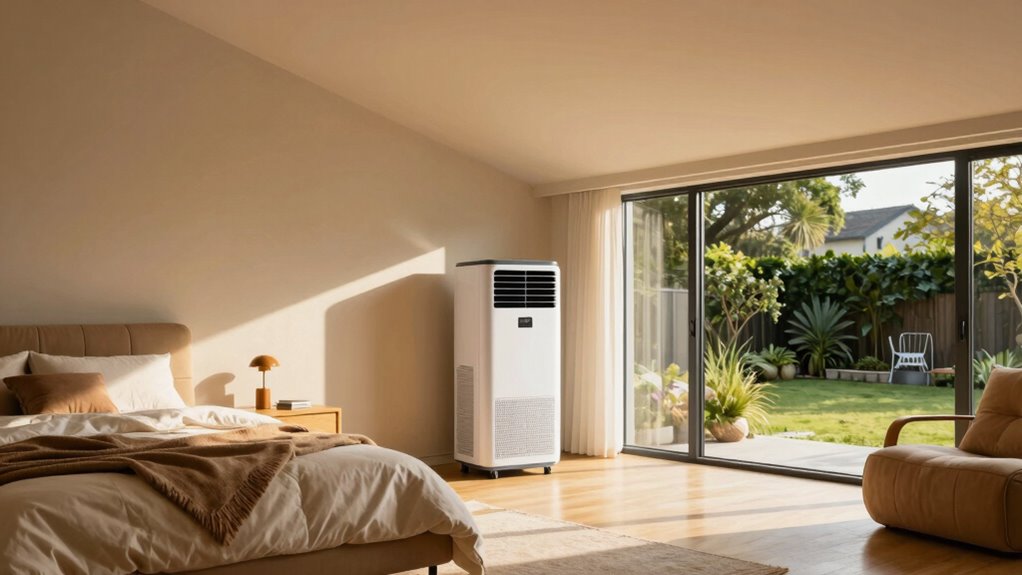
If you’re relying on a portable air conditioner to cool your upstairs space, understanding what to expect can help you make the most of your investment. Upstairs areas tend to be warmer and more challenging to cool efficiently because heat naturally rises. Unlike downstairs, where central AC or well-placed windows can make a difference, your portable unit needs to work harder to keep the space comfortable. One key factor is proper duct insulation if your setup involves ducted cooling, which can prevent heat loss and improve efficiency. Without good duct insulation, cooled air can escape or warm air can seep in, making your unit work overtime and increasing energy costs.
Upstairs cooling with a portable AC requires good duct insulation to improve efficiency and reduce energy costs.
Another important aspect is window placement. Portable AC units often rely on venting through a window to expel hot air, so the location of that window matters. Ideally, you’ll want a window that’s easy to access and doesn’t get direct sunlight during the hottest parts of the day. This helps reduce the load on your unit, as it won’t have to combat additional heat from the sun. Using reflective window films or blackout curtains can also help minimize heat gain, making your portable AC more effective upstairs. Keep in mind that improper window placement or obstructed vents can cause hot air to re-enter the room or reduce airflow, hampering cooling performance. Additionally, understanding the upstairs cooling challenges can help you better manage expectations and improve your setup.
Expect that your portable AC might struggle to reach the same efficiency levels as a central system or split units designed specifically for upstairs spaces. It’s common for these units to cycle more frequently or struggle to maintain a consistent temperature, especially during peak heat. To optimize your setup, consider enhancing insulation around your space and sealing leaks or gaps that let warm air in. Good duct insulation is essential if your portable unit connects to any ductwork—without it, cooling becomes less effective, and your unit runs longer than necessary. Recognizing the importance of proper insulation can make a significant difference in overall cooling performance.
Additionally, managing heat sources within the room—like electronics, lighting, or even sunlight coming through windows—can make a notable difference. Using fans to promote air circulation and positioning your portable AC in a central location can help distribute cooled air more evenly. Remember, though, that upstairs cooling has unique challenges, so temper your expectations accordingly. With proper window placement, good duct insulation, and smart room management, your portable AC can do a better job, but it’s unlikely to match the performance of built-in or central cooling systems designed specifically for multi-level homes.
portable air conditioner for upstairs
As an affiliate, we earn on qualifying purchases.
As an affiliate, we earn on qualifying purchases.
Frequently Asked Questions
How Does Insulation Affect Upstairs Cooling Efficiency?
Insulation plays a key role in upstairs cooling efficiency by reducing heat transfer, helping your space stay cooler. Good thermal insulation keeps the warm air out and maintains cooled air inside, which means your portable AC doesn’t have to work as hard. This improves energy efficiency, saving you money on electricity. Without proper insulation, heat easily leaks in, making it harder for your AC to maintain a comfortable temperature upstairs.
Can a Portable AC Cool Multiple Rooms Upstairs?
A portable AC can cool multiple upstairs rooms, but it depends on factors like window placement and power consumption. Proper window placement helps vent hot air efficiently, maximizing cooling. Keep in mind, cooling multiple rooms increases power consumption, so choose a model with sufficient capacity. You might need to close doors or use fans to improve airflow, ensuring the AC works effectively without overloading your power supply.
What’s the Noise Level Difference Upstairs Versus Downstairs?
You notice a difference in sound levels upstairs versus downstairs, often due to the quieter environment upstairs, making noise more noticeable. The noise comparison shows that portable AC units tend to be slightly louder downstairs where there’s more ambient sound to mask it. Upstairs, the quieter space amplifies the sound, so you might find the noise more disruptive. Keep in mind, quieter models are available if noise is a concern.
How Often Should I Service My Portable AC for Upstairs Use?
You should service your upstairs portable AC at least once a year to maintain ideal humidity control and energy efficiency. Regularly cleaning filters, checking for blockages, and inspecting for leaks help the unit run smoothly. Proper servicing guarantees efficient cooling, prevents excess energy use, and keeps humidity levels comfortable upstairs. If your unit is used heavily or in a humid climate, consider more frequent maintenance to keep it performing its best.
Are There Specific Portable AC Features Better for Upstairs Cooling?
You might think all portable ACs work equally well upstairs, but specific features make a big difference. Look for models with energy efficiency ratings, ensuring it cools effectively without high energy costs. A portable design with a compact, lightweight build helps you easily move the unit between rooms for targeted cooling. Features like adjustable vents and programmable timers also enhance upstairs comfort, making your space cooler and more energy-efficient.
window venting kit for portable AC
As an affiliate, we earn on qualifying purchases.
As an affiliate, we earn on qualifying purchases.
Conclusion
So, when cooling your upstairs space, remember it’s like trying to tame a wild horse—you need the right tools and expectations. Portable ACs designed for lower floors might struggle upstairs, just like trying to catch that wild stallion with a lasso meant for a pony. Adjust your expectations accordingly, and consider units with higher BTU ratings or additional features. This way, you’ll keep your upstairs cool and comfortable, just like a gentle breeze on a warm day.
reflective window film for heat reduction
As an affiliate, we earn on qualifying purchases.
As an affiliate, we earn on qualifying purchases.
As an affiliate, we earn on qualifying purchases.
NFL season / tailgating Picks
team gear
As an affiliate, we earn on qualifying purchases.