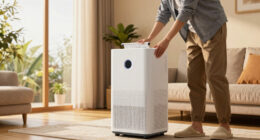
Humidity sensors in smart thermostats play a key role in maintaining comfortable indoor environments by monitoring moisture levels. They automatically adjust heating, cooling, and humidification or dehumidification systems for suitable comfort and energy efficiency. Proper calibration guarantees accurate readings, helping you avoid issues like dryness or dampness. If your sensors are working correctly, they help keep your home healthy and comfortable. Keep exploring to discover how these sensors keep your living space perfectly balanced.

Get home appliances delivered free — and shop member deals
- Fast, free delivery on millions of items
- Access to Prime Big Deal Days deals on October 6–7
- Prime Video, Amazon Music and more included
Key Takeaways
- Humidity sensors monitor indoor moisture levels to ensure optimal comfort and prevent issues like mold or dryness.
- They provide real-time data to smart thermostats, enabling automatic adjustments of heating, cooling, humidifying, or dehumidifying systems.
- Proper calibration of sensors maintains measurement accuracy, improving the efficiency of climate control and energy savings.
- Accurate humidity detection helps systems respond promptly to changes, maintaining healthy indoor environments.
- Well-calibrated sensors contribute to better indoor air quality and support the overall functionality of smart thermostats.
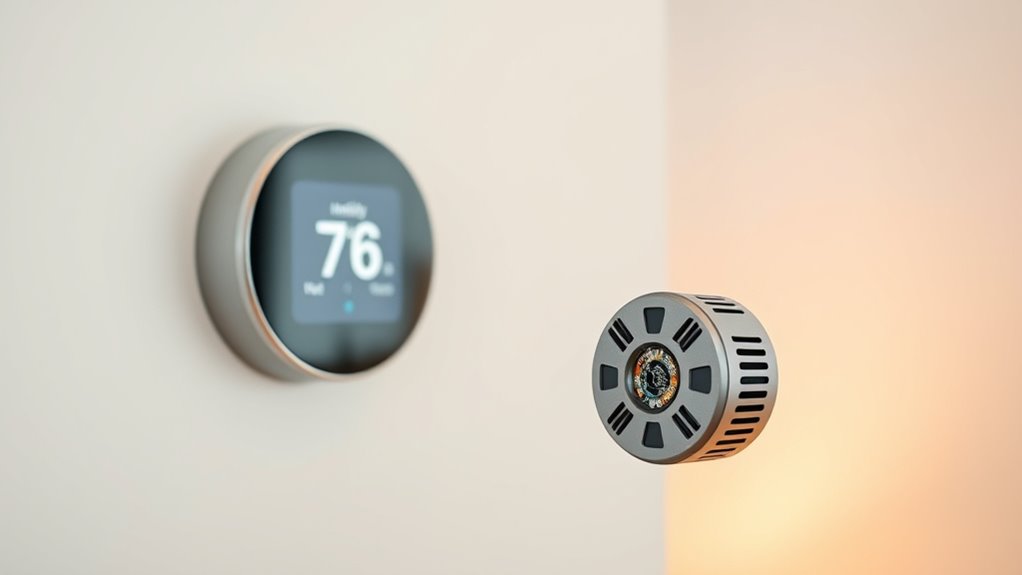
Humidity sensors play a essential role in smart thermostats by helping you maintain a comfortable and healthy indoor environment. These sensors constantly monitor the moisture levels in your home, providing fundamental data that allows your thermostat to adjust heating and cooling systems accordingly. Accurate humidity sensor calibration is indispensable because it guarantees the readings you rely on are precise, preventing issues like excessive dryness or dampness. When a humidity sensor isn’t properly calibrated, it can give false readings, leading to inefficient climate control and discomfort. Regular calibration helps maintain the sensor’s accuracy, enabling you to keep moisture levels within an ideal range.
Proper calibration of humidity sensors ensures accurate readings for optimal indoor comfort and climate control.
Moisture level monitoring is at the core of a smart thermostat’s ability to create a comfortable living space. When your humidity sensors detect high moisture levels, the thermostat can activate dehumidifiers or adjust HVAC settings to reduce humidity, preventing mold growth and damage to your belongings. Conversely, if the sensors detect low moisture levels, the system can increase humidity through humidifiers, reducing discomfort caused by dry air, which can lead to respiratory issues or skin irritation. This real-time moisture level monitoring helps you avoid common problems associated with improper humidity, such as condensation or static electricity.
As you rely on your smart thermostat, understanding the importance of humidity sensor calibration becomes clear. Sensors can drift over time due to dust, temperature fluctuations, or aging components, which impacts their ability to accurately measure moisture. Calibration involves comparing the sensor’s readings against a known standard and making necessary adjustments. Many modern thermostats include built-in calibration features, making it easier for you to keep the sensors functioning correctly. Proper calibration not only improves accuracy but also enhances the overall efficiency of your climate control system, leading to energy savings and better indoor air quality.
Furthermore, moisture level monitoring through well-maintained humidity sensors helps you create a more consistent indoor environment. By maintaining ideal humidity levels—generally between 40% and 60%—you reduce the risk of mold, mildew, and dust mites, while also making your living space more comfortable. The sensors continuously track changes and enable your smart thermostat to respond dynamically, ensuring your home stays within your preferred comfort zone. In this way, humidity sensors are integral to smart thermostats, providing the data you need to maximize indoor climate, improve health, and protect your property. Regularly checking and calibrating these sensors ensures they continue to serve you effectively in managing moisture and maintaining a balanced environment.
Maintaining proper sensor calibration also contributes to the overall Smart Home Market Growth, as accurate environmental data enhances energy efficiency and resident comfort.
humidity sensor for smart thermostat
As an affiliate, we earn on qualifying purchases.
As an affiliate, we earn on qualifying purchases.
Frequently Asked Questions
How Accurate Are Humidity Sensors Compared to Traditional Hygrometers?
You’ll find that humidity sensors in smart thermostats are quite accurate, often comparable to traditional hygrometers, especially when properly calibrated. Their calibration accuracy guarantees reliable readings over time, though sensor longevity can affect long-term performance. Regular calibration helps maintain precision, and high-quality sensors tend to last longer, providing consistent humidity levels. Overall, smart thermostat sensors are a convenient, effective alternative to traditional hygrometers for managing indoor climate.
Can Humidity Sensors Detect Rapid Changes in Moisture Levels?
Think of humidity sensors as speedboats racing across your room’s moisture lake. They can detect rapid moisture fluctuations thanks to their quick sensor responsiveness, allowing them to catch sudden changes in humidity. While they’re quite adept at tracking moisture fluctuation, their accuracy can vary depending on the sensor quality. So, if you want real-time updates, choose a smart thermostat with a highly responsive humidity sensor for the best results.
Are Humidity Sensors in Smart Thermostats Energy-Efficient?
Yes, humidity sensors in smart thermostats are energy-efficient if properly calibrated. They help you optimize humidity levels, reducing the need for excessive heating or cooling, which saves energy. Regular sensor calibration guarantees accurate readings, preventing unnecessary adjustments that waste power. By maintaining the right moisture levels, you can enhance comfort and lower energy bills, making these sensors a smart, eco-friendly addition to your home climate control system.
How Do Humidity Sensors Impact Overall Indoor Air Quality?
Think of your indoor air like a garden; humidity sensors act as the gardener, maintaining perfect moisture levels. They improve air quality by reducing mold, dust mites, and allergens, leading to better health benefits. When humidity is balanced, your air feels fresher, and respiratory issues lessen. This proactive control creates a healthier environment, much like tending a thriving garden, making your home more comfortable and safe.
What Maintenance Is Required for Humidity Sensors in Smart Thermostats?
You should regularly check your humidity sensor for accuracy and perform sensor calibration if you notice inconsistent readings. Keep the sensor clean by gently dusting it and avoiding moisture buildup. If the sensor malfunctions or gives faulty data despite calibration, consider sensor replacement. Proper maintenance guarantees your smart thermostat manages humidity effectively, maintaining comfortable indoor air quality and optimizing energy use.
calibrated indoor humidity sensor
As an affiliate, we earn on qualifying purchases.
As an affiliate, we earn on qualifying purchases.
Conclusion
By integrating humidity sensors, your smart thermostat can maintain the perfect indoor climate effortlessly. Imagine a busy family where the thermostat detects rising humidity during summer and adjusts accordingly, preventing mold and discomfort. This smart feature not only boosts comfort but also protects your home. With humidity sensors, you’re empowered to create a healthier, more comfortable environment—making your smart home truly intelligent and responsive to your needs.
smart thermostat humidity sensor replacement
As an affiliate, we earn on qualifying purchases.
As an affiliate, we earn on qualifying purchases.
As an affiliate, we earn on qualifying purchases.
NFL season / tailgating Picks
team gear
As an affiliate, we earn on qualifying purchases.