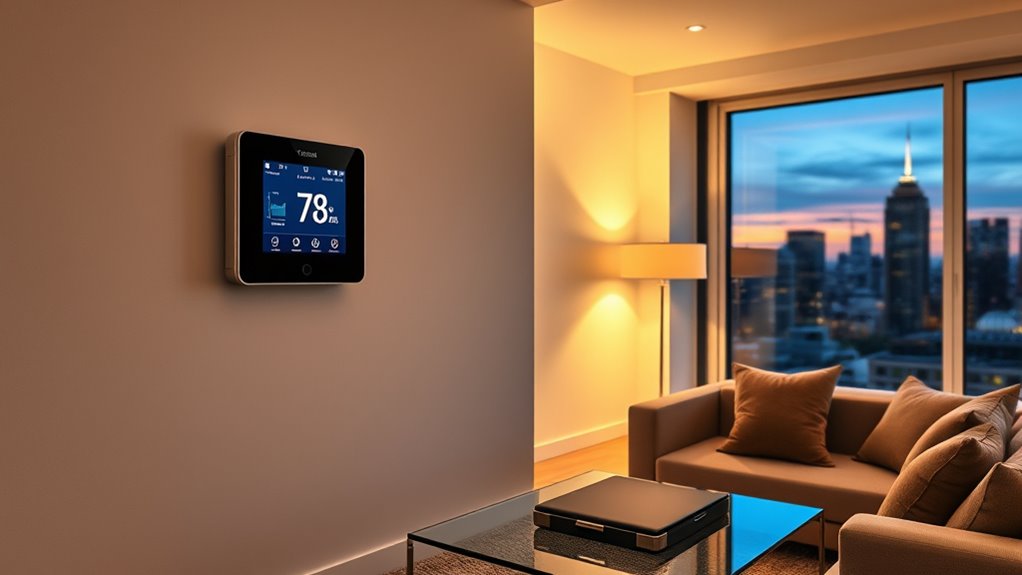

Demand response programs encourage you to reduce or shift your energy use during peak times, helping balance the grid and prevent outages. Smart thermostats play a key role by automatically adjusting your home’s temperature based on real-time data and utility signals. They help you stay comfortable while supporting grid stability and saving on energy costs. If you want to learn how these devices work together to improve energy management, there’s more to discover below.

Get home appliances delivered free with Prime
- Fast, free delivery on millions of items
- Prime Video, Amazon Music and more included
- Member-only deals all year
Key Takeaways
- Demand response involves adjusting energy consumption during peak periods to balance the grid and prevent overloads.
- Smart thermostats participate by automatically modifying home temperature settings based on utility signals.
- They communicate with utility systems using real-time data to reduce energy use during high demand.
- Participation supports grid stability, reduces reliance on costly power sources, and promotes renewable energy.
- Smart thermostats help maintain home comfort while enabling efficient energy management during demand response events.

Demand response programs are transforming how we manage energy consumption, and smart thermostats play an essential role in this shift. These programs encourage consumers to adjust their energy use during peak times, helping utilities balance the grid and avoid overloads. When you participate, your smart thermostat can automatically reduce heating or cooling loads during periods of high demand, contributing directly to grid stability. This not only prevents blackouts but also ensures a more reliable power supply for everyone. Additionally, your participation influences energy pricing, often leading to lower costs for consumers who respond to price signals. Utilities typically offer incentives or reduced rates for those who allow their thermostats to be adjusted during critical times, making it a win-win situation.
Smart thermostats are designed to seamlessly integrate with demand response initiatives. They use real-time data and communicate with utility systems to determine when energy demand is high and automatically adjust your home’s temperature settings accordingly. For example, during a heatwave or cold snap, your thermostat might slightly raise or lower the temperature to reduce energy consumption without sacrificing comfort. By doing so, you help alleviate stress on the grid, especially during extreme weather events when demand spikes. This proactive management supports grid stability and curbs the need for less efficient, more expensive power generation methods like peaker plants, which are often used during peak times. Incorporating advanced communication systems into smart thermostats further enhances their responsiveness and efficiency. Utilizing demand response technology helps optimize energy use across communities, making the entire system more resilient, and encourages the adoption of renewable energy sources for a cleaner environment.
smart thermostats for demand response
As an affiliate, we earn on qualifying purchases.
As an affiliate, we earn on qualifying purchases.
Frequently Asked Questions
How Does Demand Response Impact Energy Bills?
Demand response can lower your energy bills by helping you save on energy costs during peak times. When you participate in demand reduction strategies, your utility company may adjust your smart thermostat to reduce energy usage when demand is high. This not only contributes to a more reliable grid but also results in energy cost savings for you, making your home more efficient and affordable without sacrificing comfort.
Can Smart Thermostats Learn My Preferences Automatically?
Isn’t it ironic? Your smart thermostat, supposedly “learning” your preferences, often ends up guessing wrong. Thanks to advanced learning algorithms, it can automatically adapt to your routines and preferences, providing true user personalization. Instead of you manually adjusting settings, it learns from your behaviors, making changes seamlessly. So, yes, your thermostat can learn your preferences, but don’t be surprised if it occasionally surprises you with a different temperature!
Are There Any Privacy Concerns With Smart Thermostat Data?
You might worry about privacy concerns with smart thermostat data, and that’s understandable. While these devices collect your preferences and habits, reputable brands use strong data security measures to safeguard your information. However, it’s important to stay informed about their privacy policies and control what data you share. Being proactive helps ensure your data stays secure, and you can enjoy the convenience of smart thermostats without compromising your privacy.
What Incentives Exist for Participating in Demand Response Programs?
Did you know that nearly 30% of your energy use could be saved through demand response programs? By participating, you can earn utility incentives that reduce your bills and support grid stability. These programs encourage you to shift or reduce energy consumption during peak times, offering financial rewards while helping the environment. So, you benefit from energy savings and get paid for playing your part in a smarter, greener energy system.
How Quickly Can a Smart Thermostat Respond to Demand Response Signals?
Your smart thermostat typically responds within seconds to demand response signals, thanks to low signal latency. This quick response speed helps balance energy loads efficiently, reducing strain on the grid during peak times. Modern thermostats are designed to process signals rapidly, ensuring you experience minimal disruption while contributing to energy conservation. Overall, their fast response time makes demand response participation seamless and effective.
As an affiliate, we earn on qualifying purchases.
Conclusion
By embracing smart thermostats, you become a beacon guiding the grid through the storm of high energy use. As these devices dance with demand response programs, they paint a picture of balance and harmony in your home’s energy flow. Imagine your thermostat as a captain steering a ship through turbulent waters, ensuring comfort while easing the load on our power systems. Together, you and your smart thermostat can illuminate a sustainable future.
smart thermostats compatible with utility programs
As an affiliate, we earn on qualifying purchases.
As an affiliate, we earn on qualifying purchases.
programmable smart thermostats for peak energy management
As an affiliate, we earn on qualifying purchases.
As an affiliate, we earn on qualifying purchases.
Fall Picks
fall essentials
As an affiliate, we earn on qualifying purchases.