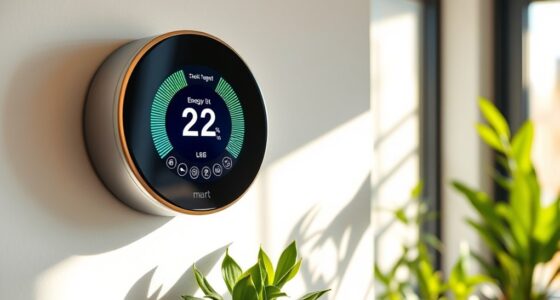
Energy reports from your smart thermostat show you how your home’s energy use varies over time. They break down data into daily, weekly, or hourly segments, revealing peak hours and patterns. By reviewing these insights, you can identify when appliances run most and adjust settings for efficiency. Smart thermostats also track temperature settings and occupancy, helping you optimize energy use. Keep exploring to learn how to interpret these details and take control of your consumption.
Key Takeaways
- Energy reports display usage data segmented into daily, weekly, or hourly intervals to identify consumption patterns.
- Smart thermostats contribute to energy reports by recording temperature settings and occupancy for precise analysis.
- Review reports to spot peak energy times and adjust thermostat schedules for improved efficiency.
- Comparing reports over time helps track savings, evaluate habits, and optimize household energy use.
- Use insights from reports to make informed adjustments, reduce costs, and promote sustainable energy habits.

Have you ever wondered what energy reports are and why they matter? If you’ve got a smart thermostat, chances are you’re receiving detailed data about your energy usage, and understanding this information can help you save money and reduce your carbon footprint. Energy reports are summaries of how much energy you consume over a specific period, typically aligned with your utility’s billing cycle. These reports often originate from your smart meter, a device that tracks your electricity, gas, or water usage in real time. Unlike traditional meters that require manual readings, smart meters automatically transmit your usage data to your utility company, allowing for more accurate and timely reports. The billing cycle is the period your utility company uses to calculate your charges, usually lasting a month. Your energy reports correspond to this cycle, giving you a clear picture of your consumption patterns during that time. When you review your energy report, you’ll notice sections that break down your usage into daily, weekly, or even hourly segments. This breakdown helps you identify when you’re using the most energy, such as during peak hours or specific days. Recognizing these patterns empowers you to make smarter decisions about when to run appliances, adjust your thermostat, or implement energy-saving habits. Your smart thermostat plays a vital role here because it records your temperature settings and occupancy patterns, which are reflected in your energy report. For example, if you notice high energy use during certain times, you can program your thermostat to be more efficient, like lowering the temperature when you’re away or asleep. Many smart thermostats also offer insights and recommendations based on your usage data, making it easier to optimize your energy consumption. By regularly reviewing your energy reports, you can track your progress over time and see the tangible results of your efforts to cut back. It’s also helpful to compare reports from different billing cycles to evaluate whether your changes are making a difference. Understanding the connection between your smart meter data and your billing cycle helps demystify how your utility bills are calculated, giving you more control over your energy costs. Instead of feeling overwhelmed by these reports, treat them as tools to better manage your household’s energy habits. Over time, you’ll develop a clearer understanding of your consumption patterns, which can lead to smarter, more sustainable choices. So, the next time you receive your energy report, take a moment to analyze the data, recognize trends, and think about adjustments that could make your home more efficient. Remember, the key to saving energy and money lies in understanding your usage, and your energy reports are the first step in that process.
Frequently Asked Questions
How Accurate Are Smart Thermostat Energy Reports?
Smart thermostat energy reports are generally quite accurate, especially when sensors are well-calibrated. They rely on consistent data sampling to track your energy use effectively. If sensors need calibration or if sampling frequency is low, accuracy can decrease. Regularly updating your firmware and ensuring sensors are calibrated helps improve report precision, giving you a reliable picture of your energy consumption and savings.
Can Energy Reports Predict Future Energy Costs?
You can’t rely solely on energy reports to predict future energy costs, but they offer valuable insights. For example, if your energy consumption increases by 20% during winter, your costs likely will too. Smart thermostat data helps with cost forecasting by highlighting trends and patterns. By analyzing these reports, you can better anticipate future expenses and adjust your usage to save money.
Are There Privacy Concerns With Sharing Thermostat Data?
Yes, there are privacy concerns with sharing thermostat data. When you share this data, you might expose details about your daily routines, home occupancy, or habits, which can be sensitive. You should carefully review data sharing policies and settings on your smart thermostat. Ensuring your data is protected and only shared with trusted parties helps prevent misuse or unauthorized access, safeguarding your privacy.
How Often Should I Review My Energy Reports?
You should review your energy report frequency at least once a month to stay on top of your energy use. An ideal review schedule helps you identify patterns and make adjustments for efficiency. Regularly checking your smart thermostat data ensures you catch any issues early, saving money and energy. Keep a consistent routine, perhaps at the end of each billing cycle, to maximize your understanding and management of your energy consumption.
Can Energy Reports Suggest Ways to Reduce Energy Use?
Yes, energy reports can reveal cost-saving tips and behavioral adjustments you might not have considered. They act like a lighthouse guiding you through the fog of wasted energy, revealing patterns and inefficiencies. By analyzing your data, you can identify ways to lower your energy use, such as adjusting your thermostat settings or reducing heating during peak hours. This proactive approach helps you save money while making a positive impact on the environment.
Conclusion
Now that you know how to read your smart thermostat data, you can make smarter energy choices. Regularly reviewing your reports helps you save money and reduce your carbon footprint. Remember, “A little knowledge is a dangerous thing,” so stay informed and proactive. By understanding your energy use, you’re taking control of your home’s efficiency—one step at a time. Embrace the process and enjoy the benefits of a smarter, greener lifestyle.