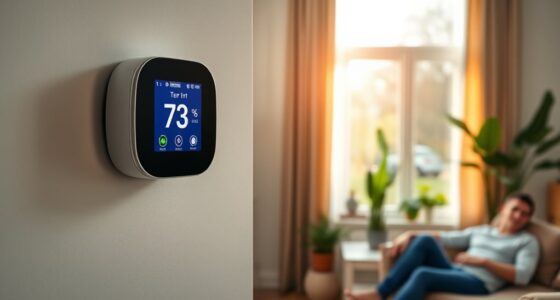
Smart thermostat sensors include temperature, occupancy, and humidity sensors, each providing vital data to optimize your home’s comfort and energy use. Temperature sensors monitor ambient conditions to adjust heating or cooling precisely. Occupancy sensors detect if people are present, helping save energy when rooms are empty. Humidity sensors measure moisture levels to keep the environment comfortable and efficient. Understanding how each sensor works can help you maximize your thermostat’s performance—continue exploring to learn how to make the most of these sensors.

Get home appliances delivered free with Prime
- Fast, free delivery on millions of items
- Prime Video, Amazon Music and more included
- Member-only deals all year
Key Takeaways
- Temperature sensors monitor ambient air to maintain optimal home climate and energy efficiency.
- Occupancy sensors detect presence, enabling automatic adjustment and energy savings when rooms are unoccupied.
- Humidity sensors measure moisture levels, helping maintain comfort and prevent HVAC overuse due to false readings.
- Proper calibration of all sensors is essential for accurate data and effective smart thermostat operation.
- Combining temperature, occupancy, and humidity data allows for precise control, enhancing comfort and reducing energy costs.

Smart thermostat sensors play an essential role in maintaining your home’s comfort and energy efficiency. They gather critical data that helps your system make real-time adjustments, guaranteeing you stay comfortable without wasting energy. To maximize their effectiveness, understanding how these sensors work and why proper sensor calibration matters is fundamental. When sensors are accurately calibrated, they provide precise readings, which directly improve your thermostat’s ability to optimize energy efficiency. Miscalibrated sensors can lead to unnecessary heating or cooling, driving up energy costs and reducing comfort. Regularly checking and calibrating your sensors ensures they reflect the true conditions in your home, allowing your system to respond appropriately.
Temperature sensors are the most common type used in smart thermostats. They detect the ambient temperature in your living space and relay this information to the thermostat’s control system. Accurate temperature readings are essential because your thermostat uses them to decide whether to turn your HVAC system on or off. If the sensor is off — say, it reads too high or too low — your system might overheat or cool unnecessarily, wasting energy and increasing your utility bills. By calibrating these sensors properly, you guarantee that the temperature data is reliable, which helps your system operate efficiently and maintain a comfortable environment. Proper calibration involves comparing sensor readings with a trusted thermometer and adjusting the sensor as needed. This process might seem technical, but many smart thermostats offer built-in calibration options, making it easier for you to keep sensors accurate over time.
Occupancy sensors add another layer of energy efficiency by detecting whether someone is in the room. When they sense that a space is unoccupied, they can trigger your system to turn off or switch to a more energy-saving mode. This prevents energy waste when you’re not around, reducing unnecessary heating and cooling. Ensuring these sensors work correctly involves positioning them strategically and ensuring they’re sensitive enough to detect movement without false triggers. If occupancy sensors aren’t calibrated properly, they might misread the presence of people — either turning off when someone is still there or staying on when the room is empty. Regularly testing and adjusting occupancy sensors helps you avoid these issues, maximizing energy savings without sacrificing comfort.
Humidity sensors measure the moisture level in the air, impacting both comfort and energy efficiency. High humidity can make a space feel warmer, prompting your system to work harder to cool and dehumidify the air, which wastes energy. Conversely, low humidity can cause discomfort and static electricity. Proper calibration of humidity sensors helps your smart thermostat maintain ideal moisture levels, reducing strain on your HVAC system. When sensors aren’t calibrated correctly, they might report false readings, leading to unnecessary dehumidification or humidification cycles. Regular calibration and maintenance ensure your home stays comfortable, with balanced humidity and efficient energy use. In sum, understanding and maintaining your smart thermostat sensors through accurate calibration and strategic placement can greatly enhance your home’s comfort and energy efficiency, making your smart system truly smart.
smart thermostat temperature sensor
As an affiliate, we earn on qualifying purchases.
As an affiliate, we earn on qualifying purchases.
Frequently Asked Questions
How Do Smart Thermostat Sensors Affect Energy Savings?
Smart thermostat sensors help decrease your energy consumption by accurately detecting occupancy, temperature, and humidity levels. Proper sensor placement guarantees the system adjusts heating and cooling only when needed, avoiding waste. You benefit from optimized energy use, lower bills, and increased comfort. When sensors are well-positioned, they respond quickly to changes, making your smart thermostat more efficient and saving you money over time.
Can Sensors Be Calibrated for More Accurate Readings?
Yes, you can calibrate your sensors to improve accuracy. Sensor calibration involves adjusting the device settings or using calibration tools to fine-tune readings. By calibrating your smart thermostat sensors, you ensure more precise temperature, occupancy, or humidity data, leading to better energy efficiency and comfort. Regular calibration checks help maintain accuracy over time, preventing false readings and optimizing your thermostat’s performance effectively.
What Are the Privacy Concerns With Occupancy Sensors?
Imagine your smart thermostat detects your presence in your living room, but this data could be exploited for privacy invasion if hackers access it. Privacy concerns with occupancy sensors stem from potential data security breaches and misuse of personal movement patterns. You might worry about unauthorized tracking or profiling. To protect yourself, guarantee your device has strong security features, such as encryption and regular updates, to mitigate risks of data misuse.
How Do Humidity Sensors Improve Indoor Air Quality?
Humidity sensors improve indoor air quality by helping you maintain ideal humidity levels. They detect excess moisture or dryness, allowing your smart thermostat to adjust humidity control settings automatically. This prevents mold growth, dust mites, and other allergens that thrive in high humidity, while also reducing respiratory issues caused by overly dry air. By keeping humidity balanced, you create a healthier, more comfortable environment for everyone inside your home.
Are There Compatibility Issues With Certain Smart Thermostats?
Think of your smart thermostat as a puzzle piece; sometimes, it doesn’t fit perfectly with others. Compatibility issues can arise if sensors or devices aren’t compatible due to differing standards or outdated firmware. To avoid this, check sensor compatibility before buying, and keep your firmware updated. This guarantees smooth communication, prevents glitches, and keeps your smart home running seamlessly, much like ensuring all puzzle pieces lock perfectly together.
occupancy sensor for smart thermostat
As an affiliate, we earn on qualifying purchases.
As an affiliate, we earn on qualifying purchases.
Conclusion
Think of your smart thermostat sensors as tiny detectives, each with a unique job—spotting temperature, sensing occupancy, or catching humidity. Together, they weave a seamless web of awareness, like a symphony where every instrument plays in harmony. When they work in concert, your home becomes a cozy, efficient haven, responding instantly to your needs. Embrace these sensors as your home’s attentive guardians, turning simple data into a symphony of comfort and savings.
As an affiliate, we earn on qualifying purchases.
calibrated smart thermostat sensors
As an affiliate, we earn on qualifying purchases.
As an affiliate, we earn on qualifying purchases.
Halloween Picks
halloween
As an affiliate, we earn on qualifying purchases.