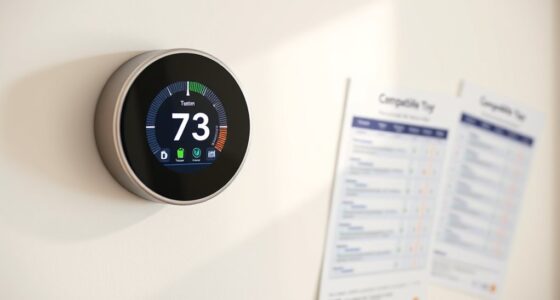

Smart thermostats help you cut carbon emissions by optimizing your home’s heating and cooling systems. They learn your habits and adjust temperatures automatically, reducing unnecessary energy use. This precise control lowers your reliance on fossil fuels, leading to cleaner energy consumption and less pollution. By using these devices, you can make your home more sustainable and eco-friendly. Keep exploring to discover more ways smart thermostats contribute to a greener future.
Key Takeaways
- Smart thermostats optimize heating and cooling for energy efficiency, reducing overall household energy consumption and associated carbon emissions.
- They learn user habits and adjust temperatures automatically, preventing unnecessary energy use and lowering reliance on fossil fuels.
- Integration with renewable energy sources and smart home devices enhances energy management, further decreasing carbon footprint.
- Remote control and automation features enable users to maintain ideal temperatures efficiently, avoiding energy waste.
- By promoting sustainable energy practices, smart thermostats support global efforts to reduce greenhouse gas emissions.
Smart thermostats are transforming how we manage energy use in homes, making it easier to reduce carbon emissions. With their advanced features, you can optimize your heating and cooling systems to consume less energy without sacrificing comfort. This not only cuts down your utility bills but also substantially lowers your home’s carbon footprint. By learning your schedule and preferences, a smart thermostat adjusts the temperature automatically, guaranteeing that energy isn’t wasted when you’re away or asleep. This continuous adjustment leads to notable energy savings over time, reducing the need for fossil fuel-based power generation, which is a major contributor to carbon emissions.
One of the key benefits of smart thermostats is user convenience. You no longer need to manually change the thermostat every time your routine shifts. Instead, these devices learn your habits, creating a personalized schedule that keeps your home comfortable while minimizing unnecessary energy use. Whether you’re leaving for work, returning home, or sleeping, your smart thermostat makes real-time adjustments that suit your lifestyle. You can control it remotely through your smartphone, giving you access to your home’s temperature from anywhere. This flexibility guarantees you’re not wasting energy just because you forgot to turn down the heat or AC before leaving. Additionally, many smart thermostats provide intuitive interfaces, making it easy to set preferences, view energy consumption data, and receive alerts about maintenance needs or unusual activity.
Another aspect that boosts user convenience is integration with other smart home devices. You can connect your thermostat with voice assistants like Alexa or Google Assistant, allowing you to change settings with simple voice commands. This hands-free control enhances your experience and makes managing your home’s climate effortless. Furthermore, some models include features like geofencing, which detects when you’re nearby or away, automatically adjusting temperatures accordingly. This automation guarantees your home is always at an ideal temperature, further conserving energy and reducing emissions.
Ultimately, smart thermostats empower you to take control of your energy use. They simplify the process of maintaining a comfortable living environment while promoting sustainability. By intelligently managing heating and cooling, they help you achieve energy savings that benefit both your wallet and the planet. Plus, the convenience they offer encourages consistent use, guaranteeing you maximize their potential to reduce carbon emissions over time. In a world where energy efficiency is increasingly crucial, smart thermostats serve as an effective tool for making your home smarter, greener, and more responsive to your needs.
Frequently Asked Questions
How Do Smart Thermostats Learn User Preferences Over Time?
Smart thermostats learn your preferences over time through machine learning by analyzing your user behavior. They track patterns like when you adjust the temperature or turn it off, then adapt to your schedule. As you use the device, it refines its understanding, automatically adjusting to keep you comfortable while saving energy. This continuous learning process guarantees the thermostat aligns with your habits, making your home more efficient and eco-friendly.
Are Smart Thermostats Compatible With All Types of Heating and Cooling Systems?
Smart thermostats aren’t compatible with all heating and cooling systems, so you might face installation challenges or compatibility issues. Before buying, check your system’s type and the thermostat’s specifications. If your system is older or unconventional, you may need additional wiring or adapters. To avoid problems, consult a professional or review compatibility guides to ensure a smooth setup and maximize energy savings.
What Are the Initial Costs and Long-Term Savings of Installing a Smart Thermostat?
Imagine saving $180 annually after investing $100-$250 in a smart thermostat. The installation costs vary depending on your system, but long-term energy savings often outweigh initial expenses. You’ll notice lower utility bills as the thermostat optimizes your heating and cooling. While upfront costs might seem high, the energy savings over time make it a smart investment, reducing both costs and your carbon footprint.
Can Smart Thermostats Be Integrated With Other Home Automation Devices?
Yes, smart thermostats can be integrated with other home automation devices. They typically feature device compatibility with systems like smart lights, security cameras, and voice assistants, allowing you to control everything seamlessly. You can set schedules, adjust settings remotely, and automate your home’s climate alongside other systems. This integration enhances convenience, energy efficiency, and helps you manage your home more effectively through a unified smart home ecosystem.
How Do Smart Thermostats Impact Energy Consumption During Peak Demand Periods?
During peak demand periods, your smart thermostat plays a subtle yet powerful role in managing energy use. It participates in demand response programs, adjusting your home’s temperature to ease grid stress. This not only conserves energy but also supports grid stabilization, reducing reliance on fossil fuels. By intelligently moderating heating and cooling, your thermostat helps lower overall energy consumption during these critical times, contributing to a more sustainable and resilient energy system.
Conclusion
Think of smart thermostats as the captain steering your home’s energy ship through calm and stormy waters alike. By optimizing your heating and cooling, you’re not just saving money—you’re steering a course toward a greener future. Every adjustment you make with your smart thermostat is like dropping a stone into a pond, creating ripples of positive change. Together, you and your thermostat can help lower carbon emissions and keep our planet sailing smoothly.