Dual-hose portable ACs keep winning the same argument because they’re more energy-efficient and provide more consistent cooling than single-hose units. Their design isolates airflow, reducing strain on the compressor and lowering energy bills over time. While they may be bulkier and need more setup, the long-term savings and better performance often outweigh the inconveniences. If you want to discover why they’re becoming the top choice, keep exploring these key advantages.

Get home appliances delivered free with Prime
- Fast, free delivery on millions of items
- Prime Video, Amazon Music and more included
- Member-only deals all year
Key Takeaways
- Dual-hose ACs are more energy-efficient due to isolated airflow, reducing workload and lowering long-term energy costs.
- They provide more consistent and effective cooling, especially in larger or enclosed spaces.
- The improved airflow balance minimizes overworking and wear, enhancing unit longevity.
- Despite complex installation, long-term savings and performance benefits often justify the setup effort.
- Their effectiveness in space-constrained or larger environments makes them a preferred choice over single-hose units.
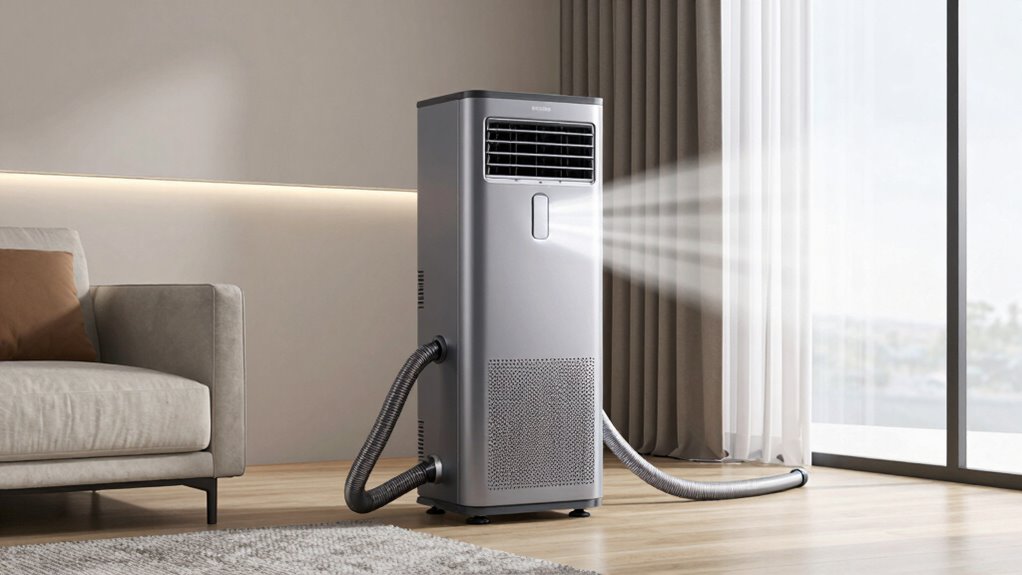
When choosing a portable air conditioner, many people have debated whether dual-hose units truly outperform single-hose models. The core of this argument often revolves around energy efficiency and installation complexity. You might find that dual-hose portable ACs are often billed as more energy-efficient, and that’s true in many cases. Because they have two hoses—one for bringing in fresh air and another for exhausting hot air—they work more efficiently to cool a space. With a single hose, the unit struggles to maintain a balanced airflow, which leads to higher energy consumption as it works harder to compensate for the air imbalance. Dual-hose units, by contrast, isolate the intake and exhaust processes, reducing the load on the compressor and, in turn, lowering energy bills over time. This makes them appealing if you’re looking for a more cost-effective, eco-friendly option.
However, the installation complexity of dual-hose units can pose a challenge. They tend to be bulkier and require more setup than single-hose models. You’ll need to find a suitable window or venting solution for both hoses, which can be more time-consuming and sometimes frustrating. If you’re not comfortable with DIY installations, you might find the process intimidating or require professional help, adding to the overall cost and effort. On the other hand, single-hose units are generally designed for quick, straightforward setup. They typically use a single exhaust hose that can be easily vented out of a window, making them more user-friendly for those who want a hassle-free cooling solution. Additionally, energy efficiency is a key factor that influences long-term operating costs, which is why many users prefer dual-hose ACs despite the initial setup challenges. Recognizing ventilation requirements can also help users optimize their cooling performance and energy savings, especially in different room configurations. Moreover, understanding room size and layout can be crucial in selecting the right model for your space.
Despite the increased installation complexity, many users prefer dual-hose ACs because they deliver better energy efficiency and more consistent cooling performance. The initial setup might take a little longer, but the long-term savings and improved performance often outweigh that inconvenience. It’s also worth noting that space constraints in certain environments can influence which model is more practical, as dual-hose units may require more room for installation. The benefits of dual-hose models become even more apparent in larger or more enclosed spaces, where they maintain airflow balance more effectively, preventing the unit from overworking and reducing wear and tear. So, even though installing them might be a bit more involved, their superior energy efficiency and cooling stability make them a compelling choice for many people, especially those prioritizing lower electricity bills and reliable performance.
Products Worth Considering

Levoit Core 400S-P Smart Air Purifier for Large Rooms

Levoit Vital 100S-P Air Purifier with Washable Pre-Filter

Coway Mighty AP-1512HH Air Purifier, Black
As an affiliate, we earn on qualifying purchases.
Frequently Asked Questions
Are Dual-Hose ACS More Energy-Efficient Than Single-Hose Models?
Yes, dual-hose ACs are more energy-efficient than single-hose models. Their design differences allow them to better manage airflow, reducing energy waste. With two hoses, one exhausts hot air while the other supplies cooled air, leading to improved energy savings. You’ll notice faster cooling and lower energy bills because dual-hose units operate more efficiently, making them a smarter choice for those seeking effective and eco-friendly cooling solutions.
How Noisy Are Dual-Hose Portable Air Conditioners?
You’ll find that dual-hose portable ACs typically operate between 50 to 60 decibels, roughly as loud as a normal conversation. Their noise levels are generally manageable, especially with good sound insulation. If noise is a concern, look for models with quiet operation modes or enhanced soundproofing. While they’re not silent, most users find the noise level acceptable for daily use, especially compared to older or less sophisticated units.
Can Dual-Hose ACS Be Used in Large Rooms Effectively?
Yes, dual-hose ACs can effectively cool large rooms if you consider room size and ventilation efficiency. They’re designed to handle bigger spaces better than single-hose units by providing improved airflow and cooling capacity. To maximize performance, guarantee proper ventilation and that the unit’s BTU rating matches your room size. This way, you’ll enjoy faster cooling and more consistent temperature control in larger areas.
What Maintenance Is Required for Dual-Hose Portable ACS?
Think of your dual-hose portable AC as a garden needing care. You’ll need to replace the filters regularly, like pruning to keep it healthy, ensuring best airflow. Also, check drainage requirements; if your unit accumulates excess water, empty the collection tank or set up proper drainage. Keeping these maintenance tasks in check helps your AC run efficiently, prolongs its lifespan, and keeps your space comfortably cool.
Do Dual-Hose Units Require Professional Installation?
No, dual-hose units typically don’t require professional installation, but you should verify unit compatibility with your space. Most models are designed for easy setup, allowing you to follow the manufacturer’s instructions. However, if you encounter any complexities or want to guarantee peak performance, seeking professional installation can help. This guarantees your unit is correctly installed, operates efficiently, and avoids potential issues down the line.
Conclusion
So, next time you see a dual-hose portable AC boasting its efficiency, just picture it lazily lounging on a tropical beach, sipping a cocktail, while your single-hose unit struggles to keep up like a hamster on a wheel. It’s the cool kid on the block, winning arguments and cooling rooms with the ease of a summer breeze. In the world of portable ACs, dual-hose reigns supreme—leaving single-hose units stranded in the sweltering heat of their own mediocrity.