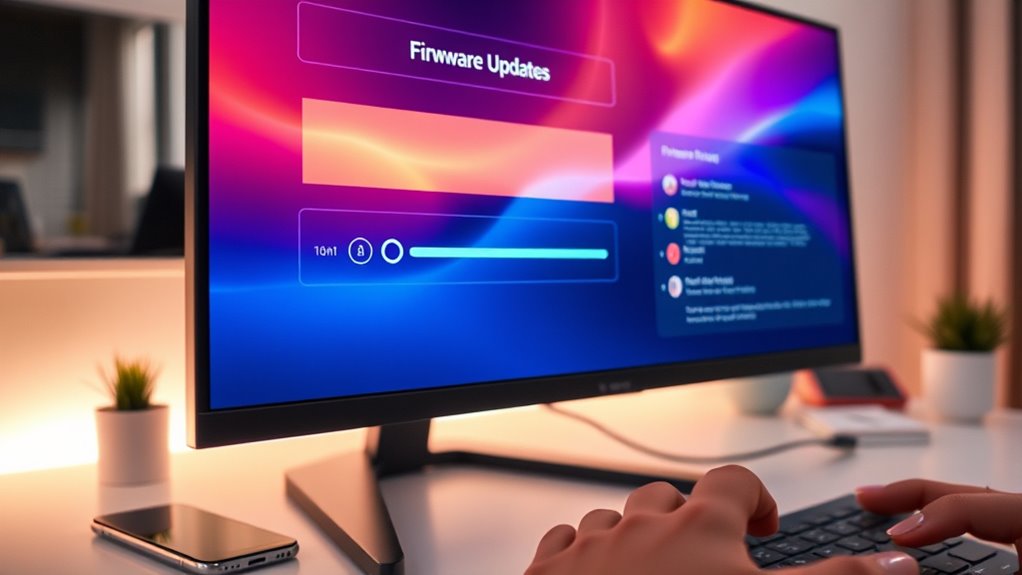

To set up automatic firmware updates, first check if your device supports this feature by reviewing the manufacturer’s documentation. Enable auto-updates in the device settings, and set update schedules during off-peak hours to avoid disruptions. You’ll also want to enable notifications to stay informed about upcoming updates. Regularly review your device support status to prevent compatibility issues. Keep these steps in mind, as continuing will guide you through each detail for a smooth setup.
Key Takeaways
- Verify device compatibility and support for automatic firmware updates before enabling the feature.
- Access device settings or manufacturer management portals to activate automatic updates.
- Schedule update times during off-peak hours to minimize disruptions and ensure smooth installations.
- Configure update frequency and notification preferences to stay informed and avoid network overload.
- Regularly review support documentation or forums to confirm ongoing compatibility and security patch availability.

Keeping your devices up to date is vital for security and ideal performance. When you set up automatic firmware updates, you guarantee your hardware stays protected against vulnerabilities and runs smoothly without manual intervention. However, to make this process effective, you need to contemplate device compatibility and update scheduling. Not all devices handle updates the same way, so understanding these factors helps you avoid potential issues and keep everything functioning seamlessly.
Device compatibility is essential when enabling automatic updates. Before turning on auto-updates, double-check that your devices support this feature and that their firmware is compatible with the latest updates. Some older devices might not receive automatic updates, or their firmware could have compatibility issues that lead to malfunction or decreased performance. To prevent this, review manufacturer documentation or support forums to confirm your devices can handle automatic firmware updates. Guaranteeing compatibility means you won’t accidentally cause disruptions or encounter errors during the update process.
Check device support and firmware compatibility before enabling automatic updates to avoid issues.
Once you verify device compatibility, focus on setting an appropriate update schedule. Most devices allow you to choose when updates occur, so pick a time that minimizes disruption. For example, scheduling updates during off-peak hours, like late at night or early mornings, prevents interruptions during your work or daily activities. Many routers, IoT devices, or network hardware let you configure update windows directly within their settings. If your device supports it, enable automatic updates to run quietly in the background, so you don’t have to worry about manually initiating each update.
Proper update scheduling also involves considering the frequency of updates. Some firmware releases happen frequently, especially when security patches are involved. You may want to set your devices to check for updates weekly or bi-weekly, depending on how often manufacturers release patches. This way, your devices stay current without overwhelming your network or causing unnecessary restarts. Additionally, some systems allow you to receive notifications before updates install, giving you a chance to prepare or postpone if needed.
Understanding the importance of AI security vulnerabilities and staying informed about emerging threats helps you make smarter decisions regarding firmware updates and device safety.
Frequently Asked Questions
How Do I Cancel or Pause Automatic Firmware Updates?
You can cancel or pause automatic firmware updates by disabling update notifications or changing your device settings. First, go into your device’s settings and find the firmware update section. Select manual update instead of automatic. This way, you’ll stop automatic updates and only update when you choose. If you want to pause temporarily, look for options to delay updates. This keeps you in control without completely turning off updates.
What Are the Risks of Enabling Automatic Firmware Updates?
They say, “Better safe than sorry.” Enabling automatic firmware updates can risk compatibility issues if updates introduce bugs or cause your device to malfunction. You might miss the chance to perform a manual update first or prevent you from rolling back to a previous firmware version if needed. Stay vigilant, and regularly check your device’s firmware version, ensuring updates improve performance without risking stability.
Can I Customize Update Schedules for Different Devices?
Yes, you can customize update schedules for different devices. By using device-specific scheduling, you guarantee each device updates at ideal times, minimizing disruptions. Many systems allow you to set custom update preferences, giving you control over when and how updates occur. This way, you can prioritize critical devices or avoid updates during busy hours, maintaining smooth operations while keeping your firmware current and secure.
How Do I Troubleshoot Failed Automatic Updates?
When automatic updates hit a snag, think of it like a train stuck on the tracks. First, check the troubleshooting log for clues, then try a manual update to clear the blockage. If issues persist, restart your device and verify it has a stable internet connection. These steps often reveal the root cause, helping you get back on track and keep your devices running smoothly without missing a beat.
Are Automatic Updates Secure Against Potential Cyber Threats?
Automatic updates are generally secure against cyber threats if you enable update verification, which authenticates the source and integrity of updates. However, cybersecurity concerns remain, especially if your device isn’t configured properly or if updates come from untrusted sources. To stay safe, make sure your device’s security settings are current, and always verify updates before installation. This proactive approach minimizes risks and helps protect your system from potential cyber threats.
Conclusion
By enabling automatic firmware updates, you guarantee your device stays secure and performs at its best without extra effort. Imagine a small business that activated updates automatically—when a critical security patch was released, their system protected sensitive data without delay. You can do the same: set it and forget it, knowing your device is always up-to-date. Don’t wait for manual updates; automatic updates keep your tech safe and efficient effortlessly.