
Smart home learning thermostats go beyond simple scheduling — they study your routines, adjust temperatures automatically, and trim heating and cooling costs without constant tinkering. After comparing 15 of the most popular models, the Google Nest Learning Thermostat (4th Gen) stands out as the best overall pick thanks to genuine auto-scheduling, remote temperature sensors, and broad smart home integration. The ecobee Smart Thermostat Premium is the strongest alternative with built-in Siri and Alexa plus a bundled smart sensor, while the Amazon Smart Thermostat proves you can get basic learning-style automation for a fraction of the price. The main tradeoff in this category is real adaptive learning versus programmable scheduling with remote access — many models labeled “smart” don’t actually learn your habits. Keep reading for the full breakdown, including which thermostat fits which home and budget.

Get home appliances delivered free with Prime
- Fast, free delivery on millions of items
- Prime Video, Amazon Music and more included
- Member-only deals all year
Complete the kit


Key Takeaways
- Only the Nest Learning Thermostat models and ecobee‘s Premium tier offer true auto-learning; most other picks are programmable smart thermostats that rely on you setting schedules manually.
- Remote temperature sensors are the single biggest differentiator for comfort — ecobee and the Nest Learning 4th Gen include them, while budget models like the Amazon and Sensi Lite leave rooms unevenly heated.
- The Amazon Smart Thermostat and Sensi Lite deliver the best cost-to-capability ratio, but both cut corners on display quality and advanced zoning.
- Color and finish variants (Nest in Silver, Obsidian, Polished Gold) carry identical hardware — buying by price rather than finish saves $30 or more on the same performance.
- C-wire requirements still trip up buyers: the Honeywell RTH9585WF demands one outright, while Sensi and ecobee models are more forgiving in older homes without a common wire.
| Google Nest Learning Thermostat (4th gen) + Nest Temperature Sensor (2nd gen) – Silver |  | Best Overall | Model: 4th generation | Included accessories: Nest Temperature Sensor (2nd gen) | Display: 60% larger than previous generation | VIEW LATEST PRICE | See Our Full Breakdown |
| ecobee Smart Thermostat Enhanced, Programmable Wi-Fi Thermostat |  | Best Value for Smart Features | Compatibility: 90% of HVAC systems | Control: Wi-Fi, smartphone app, Alexa, Siri, Google Assistant | Energy savings: Up to 26% annually | VIEW LATEST PRICE | See Our Full Breakdown |
| Amazon Smart Thermostat |  | Best Budget Pick | Ecosystem: Works with Alexa and Ring | C-wire required: Yes | Energy savings: Up to $90 annually (EPA estimate) | VIEW LATEST PRICE | See Our Full Breakdown |
| Sensi Smart Thermostat, Wi-Fi, DIY, Alexa, Energy Star Certified, ST55 |  | Best for Ecosystem Flexibility | Platform support: Alexa, Apple HomeKit, Google Assistant, SmartThings, Vera | Certification: Energy Star certified | Energy savings: Approximately 23% on HVAC costs | VIEW LATEST PRICE | See Our Full Breakdown |
| Google Nest Thermostat – Smart Wi-Fi Programmable Thermostat for Home – Snow |  | Best for Easy Installation | Connectivity: Wi-Fi, 2.4 GHz and 5 GHz | C-wire: Not required in most homes; accessory may be needed for some systems | Certification: Energy Star certified | VIEW LATEST PRICE | See Our Full Breakdown |
| Honeywell Home T5 Smart Wi-Fi Thermostat |  | Best for Geofencing Basics | Scheduling: 7-day flexible scheduling | Control: Wi-Fi enabled, smartphone/tablet control | Energy Certification: ENERGY STAR certified | VIEW LATEST PRICE | See Our Full Breakdown |
| Sensi Lite Smart Thermostat, WiFi, Alexa, DIY, Energy Star Certified, ST25 | 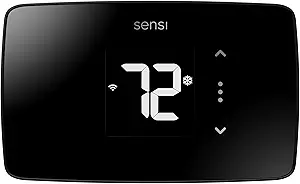 | Best Budget Starter Pick | Connectivity: Wi-Fi | Compatibility: Most HVAC systems with common wire (C-wire) | Certification: Energy Star | VIEW LATEST PRICE | See Our Full Breakdown |
| Google Nest Learning Thermostat (4th Gen, 2024) with Nest Temperature Sensor – Polished Gold |  | Best Premium Learning Thermostat | Model: 4th Gen, 2024 | Color: Polished Gold | Compatibility: Most 24V systems, including gas, electric, oil, heat pump, radiant | VIEW LATEST PRICE | See Our Full Breakdown |
| Google Nest Thermostat – Smart Thermostat for Home – Programmable Wi-Fi Thermostat – Sand |  | Best Mid-Range Nest for DIYers | Energy Star Certified: Yes | Compatibility: Most HVAC systems; controlled via iOS/Android devices | Control: Remote via Google Home app; voice control with Google Assistant and Matter | VIEW LATEST PRICE | See Our Full Breakdown |
| ecobee Smart Thermostat Essential – WiFi Thermostat, Energy Star Certified |  | Best for Homes Without a C-Wire | Energy Star Certified: Yes | Compatibility: Most 24 VAC HVAC systems, including gas, oil, electric, dual fuel, and heat pump | Smart Home Support: Apple HomeKit, Google Assistant, Alexa | VIEW LATEST PRICE | See Our Full Breakdown |
| Honeywell Home RTH9585WF Wi-Fi Smart Color Thermostat |  | Best for Customizable Scheduling | Model: RTH9585WF | Programming: 7-day programmable | Display: Customizable color touchscreen | VIEW LATEST PRICE | See Our Full Breakdown |
| Google Nest Learning Thermostat (4th gen) + Nest Temperature Sensor (2nd gen) – Obsidian |  | Best Overall | Model: Nest Learning Thermostat 4th gen | Includes: Nest Temperature Sensor (2nd gen) | Display: 60% larger with Dynamic Farsight | VIEW LATEST PRICE | See Our Full Breakdown |
| ecobee Smart Thermostat Premium |  | Best Premium Smart Home Hub | Energy Savings: Up to 26% on energy bills | SmartSensor: Included, with occupancy detection | Compatibility: Works with 95% of HVAC systems | VIEW LATEST PRICE | See Our Full Breakdown |
| Google Nest Thermostat with Trim Kit Bundle (White) |  | Best Value Learning Pick | Compatibility: Works with 95% of heating and cooling systems | Display: Frosted display | Connectivity: Wi-Fi, iOS and Android compatible | VIEW LATEST PRICE | See Our Full Breakdown |
| Google Nest Thermostat (Charcoal) | 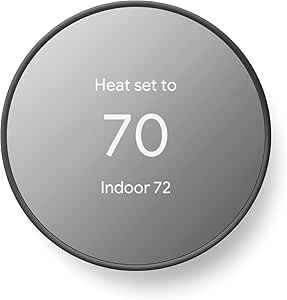 | Best Budget Entry Point | Connectivity: Wi-Fi 802.11 b/g/n 2.4 GHz, 802.11 a/n 5 GHz; Bluetooth Low Energy | Compatibility: Works without C wire in most homes | Smart Home: Google Assistant, Matter | VIEW LATEST PRICE | See Our Full Breakdown |
| smart home learning thermostat | Compatibility |
|---|---|
| Google Nest Learning Thermosta | Most 24V systems; no C wire needed in most homes |
| ecobee Smart Thermostat Enhanc | 90% of HVAC systems |
| Amazon Smart Thermostat | — |
| Sensi Smart Thermostat | — |
| Google Nest Thermostat | — |
| Honeywell Home T5 Smart Wi-Fi | Most heat/cool oil furnace systems |
| Sensi Lite Smart Thermostat | Most HVAC systems with common wire (C-wire) |
| Google Nest Learning Thermosta | Most 24V systems, including gas, electric, oil, heat pump, radiant |
| Google Nest Thermostat | Most HVAC systems; controlled via iOS/Android devices |
| ecobee Smart Thermostat Essent | Most 24 VAC HVAC systems, including gas, oil, electric, dual fuel, and heat pump |
| Honeywell Home RTH9585WF Wi-Fi | Forced air, hot water, steam, heat pumps with electric backup |
| Google Nest Learning Thermosta | — |
| ecobee Smart Thermostat Premiu | Works with 95% of HVAC systems |
| Google Nest Thermostat with Tr | Works with 95% of heating and cooling systems |
| Google Nest Thermostat | Works without C wire in most homes |
More Details on Our Top Picks
Google Nest Learning Thermostat (4th gen) + Nest Temperature Sensor (2nd gen) – Silver
The fourth-generation Nest Learning Thermostat earns the top spot because it’s the only model in this lineup that genuinely lives up to the word learning in the title. While the standard Google Nest Thermostat and the Amazon Smart Thermostat rely on schedules you build yourself, this model observes your adjustments and builds its own routine, then refines it with adaptive eco modes. The display is 60% larger than the budget Nest, and the bundled second-generation temperature sensor solves the most common smart thermostat complaint: rooms that never match the temperature at the thermostat itself.
The tradeoff is straightforward — this is the most expensive way to enter the category, and buyers who just want app control and a schedule would be equally served by the ecobee Smart Thermostat Enhanced for less money. It also depends on Wi-Fi for its smarter features to function.
Pros:- Genuinely learns routines and adjusts heating and cooling automatically
- Included room sensor enables true zone-based comfort control
- 60% larger display with customizable faces that’s readable across a room
- Works with most 24V systems without a C wire in most homes
Cons:- Highest price point in this batch by a wide margin
- Full feature set depends on a reliable Wi-Fi connection
- Setup with the sensor and HVAC wiring can overwhelm first-timers
Best for: Homeowners who want a thermostat that builds its own schedule and manages multi-room comfort without manual programming
Not ideal for: Budget-conscious buyers or renters — the price is hard to justify if you only need basic scheduling and remote control
- Model:4th generation
- Included accessories:Nest Temperature Sensor (2nd gen)
- Display:60% larger than previous generation
- Compatibility:Most 24V systems; no C wire needed in most homes
- Connectivity:Wi-Fi, Matter compatible
- Control options:Google Home app, Alexa, Siri, Google Assistant
- Key features:Dynamic Farsight, adaptive eco, routine learning, energy savings
Our verdict“If real learning automation and whole-home comfort are the priority and budget allows, this is the pick; anyone content with manual schedules should buy down the list.”
ecobee Smart Thermostat Enhanced, Programmable Wi-Fi Thermostat
Sitting in the middle of the price range, the ecobee Smart Thermostat Enhanced delivers much of what makes the Nest Learning Thermostat expensive — automatic occupancy-based adjustments, remote control, and voice assistant support — at a noticeably lower cost. Its headline claim of up to 26% annual energy savings is the strongest efficiency figure in this batch, edging out the Sensi ST55’s 23%.
Compared with the Amazon Smart Thermostat, this model covers roughly 90% of HVAC systems and includes a Power Extender Kit, which spares many buyers the C-wire hassle that sinks the Amazon unit in older homes. The catch: room sensors are sold separately, so buyers chasing the multi-room comfort the Nest 4th gen bundles will pay extra to match it. A three-year warranty softens that blow.
Pros:- Up to 26% annual energy savings, the best efficiency claim in this batch
- Compatible with about 90% of HVAC systems
- Includes Power Extender Kit and trim kit for easier installation
- Works with Alexa, Siri, and Google Assistant plus a 3-year warranty
Cons:- SmartSensors for room-level comfort are sold separately
- Some users report a steeper setup process than expected
- Remote features stop working without Wi-Fi
Best for: Buyers who want near-premium automation and energy savings without paying Nest Learning Thermostat prices
Not ideal for: Households wanting multi-room temperature balancing out of the box — the SmartSensors cost extra
- Compatibility:90% of HVAC systems
- Control:Wi-Fi, smartphone app, Alexa, Siri, Google Assistant
- Energy savings:Up to 26% annually
- Included:Power Extender Kit, trim kit
- Room sensors:Optional, sold separately
- Warranty:3 years
Our verdict“The strongest balance of price, efficiency, and compatibility in the lineup — buy it unless you specifically need learning automation or bundled room sensors.”
Amazon Smart Thermostat
The Amazon Smart Thermostat is the cheapest way into this category, and for Alexa households it makes a compelling case. EPA estimates put savings at up to $90 annually, and the Alexa app walks first-timers through installation step by step — an experience that’s friendlier than the more manual setup of the Sensi ST55.
Where the savings show up is in capability. Unlike the ecobee Smart Thermostat Enhanced, there’s no occupancy detection, no room sensor ecosystem, and no learning — schedules are the ones you program yourself. The bigger dealbreaker is the hard C-wire requirement: the Nest Learning Thermostat and Nest Thermostat both work without one in most homes, so older houses may need an electrician before this unit saves a dime. Ecosystem lock-in to Alexa and Ring is another limitation the Sensi and ecobee avoid.
Pros:- Lowest price in the roundup by a clear margin
- Guided DIY installation through the Alexa app
- EPA-estimated savings of up to $90 per year
- Remote scheduling and control integrate cleanly with Alexa routines
Cons:- C-wire is required, which blocks many older homes
- Locked to Alexa and Ring with no Google or Apple support
- No occupancy sensing, sensors, or learning capability
Best for: Alexa-centric households with modern wiring who want remote control and scheduling for the lowest possible price
Not ideal for: Older homes without a C-wire, or anyone outside the Alexa ecosystem — it won’t play well with Google or Apple setups
- Ecosystem:Works with Alexa and Ring
- C-wire required:Yes
- Energy savings:Up to $90 annually (EPA estimate)
- Installation:DIY with app guidance
- Scheduling:Customizable schedules via Alexa app
- Remote control:Alexa app
Our verdict“A genuine bargain for wired-up Alexa homes; everyone else should spend slightly more on the Sensi or ecobee for flexibility.”
Sensi Smart Thermostat, Wi-Fi, DIY, Alexa, Energy Star Certified, ST55
The Sensi ST55 takes a different approach from everything else here: instead of deep automation, it bets on broad compatibility and privacy. It’s the only thermostat in this batch that plays nicely with Alexa, Google Assistant, Apple HomeKit, SmartThings, and Vera simultaneously — the Amazon Smart Thermostat covers exactly one of those, and the Nest models exclude HomeKit entirely.
Its roughly 23% energy savings lands close to the ecobee Enhanced’s 26%, and its traditional dial-style design appeals to households where a touchscreen slab on the wall feels alien. The compromises are real, though: customization options are shallower than what the Nest or ecobee apps offer, some installations demand a C-wire, and occasional connectivity dropouts are a known frustration. Think of it as the pragmatic, platform-agnostic choice rather than the clever one.
Pros:- Works with Alexa, Google Assistant, Apple HomeKit, SmartThings, and Vera
- Energy Star certified with roughly 23% HVAC cost savings
- Step-by-step app-guided DIY installation
- Maintenance alerts, filter indicators, and usage reports extend HVAC life
Cons:- Fewer customization options than premium models like the Nest Learning Thermostat
- C-wire required in some installations
- Some users report intermittent Wi-Fi connectivity issues
Best for: Mixed-smart-home households, especially Apple HomeKit users, who want one thermostat that works with every platform
Not ideal for: Tinkerers who want granular schedule customization or learning automation — the feature depth isn’t there
- Platform support:Alexa, Apple HomeKit, Google Assistant, SmartThings, Vera
- Certification:Energy Star certified
- Energy savings:Approximately 23% on HVAC costs
- HVAC compatibility:Air conditioner, boiler, furnace, heat pump
- Installation:DIY with app instructions
- Extra features:Filter indicator, maintenance alerts, usage reports, data privacy options
Our verdict“The safest cross-platform choice for multi-ecosystem homes; power users will find its scheduling tools too shallow.”
Google Nest Thermostat – Smart Wi-Fi Programmable Thermostat for Home – Snow
The standard Google Nest Thermostat occupies a smart middle ground: cheaper than its Learning sibling, more polished than the Amazon Smart Thermostat, and installable in about 30 minutes by most homeowners. It skips the learning engine and the bundled room sensor of the Nest Learning Thermostat 4th gen — schedules here are ones you set — but it keeps the genuinely useful extras: HVAC monitoring, energy history, and automatic turn-down when you leave.
Compared with the Sensi ST55, its dual-band Wi-Fi (2.4 and 5 GHz) tends to hold connections more reliably, though its ecosystem is narrower since HomeKit isn’t supported. Most homes won’t need a C wire, but a minority of systems will require an accessory — a caveat worth checking before purchase. One honest limitation: its HVAC alerts are informational only and can’t replace a technician’s diagnosis.
Pros:- DIY installation typically completed in about 30 minutes
- No C wire needed in most homes
- Dual-band Wi-Fi with both Google Assistant and Alexa voice control
- Energy Star certified with auto turn-down and HVAC monitoring
Cons:- No true learning capability — you build and maintain the schedule yourself
- Some HVAC systems require a C-wire accessory
- HVAC alerts are informational only, not diagnostic
Best for: First-time smart thermostat buyers who want Nest polish and energy savings without the Learning model’s price
Not ideal for: Buyers expecting true learning automation or diagnostics — this model schedules but doesn’t adapt on its own
- Connectivity:Wi-Fi, 2.4 GHz and 5 GHz
- C-wire:Not required in most homes; accessory may be needed for some systems
- Certification:Energy Star certified
- Voice control:Google Assistant and Alexa
- App control:Google Home app
- Installation:DIY, typically about 30 minutes
- Energy features:Auto turn-down, energy history, HVAC monitoring
Our verdict“The easiest on-ramp to the Nest ecosystem for hands-on schedulers; anyone wanting the thermostat to think for itself needs the Learning model.”
Honeywell Home T5 Smart Wi-Fi Thermostat
The T5 earns its spot on geofencing alone. While the Sensi Lite offers location-based savings too, the T5 pairs its geofence with Auto Home/Away Mode that adjusts temperature the moment a phone crosses the boundary, which translates into real savings for households with unpredictable schedules. Its 7-day flexible scheduling is more hands-on than the self-programming Google Nest Learning Thermostat, so this model suits buyers who want to set rules themselves rather than let an algorithm learn. Compared with the ecobee Essential, the T5 feels more basic — no humidity sensing, no room sensors — but it undercuts premium models on price while keeping the features that actually move the needle on energy bills. The tradeoff is installation friction: a C-wire is mandatory, and heating-only oil systems without one are out of luck entirely.
Pros:- Geofence technology with Auto Home/Away Mode adjusts temperatures automatically based on your location
- 7-day flexible scheduling gives you granular control over each day separately
- ENERGY STAR certified with documented energy savings
- Remote control via smartphone or tablet from anywhere
Cons:- Requires a C-wire power adapter for installation
- Incompatible with heating-only oil systems unless a C-wire is present
- No room sensors or humidity detection like the ecobee Essential offers
Best for: Commuters and households with irregular schedules who want automatic home/away adjustments without paying for a learning thermostat
Not ideal for: Homes without a C-wire or with heating-only oil systems — it simply won’t work without additional wiring
- Scheduling:7-day flexible scheduling
- Control:Wi-Fi enabled, smartphone/tablet control
- Energy Certification:ENERGY STAR certified
- Compatibility:Most heat/cool oil furnace systems
- Power Requirement:C-wire power adapter required
- Features:Geofence technology, Auto Home/Away Mode
Our verdict“A solid pick for schedule-driven buyers who want reliable geofencing savings at a mid-range price, provided your wiring is ready for it.”
Sensi Lite Smart Thermostat, WiFi, Alexa, DIY, Energy Star Certified, ST25
For a first smart thermostat, the Sensi Lite keeps things refreshingly simple. The built-in level and step-by-step in-app instructions make DIY installation genuinely approachable, something the pricier Nest Learning Thermostat can’t always claim for nervous first-timers. Sensi claims roughly 23% HVAC energy savings, matching the ecobee Essential’s headline number at a lower price point. What you give up is depth: there’s no room sensing, no learning algorithm, and customization options are thinner than what the Honeywell T5 offers with its 7-day granular scheduling. Alexa voice control works well, though Google and Apple users get less love here. Think of it as the thermostat equivalent of training wheels — it covers scheduling, geofencing, and remote control competently, but buyers who enjoy tinkering will outgrow its feature set within a year or two.
Pros:- Easy DIY installation with built-in level and guided instructions
- Up to 23% savings on HVAC energy costs with scheduling and geofencing
- Remote control via mobile app for both Android and iOS
- Energy Star certified and Alexa compatible
Cons:- Requires a C-wire for many systems, with limited workarounds
- Basic features lack the advanced customization of higher-end models
- No room-specific temperature sensing capability
Best for: First-time smart thermostat buyers and Alexa households who want the cheapest reliable entry point with genuinely easy installation
Not ideal for: Tinkerers and multi-room homes — the basic feature set lacks room sensors and advanced customization found on ecobee and Nest models
- Connectivity:Wi-Fi
- Compatibility:Most HVAC systems with common wire (C-wire)
- Certification:Energy Star
- Control:Remote via mobile app (Android and iOS)
- Voice Assistant Compatibility:Alexa
- Installation:DIY with built-in level and step-by-step instructions
Our verdict“The least intimidating way to start saving on heating and cooling, as long as you accept its basic feature ceiling.”
Google Nest Learning Thermostat (4th Gen, 2024) with Nest Temperature Sensor – Polished Gold
This is the pick that defines the category. The 4th Gen Nest Learning Thermostat genuinely learns your routine and programs itself, eliminating the manual scheduling that the Honeywell T5 and Sensi Lite demand. Compared with the standard Google Nest Thermostat in Sand, this model adds Adaptive Eco, dynamic weather response, a 60% larger display, and — critically — the included second-generation Nest Temperature Sensor, which solves the classic problem of one room always being too hot or cold. The Polished Gold finish also makes it a design statement rather than wall clutter. It plays nicely across Alexa, Apple HomeKit, Google Home, and Matter, giving it the broadest ecosystem support in this batch. The premium price is the obvious cost, and some setups benefit from professional installation, which adds to the total. Wi-Fi dependence means full functionality drops offline too.
Pros:- Self-learning schedule eliminates manual programming entirely
- Includes a 2nd-gen Nest Temperature Sensor for room-specific comfort
- Works with Alexa, Apple HomeKit, Google Home, and Matter
- 60% larger display with Dynamic Farsight that shows info from across the room
Cons:- Noticeably more expensive than basic smart thermostats
- Setup can be complex enough that some users need professional help
- Full functionality requires a stable Wi-Fi connection
Best for: Buyers who want a set-and-forget thermostat that programs itself, with whole-home ecosystem support and room-specific comfort in a statement finish
Not ideal for: Budget-conscious buyers or those with older wiring — the premium price and potentially complex setup make cheaper models like the Sensi Lite more sensible
- Model:4th Gen, 2024
- Color:Polished Gold
- Compatibility:Most 24V systems, including gas, electric, oil, heat pump, radiant
- Display:60% larger display with Dynamic Farsight
- Smart Home Support:Alexa, Apple HomeKit, Google Home, Matter compatible
- Included Sensor:Nest Temperature Sensor (2nd gen)
- Key Features:Adaptive Eco, self-learning schedule, system notifications
Our verdict“If you want the closest thing to a thermostat that thinks for itself — and you’re willing to pay for it — this is the one to buy.”
Google Nest Thermostat – Smart Thermostat for Home – Programmable Wi-Fi Thermostat – Sand
The standard Google Nest Thermostat is the rational middle child between the Sensi Lite’s bare-bones approach and the 4th Gen Learning model’s premium price. It keeps the polished Google Home app experience, ENERGY STAR certification, and HVAC monitoring alerts that flag potential system issues early — a feature the Honeywell T5 doesn’t offer at all. Installation typically takes about 30 minutes, and it works without a C-wire in most homes, removing the wiring hurdle that trips up both the T5 and Sensi Lite. What separates it from its pricier Nest sibling is intelligence: it doesn’t learn your schedule automatically, so you’ll do the programming yourself. The mirrored display and Sand colorway look sharper than most competitors at this price. Just know that its alerts are informational only — they’re a nudge to call a technician, not a diagnosis.
Pros:- Works without a C-wire in most homes, simplifying installation
- HVAC monitoring sends alerts about potential system issues
- Typical self-installation in about 30 minutes
- Voice control via Google Assistant plus Matter compatibility
Cons:- Some systems still require additional wiring or accessories
- Features depend on a stable Wi-Fi and internet connection
- Alerts are informational and not a substitute for professional diagnosis
Best for: DIY-minded buyers who want the Google Home ecosystem and modern design without paying the Learning Thermostat’s premium
Not ideal for: Buyers who want true automatic scheduling — this model requires manual programming, unlike the 4th Gen Learning Thermostat
- Energy Star Certified:Yes
- Compatibility:Most HVAC systems; controlled via iOS/Android devices
- Control:Remote via Google Home app; voice control with Google Assistant and Matter
- Installation:Self-installable, typically in 30 minutes
- Power Requirements:Works without C-wire in most homes; some systems may need one or an accessory
- Key Features:Smart scheduling, HVAC monitoring, system alerts
Our verdict“The smart choice for Google households that want clean design and dependable scheduling at a moderate price, minus the self-learning brains.”
ecobee Smart Thermostat Essential – WiFi Thermostat, Energy Star Certified
The ecobee Essential’s headline advantage is its Power Extender Kit, which lets many homes skip the C-wire requirement entirely — the single biggest installation barrier for the Honeywell T5 and Sensi Lite in this lineup. ecobee claims up to 23% annual savings on heating and cooling, matching Sensi Lite’s figure while adding features Sensi doesn’t have: a color touchscreen, built-in indoor humidity detection, and a schedule assistant. Ecosystem support is broader than Sensi Lite too, spanning Apple HomeKit, Google Assistant, and Alexa. Compared with the standard Google Nest Thermostat, the Essential trades Nest’s HVAC monitoring for humidity awareness and broader system compatibility, including dual fuel and heat pump setups. The catch is à la carte pricing — the room-sensing SmartSensor that makes ecobees special is sold separately, and some features demand extra accessories, so check compatibility before buying.
Pros:- No C-wire needed thanks to the included Power Extender Kit option
- Saves up to 23% annually on heating and cooling costs
- Built-in indoor humidity detection and schedule assistant
- Broad compatibility including dual fuel, heat pump, gas, oil, and electric systems
Cons:- SmartSensor for room-specific comfort is sold separately
- Requires checking system compatibility online before purchase
- Some features may require additional accessories
Best for: Owners of older homes without a C-wire, and buyers with dual fuel or heat pump systems who want broad compatibility and humidity awareness
Not ideal for: Buyers wanting room-by-room temperature control out of the box — the SmartSensor costs extra, and stacked accessories push the price toward premium territory
- Energy Star Certified:Yes
- Compatibility:Most 24 VAC HVAC systems, including gas, oil, electric, dual fuel, and heat pump
- Smart Home Support:Apple HomeKit, Google Assistant, Alexa
- SmartSensor:Optional, measures temperature and movement (sold separately)
- Built-in Features:Indoor humidity detection, schedule assistant, time of use
- Installation:DIY, no C-wire needed with optional Power Extender Kit
- Display:Color touchscreen
Our verdict“The most hassle-free option for tricky wiring, especially heat pump and dual fuel homes — just budget for the sensor if you want room-level control.”
Honeywell Home RTH9585WF Wi-Fi Smart Color Thermostat
While the Google Nest Learning Thermostat (4th gen) automates everything for you, the Honeywell Home RTH9585WF takes the opposite approach: it hands you the keys. The 7-day programmable schedule means you decide exactly when the heat kicks on, rather than trusting an algorithm to learn your habits. That control comes with a genuinely nice interface — a color touchscreen you can customize to match your wall color or decor, something neither Nest nor ecobee offers with this much visual flexibility. It also supports demand response programs, which can unlock utility rebates the cheaper Amazon Smart Thermostat can’t touch. The tradeoff is real, though: the C-wire requirement rules out plenty of older homes, and electric baseboard heating owners are out of luck entirely. Setup on multi-stage systems can get fiddly compared with Nest’s guided app install.
Pros:- Fully customizable 7-day schedule for precise, predictable control
- Color touchscreen display personalizable to match any decor
- Works with Alexa and Google Home plus utility demand response rebates
- Broad HVAC compatibility including heat pumps with electric backup
Cons:- C-wire required, which many older homes lack
- Incompatible with electric baseboard heating
- Setup can be complex on multi-stage HVAC systems
Best for: Hands-on homeowners who want explicit control over every schedule slot and a display that matches their decor
Not ideal for: Renters or owners of older homes without a C-wire, and anyone with electric baseboard heating
- Model:RTH9585WF
- Programming:7-day programmable
- Display:Customizable color touchscreen
- Connectivity:Wi-Fi
- Voice Assistants:Alexa, Google Home
- Compatibility:Forced air, hot water, steam, heat pumps with electric backup
- C-Wire Required:Yes
- Energy Star:Yes
Our verdict“This pick makes the most sense for buyers who’d rather program a schedule themselves than let a learning algorithm decide.”
Google Nest Learning Thermostat (4th gen) + Nest Temperature Sensor (2nd gen) – Obsidian
This option stands out as the strongest all-around choice in the lineup because it combines genuine learning automation with hardware most rivals charge extra for. The bundled Nest Temperature Sensor (2nd gen) solves the classic single-thermostat problem — a cold bedroom while the hallway stays cozy — and the ecobee Smart Thermostat Premium is its only real competitor on that front, since ecobee includes a SmartSensor but locks its best features behind a subscription. Nest’s sensor works with no ongoing fees. The 60% larger display with Dynamic Farsight is readable across a room, and Matter compatibility means it plays nicely whether your home runs on Google, Alexa, or Siri. Claimed savings of up to 31% on heating and cooling lead the category. The tradeoff: it’s the priciest option here aside from the ecobee Premium, and anyone without reliable Wi-Fi loses most of what they’re paying for.
Pros:- True learning automation with no subscription required
- Includes a room sensor for multi-room temperature balance
- Matter compatibility across Google, Alexa, and Siri ecosystems
- Up to 31% claimed savings on heating and cooling bills
Cons:- Premium price well above the standard Nest Thermostat
- Full functionality depends on a stable Wi-Fi connection
- Initial setup and learning period can confuse less technical users
Best for: Homeowners who want set-and-forget automation, whole-home temperature balance, and the biggest energy savings without a subscription
Not ideal for: Budget-focused buyers and anyone whose HVAC setup or Wi-Fi makes a premium learning thermostat overkill
- Model:Nest Learning Thermostat 4th gen
- Includes:Nest Temperature Sensor (2nd gen)
- Display:60% larger with Dynamic Farsight
- Connectivity:Wi-Fi, Matter compatible
- Control:Google Home app, Alexa, Siri, Google Assistant
- Energy Savings:Up to 31% on heating and cooling
- C-Wire:Not required in most homes
- Learning Capabilities:Yes, with Adaptive Eco
Our verdict“If you want one thermostat that does everything — learns, balances rooms, and works with every platform — this is the one to buy.”
ecobee Smart Thermostat Premium
Compared with the Nest Learning Thermostat (4th gen), the ecobee Smart Thermostat Premium bets on being more than a thermostat — it wants to be a mini smart home hub. With Siri and Alexa built directly into the unit, you get voice control without a separate speaker, plus occupancy radar and even doorbell camera streaming on the display. The built-in air quality monitor is unique in this lineup; no Nest or Honeywell model tracks pollutants and humidity the way this does. The included SmartSensor handles room-specific comfort much like Nest’s bundled sensor, and the Power Extender Kit spares many homes a C-wire install. The catch is the paywall: some of the flashier features require an ecobee Smart Security subscription, and full Siri functionality demands an Apple home hub. Buy it for the hub ambitions and air quality insight; skip it if you just want simple temperature automation.
Pros:- Siri and Alexa built in, no separate speaker needed
- Built-in air quality monitoring for humidity and pollutants
- Includes SmartSensor with occupancy detection for room-level comfort
- Power Extender Kit and trim kit included for easier DIY install
Cons:- Some features locked behind an ecobee Smart Security subscription
- Siri functionality requires an Apple home hub
- Higher price than most non-learning alternatives
Best for: Smart home enthusiasts who want voice control, air quality monitoring, and security features in one wall unit
Not ideal for: Buyers who only need basic temperature control — the premium features and price go to waste
- Energy Savings:Up to 26% on energy bills
- SmartSensor:Included, with occupancy detection
- Compatibility:Works with 95% of HVAC systems
- Air Quality:Built-in monitor for pollutants and humidity
- Voice Control:Siri and Alexa built in
- Installation:DIY, Power Extender Kit and trim kit included
- Warranty:3 years
Our verdict“This model is better suited to buyers building out a whole smart home than anyone shopping for a thermostat alone.”
Google Nest Thermostat with Trim Kit Bundle (White)
Sitting well below the Nest Learning Thermostat (4th gen) on price, this standard Google Nest Thermostat bundle delivers the core Nest experience — schedule learning, remote control, and the polished app — without the premium display or bundled room sensor. It’s a smarter buy than the Honeywell RTH9585WF for anyone who prefers automation over manual programming, since Nest figures out your routine while Honeywell waits for you to build a schedule. The included trim kit also covers old paint outlines or mounting holes from your previous thermostat, a small touch that matters during a swap. Installation typically takes 30-60 minutes with everything in the box. Be aware of what you give up: there’s no room sensor included (it’s sold separately), the frosted display is smaller and less capable than the Learning model’s, and savings depend heavily on how consistently the learning features engage.
Pros:- Learns your schedule automatically at a lower price than the Learning model
- Easy 30-60 minute DIY installation with all components included
- Remote control via the well-designed Nest app
- Trim kit covers cosmetic damage from old thermostat mounting
Cons:- Room temperature sensor sold separately
- Smaller frosted display lacks the premium model’s Farsight features
- Energy savings vary based on usage patterns and home conditions
Best for: First-time smart thermostat buyers who want Nest’s learning and app experience at a midrange price
Not ideal for: Homes with uneven room temperatures — there’s no included sensor, unlike the Learning Thermostat bundle
- Compatibility:Works with 95% of heating and cooling systems
- Display:Frosted display
- Connectivity:Wi-Fi, iOS and Android compatible
- Includes:Thermostat display, mounting base, power cable, trim kit
- Installation Time:Typically 30-60 minutes
- Control:Nest app remote control
Our verdict“This pick makes the most sense for buyers who want genuine learning automation without paying the 4th-gen Learning premium.”
Google Nest Thermostat (Charcoal)
The charcoal Google Nest Thermostat is the leanest option in this batch, and that’s its entire appeal. Unlike the bundle version (product 14), it skips the trim kit and leans on ENERGY STAR certification and automatic away-detection savings to justify itself at the lowest Nest price point. Compared with the Amazon Smart Thermostat, it wins on smart home breadth thanks to Matter support and Google Assistant integration, and it works without a C-wire in most homes — a genuine advantage over the Honeywell RTH9585WF for older wiring. DIY installation usually takes about 30 minutes. The compromises are fair for the price: there’s no lock feature to stop kids or guests from cranking the heat, no included room sensor, and some HVAC systems will still need extra wiring accessories. It’s not a learning powerhouse, but it covers the fundamentals cleanly.
Pros:- Lowest-cost way into the Nest ecosystem with Matter support
- Works without a C-wire in most homes
- Automatic away adjustments deliver real energy savings
- Quick DIY installation in around 30 minutes
Cons:- No lock feature to restrict local setting changes
- Voice control requires compatible internet and devices
- Some HVAC systems need additional wiring or accessories
Best for: Budget-conscious buyers and renters who want app control and automatic energy savings with minimal fuss
Not ideal for: Households needing remote sensor support or a lock feature to prevent tampering with settings
- Connectivity:Wi-Fi 802.11 b/g/n 2.4 GHz, 802.11 a/n 5 GHz; Bluetooth Low Energy
- Compatibility:Works without C wire in most homes
- Smart Home:Google Assistant, Matter
- Energy Star:Yes
- Color:Charcoal
- HVAC Monitoring:Included
Our verdict“This option stands out as the cheapest credible entry into smart climate control, provided you can live without sensors and a lock.”

How We Picked
My ranking logic starts with one question: how well does this thermostat actually adapt to your life? Products that build schedules automatically from your behavior ranked higher than models that just mirror a phone app onto a wall unit. I weighted remote sensor support heavily, because a thermostat that only reads temperature in one hallway will never balance a multi-room home. Energy Star certification, estimated savings, and utility rebates factored into value scoring as well.
Beyond intelligence, I evaluated installation complexity (C-wire requirements, DIY friendliness), ecosystem compatibility (Alexa, Google Home, HomeKit, Siri), and hardware quality like display resolution and build materials. Price-per-capability was the final filter — a $280 thermostat needs to clearly justify itself over a $90 competitor. Models appearing in multiple finishes were grouped by hardware performance, with price differences noted where they matter.
Factors to Consider When Choosing Smart Home Learning Thermostats
Choosing a smart learning thermostat involves more than picking the most expensive model. These are the broader factors and common pitfalls that shape whether any of these thermostats will actually save you money and keep your home comfortable.True Learning Versus Smart Programming
The biggest mistake buyers make is assuming every Wi-Fi thermostat learns. Genuine learning thermostats like the Nest Learning 4th Gen observe when you leave, sleep, and adjust, then build schedules without input. Programmable smart models — the Amazon, Sensi, and Honeywell options here — still need you to set the initial schedule, and their “smart” features are mostly remote access and geofencing. If your schedule is irregular, learning models pay off faster. If you run a predictable routine, a programmable unit at half the price delivers nearly identical savings, because a manual schedule you actually follow beats an algorithm you never train.Remote Sensors and Room Balancing
A thermostat mounted in a hallway only knows one temperature, which is why remote sensors are the hidden comfort upgrade in this category. Ecobee’s bundled Smart Sensor and Nest’s Temperature Sensor (2nd Gen) let the system average readings across rooms or prioritize the bedroom at night. Without sensors, a two-story home often ends up with a freezing ground floor and an overheated upstairs. Before buying, check whether a model supports add-on sensors and what each costs — sensor ecosystems vary widely in price, and some budget models have no sensor support at all. Buyers with zoning HVAC systems should also verify sensor-based averaging won’t conflict with existing zone controls.Wiring Compatibility and the C-Wire Question
Nothing derails a thermostat upgrade faster than wiring. The Honeywell RTH9585WF requires a C-wire outright, and older homes with two- or four-wire setups often lack one. Nest Learning models include a power-connecting approach that usually works without a C-wire, while Sensi explicitly engineers its models for low-power compatibility. If your home lacks a common wire, either budget $25–$40 for a C-wire adapter and an afternoon of wiring, or choose a model that handles it internally. Checking your existing wiring and your HVAC system type (conventional, heat pump, multi-stage) before ordering prevents the most common return in this category.Ecosystem Lock-In and Voice Assistant Choice
Your thermostat becomes a permanent resident in your smart home, so compatibility should drive the decision as much as features. The ecobee Premium has Alexa and Siri built directly into the wall unit, making it a functional voice hub without any speaker. Nest models integrate deepest with Google Home; Honeywell and Sensi play more neutral across platforms. If your household mixes assistants, ecobee and Sensi offer the most flexibility, while Nest assumes you live in Google’s world. Also check Matter support — newer models are adding it, which future-proofs cross-platform control as your smart home evolves.Realistic Savings and Utility Rebates
Manufacturers advertise 10–23% savings, but real results depend on your baseline behavior. If you already adjust temperatures diligently, a learning thermostat has less to optimize. The bigger immediate win for many buyers is utility rebates — most Energy Star certified models in this lineup qualify for $50–$100 instant rebates from major utilities, which can erase the price gap between budget and mid-tier options. Some utilities also offer free or discounted smart thermostats in exchange for demand-response participation, so check before paying full price. Also verify whether your energy plan charges time-of-use rates, since models with peak-aware scheduling capture extra savings there.When Paying More Actually Makes Sense
Spending $250+ makes sense in three scenarios: large multi-room homes that need sensor averaging, households with unpredictable schedules that benefit from genuine learning, and buyers who want the thermostat to double as a smart home hub. For renters, small apartments, or single-zone homes, a $70–$100 model like the Amazon or Sensi Lite captures most of the benefit. Premium finishes are the weakest reason to pay more — the Polished Gold Nest costs extra for identical hardware to the Silver version. A useful rule: if the price difference between two tiers exceeds your expected annual energy savings, the upgrade won’t pay for itself before you move or replace the unit.Frequently Asked Questions
Do I really need a learning thermostat, or is a programmable smart thermostat enough?
If your daily routine is fairly consistent, a programmable model like the Sensi ST55 or Amazon Smart Thermostat will capture most of the available savings at half the cost, because a manual schedule you follow closely rivals what an algorithm learns. Learning thermostats earn their premium when schedules are unpredictable — shift work, work-from-home variability, or households where nobody remembers to adjust the dial. They also handle seasonal adaptation automatically, which matters in climates with wide temperature swings. Be honest about your habits: an untrained learning thermostat defaults to conservative schedules that may save less than a well-set manual program.
Will any of these thermostats work in a home without a C-wire?
Several models handle missing C-wires gracefully, but not all. The Nest Learning Thermostat typically powers itself from the HVAC circuit without one, and Sensi designs its thermostats specifically for low-power compatibility. The Honeywell RTH9585WF is the least forgiving and explicitly requires a C-wire, as do some ecobee installations without the included Power Extender Kit. If you’re unsure, photograph your current thermostat’s wiring before ordering and check the manufacturer’s compatibility checker online. A $30 C-wire adapter is usually cheaper than paying an electrician to run new wire through your walls.
Is the Nest Learning Thermostat worth it over the standard Nest Thermostat?
The difference comes down to learning and sensors rather than basic function. The standard Nest Thermostat relies on manual scheduling with a simplified interface and lacks the remote temperature sensor support of the Learning model. The Learning 4th Gen builds schedules automatically, includes a 2nd Gen temperature sensor, and has a premium display plus radar-based presence detection for more accurate home/away sensing. For a single-zone apartment or a home with predictable routines, the standard Nest is the smarter buy. For multi-room homes where uneven temperatures are a real problem, the Learning model’s sensor support justifies its higher price.
Which thermostat works best if my household uses both Alexa and Google Home?
The ecobee models are the strongest cross-platform performers, with the Smart Thermostat Premium having both Alexa and Siri built into the unit itself while still supporting Google Home integration through the app. Sensi thermostats are also deliberately platform-neutral, working cleanly with both assistants without favoring either. Nest models function with Alexa but are clearly designed around Google Home, and some advanced features only surface there. If voice control matters equally across assistants in your home, avoid deep ecosystem lock-in. Also check for Matter support on newer units, which standardizes control across platforms over time.
How much can I realistically expect to save on energy bills?
Most certified models advertise savings of 10–23% on heating and cooling, but your actual result depends on your starting behavior. If you currently leave the heat at one setting all day, automated setbacks can save substantially — often $100–$150 annually for a typical home. If you already adjust temperatures manually and diligently, expect the low end or less. Check with your utility before purchasing, since most Energy Star models in this lineup qualify for $50–$100 rebates, and some utilities offer bigger discounts for enrolling in demand-response programs. Over five years, that combination of savings and rebates typically pays back even a premium thermostat.
Conclusion
For most buyers, the Google Nest Learning Thermostat (4th Gen) is the best overall choice — genuine auto-learning, a bundled temperature sensor, and polished integration make it the most complete package in this lineup. The Amazon Smart Thermostat takes best value, delivering remote control, scheduling, and Energy Star savings for under $100. On the premium end, the ecobee Smart Thermostat Premium doubles as a voice hub with built-in Siri and Alexa plus air quality monitoring, making it ideal for buyers building out a whole smart home rather than just replacing a thermostat.
Beginners and renters should start with the Sensi Lite or the standard Google Nest Thermostat — both install easily, cost little, and avoid features you won’t use. For specific needs: homes with uneven room temperatures need the ecobee Essential or Premium with sensor averaging, older homes without a C-wire should lean on Sensi or the Nest Learning model’s power handling, and anyone wanting maximum scheduling control on a budget will appreciate the Honeywell RTH9585WF’s 7-day touchscreen programming. Match the thermostat to your home’s wiring, your ecosystem, and your actual routine — that combination, not price, determines which pick is right for you.