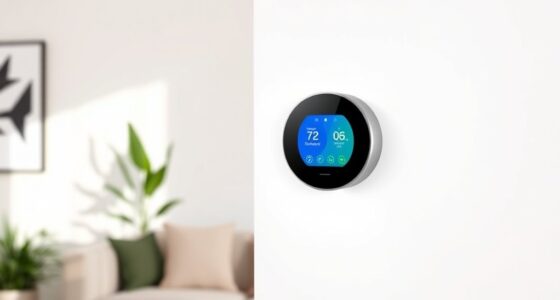
Smart thermostats can improve your home’s comfort and save energy, but they also pose privacy and security risks. They collect personal habits, daily routines, and home occupancy data, which could be shared or accessed without your consent if not properly protected. Weak encryption and outdated firmware can make your device vulnerable to hacking. To safeguard your privacy, it’s important to choose reputable devices, understand their data policies, and keep software up to date. If you want to learn more, keep exploring these important security tips.
Key Takeaways
- Smart thermostats collect sensitive personal data, requiring informed user consent and transparent privacy policies.
- Outdated or weak encryption protocols increase the risk of data breaches during transmission.
- Regular firmware updates and strong security safeguards are essential to protect devices from hacking.
- Users should actively manage privacy settings to limit data sharing and enhance personal privacy.
- Choosing reputable brands with robust security features reduces vulnerabilities and safeguards user information.

Smart thermostats have become popular for their convenience and energy savings, but they also raise significant concerns about data privacy and security. When you install one, you might not realize that your personal habits and daily routines are being collected, stored, and transmitted over the internet. This data can reveal when you’re home, what temperatures you prefer, and even your daily schedule. To protect your privacy, it’s essential that manufacturers obtain your informed user consent before collecting any personal information. This means they should clearly explain what data they gather, how they use it, and who has access. Without proper user consent, your personal details could be shared or exploited without your knowledge, leading to privacy breaches.
Encryption protocols play a critical role in safeguarding this sensitive information. These protocols are like digital locks that protect your data as it travels between your smart thermostat and the company’s servers. When robust encryption protocols are in place, they make it extremely difficult for hackers to intercept or decipher your data. However, not all smart thermostats use the same level of encryption. Some may rely on outdated or weak encryption methods, making them vulnerable to cyberattacks. As a user, you should guarantee that your device employs strong, updated encryption protocols to minimize the risk of unauthorized access.
Ensure your smart thermostat uses strong, updated encryption protocols to keep your data safe from cyber threats.
Security is further compromised if manufacturers neglect to implement proper safeguards or fail to update their systems regularly. Hackers often target poorly protected devices to gain entry into home networks, which can lead to unauthorized control of your thermostat or even broader access to other connected devices. You can take steps to protect yourself by choosing thermostats from reputable brands that prioritize user privacy and security, and by regularly updating your device’s firmware. These updates often patch security vulnerabilities and improve encryption protocols, making it harder for malicious actors to exploit weaknesses.
In addition, it’s wise to review the privacy policies of your smart thermostat provider. Ensure they are transparent about their data collection practices and that they give you control over your information. Some companies offer settings to limit data collection or disable certain features that may compromise your privacy. By actively managing your device’s privacy settings, you retain more control and reduce potential risks.
Additionally, choosing smart thermostats that employ diverse and reliable designs can enhance your overall security posture by reducing potential vulnerabilities. Ultimately, your privacy and security depend on the manufacturer’s commitment to user consent and robust encryption protocols. As a user, staying informed and vigilant helps you enjoy the benefits of smart technology without exposing yourself to unnecessary risks. Prioritize devices that respect your privacy, implement strong security measures, and give you clear options to control your data. That way, you can enjoy the comfort and efficiency of your smart thermostat without compromising your personal information.
Frequently Asked Questions
Can Smart Thermostats Detect When I Am Home or Away?
Yes, smart thermostats can detect when you’re home or away through location tracking features. They use sensors and your phone’s GPS data to monitor your presence, which raises privacy concerns. While this helps save energy and optimize comfort, it also means your activity patterns are being tracked. Be aware of these privacy issues and adjust your device’s settings if you’re uncomfortable with constant location monitoring.
How Often Are My Thermostat’s Security Updates Released?
Your thermostat’s security updates happen more often than you think—sometimes weekly or monthly! Firmware updates are released regularly to patch vulnerabilities and improve security. Always check your device’s privacy policies to understand how your data is safeguarded. Staying current with these updates keeps your smart thermostat secure and ensures your privacy isn’t compromised, giving you peace of mind in your connected home.
Do Smart Thermostats Share Data With Third-Party Advertisers?
Yes, smart thermostats can share data with third-party advertisers. You might not realize it, but these devices often collect your usage patterns and location data, which are then shared for targeted advertising. This raises advertising privacy concerns, as your personal habits become part of marketing profiles. To protect yourself, review your thermostat’s privacy settings and opt out of third-party data sharing whenever possible.
What Happens if My Smart Thermostat Is Hacked?
If your smart thermostat is hacked, it’s like someone sneaking into your cozy home unnoticed. You risk personal data breaches and unauthorized access to your home’s settings, possibly revealing when you’re away or asleep. This could disrupt your comfort or even give hackers control over your environment. To protect yourself, regularly update your device’s software, use strong passwords, and enable security features to keep intruders out.
Are There Any Legal Regulations Governing Data Collected by Smart Thermostats?
Yes, privacy laws and data compliance regulations govern the data collected by smart thermostats. You’re protected by laws like GDPR in Europe and CCPA in California, which require manufacturers to secure your data and inform you about its use. It’s important to review the device’s privacy policy, verify your data is handled responsibly, and choose products that prioritize data security to stay compliant and protect your privacy.
Conclusion
If you ignore these privacy and security risks, you might as well hand over your home’s secrets to hackers on a silver platter. Smart thermostats could turn into gateways for cybercriminals, exposing your personal life and giving them control over your home. Don’t let your cozy sanctuary become a hacker’s playground. Protect your privacy now—because losing your data privacy could feel like losing your entire home to a digital invasion you never saw coming.