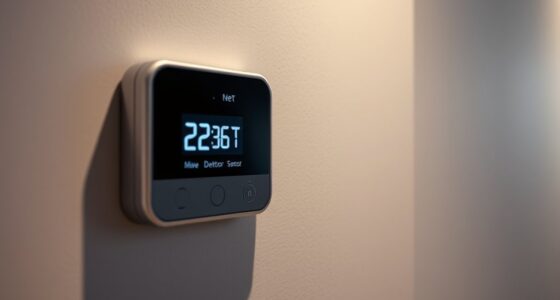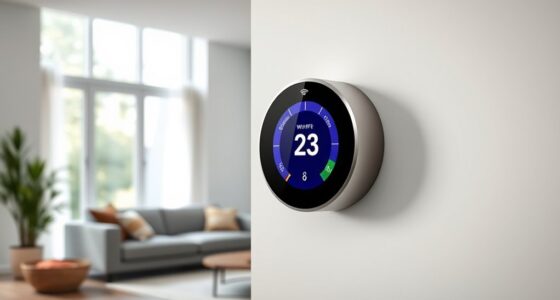
Smart thermostats work with radiant heat systems by precisely controlling the temperature through direct heat distribution. They monitor your home’s conditions, learn your habits, and adjust settings automatically for ideal comfort. You can also manage them remotely via apps, helping save energy and lower bills. Proper installation guarantees maximum efficiency and system lifespan. Want to know how this seamless integration boosts your home’s comfort and savings? Keep exploring to discover more.
Key Takeaways
- Smart thermostats connect to radiant heating systems via compatible wiring or wireless communication for seamless control.
- They enable precise temperature scheduling and monitoring to optimize radiant heat performance.
- Sensors detect room temperature and occupancy, allowing the thermostat to adjust heat levels automatically.
- Features like geofencing and learning habits reduce energy waste by targeting when and where to heat.
- Proper installation ensures efficient operation, extending system lifespan and maximizing energy savings.

Smart thermostats have revolutionized home heating by offering precise control and energy savings, especially when paired with radiant heat systems. These devices allow you to set your preferred temperatures accurately, monitor energy consumption, and maximize your heating schedule—all from your smartphone or a central control panel. When you connect a smart thermostat to a radiant heat system, you open a level of efficiency that traditional thermostats can’t match, because radiant heat delivers warmth directly through floors, walls, or ceilings, reducing heat loss and guaranteeing more consistent comfort. This synergy not only enhances your home’s coziness but also noticeably cuts down on energy bills over time.
Smart thermostats optimize radiant heating for efficient, consistent, and energy-saving home comfort.
The installation process for integrating a smart thermostat with your radiant heat system is straightforward but requires some attention to detail. First, you need to verify compatibility. Not all radiant heat setups work seamlessly with every smart thermostat, so checking the manufacturer’s specifications is essential. Once compatibility is confirmed, the installation typically involves removing your existing thermostat and connecting the new smart device to your home’s wiring. If your radiant system uses a dedicated control panel or zone valves, you might need to make additional connections or adjustments, which can sometimes require professional assistance to guarantee safety and proper functionality.
During installation, you’ll often need to access your heating system’s wiring panel and follow the setup instructions specific to your device. This process involves connecting power, data, and control wires as indicated in the thermostat’s manual. Some smart thermostats also support wireless communication with your home Wi-Fi network, making setup even easier. After wiring, you’ll configure the device through its app or interface, where you can set your heating preferences, schedule, and temperature zones. Proper installation not only ensures that your radiant heat system operates efficiently but also maximizes energy savings by guaranteeing precise control of heat distribution throughout your home. Additionally, incorporating seasonal variations can further optimize your heating system’s performance and comfort levels.
Once installed, you’ll appreciate how a smart thermostat enhances energy efficiency by learning your habits and adjusting heating accordingly. It can reduce unnecessary heating when you’re away or asleep, guaranteeing your system only runs when needed. This targeted control minimizes energy waste and prolongs the lifespan of your radiant heating components. Plus, many smart thermostats include features like geofencing, which detects when you’re leaving or returning home, automatically adjusting the temperature for maximum comfort and savings. Overall, investing in a smart thermostat and understanding the installation process allows you to enjoy a warmer, more energy-efficient home with less effort and expense.
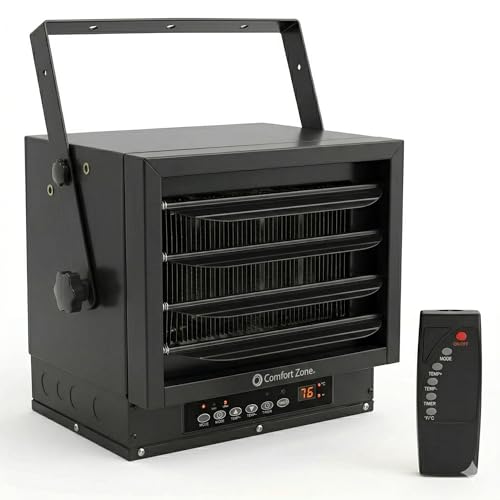
Comfort Zone Hard-Wired Ceiling Mount Garage Space Heater with Remote, 7,500 Watt, 240 Volt, Fan-Forced, Overheat Protection, Digital Thermostat, 12-Hour Timer, Ideal for Garage & Workshop, CZ230ERBK
OPTIMAL SPACE UTILIZATION: Maximize your available floor space with the space-saving design of this fan-forced heater. Specifically designed...
As an affiliate, we earn on qualifying purchases.
Frequently Asked Questions
Can Smart Thermostats Control Multiple Zones in Radiant Heating Systems?
Yes, smart thermostats with zoning capabilities can control multiple zones in radiant heating systems. You can set up multi-zone control, allowing each area to have its own temperature schedule for maximum comfort and efficiency. By integrating smart thermostats with your radiant system, you gain precise control over different zones, saving energy and ensuring consistent warmth throughout your home. Make sure your thermostat supports multi-zone control for the best results.
How Do Smart Thermostats Detect When to Activate Radiant Heat?
Smart thermostats detect when to activate radiant heat by constantly monitoring temperature sensors in your home. When the sensors sense the room has cooled below your set point, the thermostat activates the system. You can easily adjust this via the user interface, which allows you to set preferences, schedules, and monitor system performance. This real-time control guarantees your radiant heat remains comfortable and efficient without manual adjustments.
Are Smart Thermostats Compatible With All Radiant Heat System Types?
Not all radiant heat systems are compatible with smart thermostats. You’ll want to check the radiant system compatibility and thermostat integration options before purchasing. Many modern systems work well with popular smart thermostats via wired or wireless connections, but some older or specialized radiant systems might need adapters or might not support smart control at all. Always verify compatibility to guarantee seamless integration and maximum heating control.
What Security Features Protect Smart Thermostat Data?
Smart thermostats protect your data with robust security features like data encryption and user authentication. Data encryption guarantees your information stays private during transmission and storage, preventing unauthorized access. User authentication verifies your identity before allowing access, adding an extra layer of security. By combining these features, your smart thermostat keeps your personal data safe from cyber threats, giving you peace of mind while managing your radiant heat system.
How Does Wi-Fi Connectivity Impact System Reliability?
Wi-Fi connectivity can impact your system’s reliability by causing issues with signal stability and susceptibility to wireless interference. If your Wi-Fi network is congested or experiences disruptions, your smart thermostat might lose connection or respond slowly. To guarantee smooth operation, you should optimize your Wi-Fi setup, reduce interference sources, and consider a dedicated network or range extender to maintain a stable, reliable connection for your smart thermostat.

Heat Storm HS-6000-GC Heater, Gray, 7"D x 18"W x 13"H
INSTANT HEAT - 3000 to 6000 watts of quiet and comfortable heat. It warms your room with adjustable...
As an affiliate, we earn on qualifying purchases.
Conclusion
As you sit comfortably in your cozy home, it’s no coincidence how your smart thermostat seamlessly manages your radiant heat system. With just a few taps, you’ve created a warm haven that responds intuitively to your schedule and preferences. It’s almost like the thermostat knew what you needed before you did, ensuring comfort and efficiency align perfectly. Truly, the right technology turns everyday moments into effortless comfort, making your home feel just right—every single day.
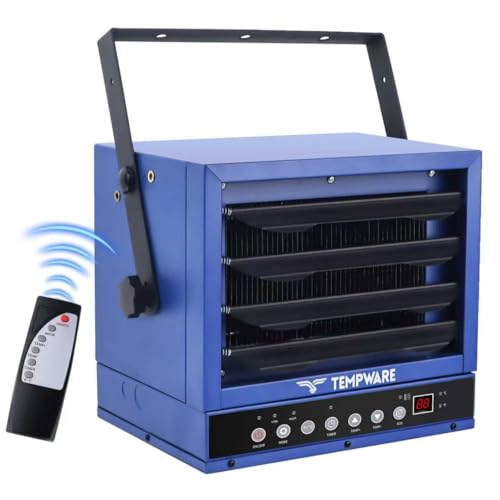
TEMPWARE 7500W Electric Garage Heater, 240V Hardwired Digital Ceiling Mount Fan-Forced Shop Heater with Full-Function Remote and 12-Hour Timer, Ideal for Workshop Warehouse
Adjustable Angle & 2 Heat Settings: This 240V hardwired garage heater features adjustable louvers and a variable mounting...
As an affiliate, we earn on qualifying purchases.

7500W Electric Garage Heater with WIFI & Remote, 240V Hardwired Ceiling Mount Shop Heater, Garage Space Heaters with ECO Mode, 12H Timer, Thermostat, Overheat Protection, for Garage Workshop Warehouse
FAST HEATING & WIDE COVERAGE: This electric garage heater is renowned for its exceptional heating performance, delivering a...
As an affiliate, we earn on qualifying purchases.