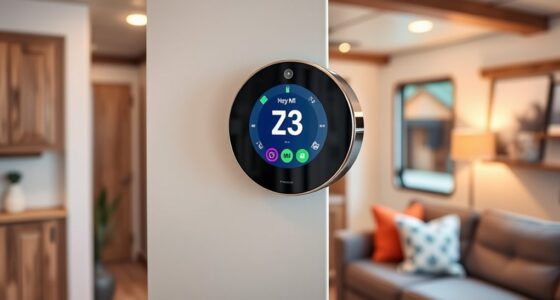
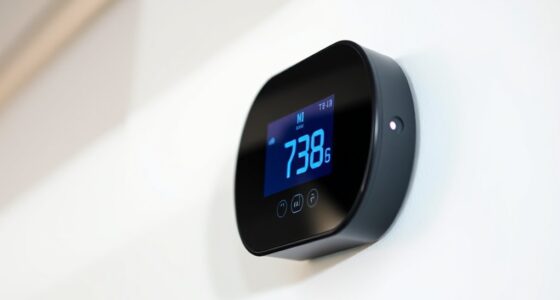
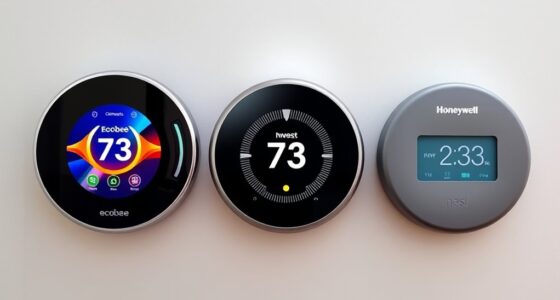
When choosing a smart thermostat for cold climates, look for models with advanced temperature control, adaptive learning, and geofencing features. Make certain it’s compatible with your heating system, such as boilers or radiant heaters, and offers detailed energy reports to track savings. Easy-to-use interfaces and remote control options are also vital for convenience. Focusing on these features helps maximize comfort and efficiency; learn more about selecting the best model for your home.
Key Takeaways
- Select models with advanced temperature control and adaptive learning to maintain consistent comfort in cold weather.
- Ensure compatibility with your heating system, such as heat pumps, boilers, or radiant heaters.
- Prioritize thermostats with geofencing and presence detection to optimize energy use when you’re away.
- Look for features like detailed energy reports and automatic adjustments to maximize cost savings.
- Choose user-friendly interfaces and remote control options for easy management during harsh winter conditions.

Are you looking to upgrade your home’s heating and cooling system? If you live in a cold climate, choosing the right smart thermostat can make a significant difference in comfort and efficiency. Modern smart thermostats are designed to optimize energy savings while offering user-friendly interfaces that make managing your home’s temperature simple and intuitive. These devices adapt to your schedule, learn your preferences, and help reduce energy waste, which is especially important when heating bills tend to spike during the colder months.
When selecting a smart thermostat for a cold climate, focus on models that provide advanced temperature control features. Many thermostats now offer geofencing capabilities, which detect your presence and adjust settings accordingly, ensuring your home stays warm when you’re there and conserves energy when you’re away. This automatic adjustment not only enhances comfort but also helps cut down on unnecessary energy consumption. Look for thermostats with high compatibility with various heating systems, including heat pumps, radiant heaters, and boilers, as this ensures seamless integration with your existing setup.
Energy savings are a key factor, especially in colder regions where heating costs can be substantial. Opt for thermostats with detailed energy reports that let you track consumption patterns over time. These insights enable you to make smarter decisions about temperature settings and scheduling, ultimately reducing your energy bills. Many smart thermostats also feature adaptive learning algorithms, which analyze your habits and automatically fine-tune heating schedules to maximize efficiency without sacrificing comfort. This intelligent automation means you won’t have to manually adjust settings constantly, saving you time and money in the long run.
User-friendly interfaces are critical when choosing a smart thermostat. Even if you’re not tech-savvy, you should find the controls straightforward and easy to navigate. Look for models with large, clear displays and simple menus, along with mobile apps that are intuitive and responsive. A good app allows you to control your thermostat remotely, set schedules, and receive alerts or energy usage tips from anywhere. Voice control compatibility with smart home assistants like Alexa or Google Assistant adds another layer of convenience, enabling you to adjust your home’s temperature with just your voice. Additionally, ensuring your device integrates with home automation systems can enhance overall convenience and control.
Frequently Asked Questions
Do Smart Thermostats Work Well With Traditional Heating Systems?
Smart thermostats generally work well with traditional heating systems, but you should consider compatibility concerns before installing. Some systems may have specific wiring or compatibility issues that could cause installation challenges. To avoid problems, check your heating system’s specifications and verify the thermostat is compatible. If you’re unsure, consulting a professional can help you navigate potential compatibility concerns and ensure a smooth installation process.
How Does Climate Impact Smart Thermostat Energy Savings?
Climate greatly impacts your smart thermostat’s energy savings, especially in cold weather. You’ll see better results when it manages humidity levels and offers solar compatibility, reducing heating needs. In cold climates, a thermostat that adapts to humidity control prevents drafts and heat loss, while solar compatibility can supplement power, lowering energy bills. Properly adjusting settings based on your environment maximizes efficiency and keeps your home comfortable year-round.
Can Smart Thermostats Prevent Pipes From Freezing?
Yes, smart thermostats can help prevent pipes from freezing. By setting them to maintain a consistent temperature, especially during cold snaps, you reduce the risk of freeze mitigation issues. Pairing your thermostat with pipe insulation ensures even better protection, as insulation helps keep the heat in. Program your smart thermostat to lower the temperature when you’re away, and keep the house warm enough to prevent freezing pipes during winter.
Are There Smart Thermostats Specifically Designed for Extremely Cold Temperatures?
Think of a thermostat as your winter guardian, standing firm against the cold. Some smart thermostats feature cold resistant designs and winter-specific features, making them ideal for extremely cold temperatures. These devices adapt to freezing conditions, ensuring your home stays warm without overworking the system. When selecting one, look for models explicitly built for harsh climates, giving you peace of mind even in the harshest winter storms.
What Are the Backup Options if Wi-Fi Fails in Cold Weather?
If your Wi-Fi fails in cold weather, your smart thermostat might still operate using a battery backup or cellular connectivity. Many models have a battery backup that keeps basic functions running temporarily, while cellular connectivity allows remote control even if Wi-Fi drops. To guarantee continuous operation, consider thermostats with these features, and keep spare batteries handy. This way, your heating stays on, no matter what disrupts your Wi-Fi connection.
Conclusion
Choosing the right smart thermostat for cold climates guarantees comfort and energy savings. With the right device, you’ll stay warm during harsh winters and avoid unnecessary costs. Remember, “a stitch in time saves nine”—investing in a good thermostat now prevents bigger problems later. Take the time to select wisely, and you’ll enjoy a cozy home year-round. After all, smart choices today lead to a warmer, more efficient tomorrow.