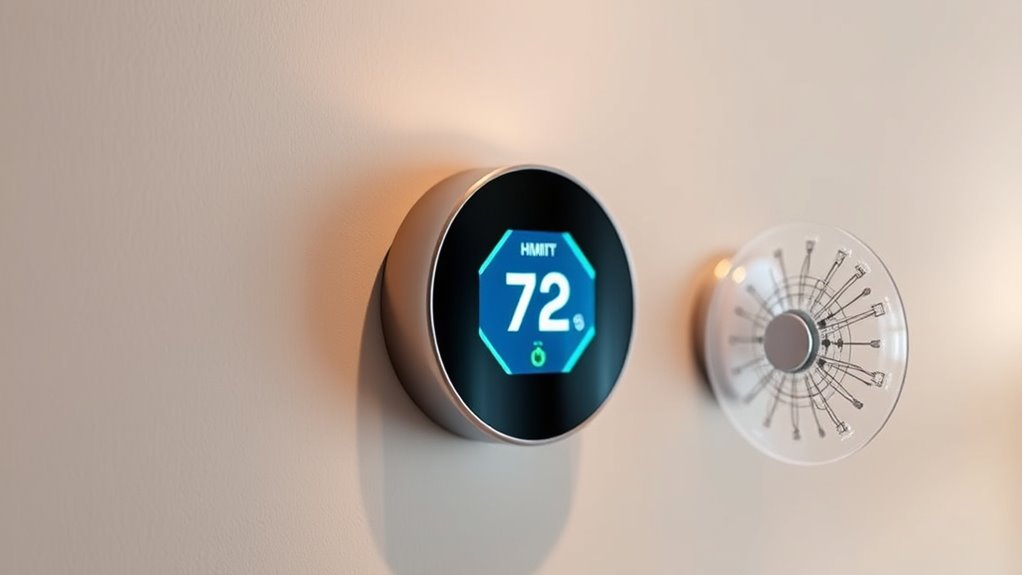
Smart thermostats help manage humidity by constantly monitoring moisture levels inside your home. They adjust heating, cooling, and activate dehumidifiers to keep humidity within your preferred range. This process prevents issues like mold, dry skin, or discomfort caused by excessive dryness. Many models let you set desired humidity levels directly and provide real-time feedback. If you want to learn more about how these devices optimize your indoor air quality, keep exploring this topic.
Key Takeaways
- Smart thermostats monitor indoor humidity levels in real-time to maintain optimal comfort.
- They adjust heating and cooling cycles to prevent excess moisture or dryness.
- Many integrate with dehumidifiers or humidifiers for automated humidity control.
- Users can set preferred humidity ranges via intuitive interfaces or mobile apps.
- These devices communicate with other smart home systems to optimize overall indoor air quality.
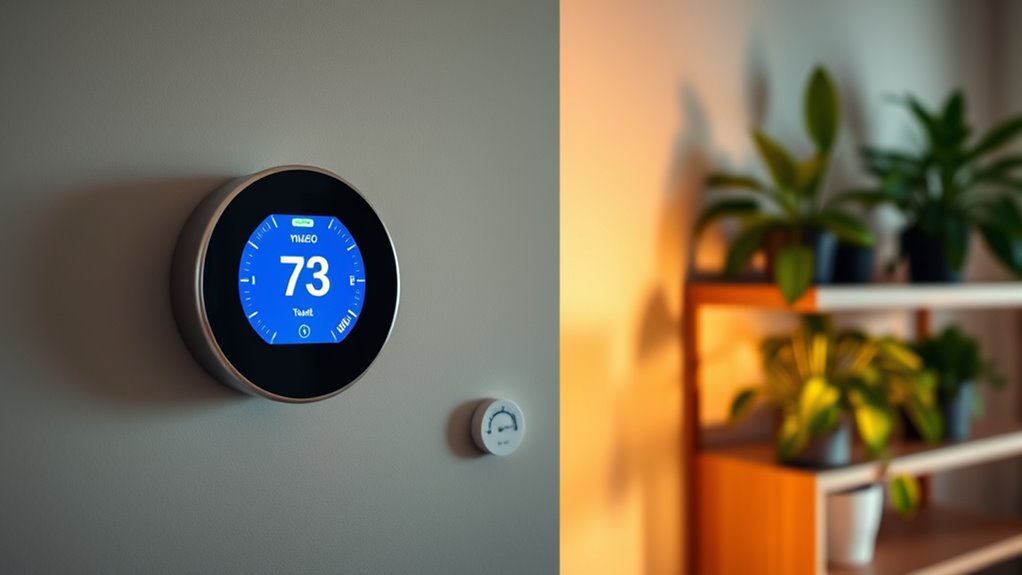
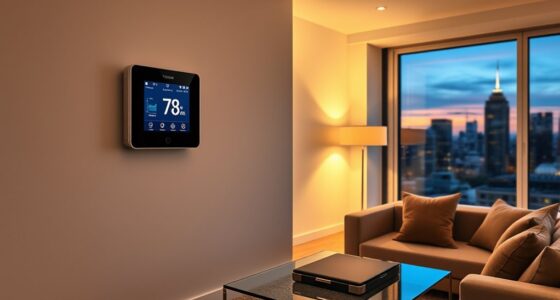
Smart thermostats do more than just regulate temperature; they also play a crucial role in managing indoor humidity levels. When you’re focused on maintaining a comfortable environment, controlling humidity is just as important as setting the right temperature. High humidity can make a space feel sticky and uncomfortable, while low humidity can cause dryness and irritation. Fortunately, smart thermostats are equipped with features that help you balance these levels effectively, contributing to overall comfort and health.
One of the key ways smart thermostats manage humidity is through their energy efficiency. By monitoring indoor conditions continuously, they can adjust heating or cooling cycles to prevent excessive humidity buildup or dryness. For example, if the device detects that humidity levels are rising beyond your preferred range, it can activate dehumidification modes or signal your HVAC system to run in a way that reduces moisture. This not only keeps your indoor air comfortable but also minimizes energy waste by avoiding unnecessary heating or cooling. Over time, this precise regulation helps you save on energy bills because your system isn’t working harder than it needs to.
Smart thermostats optimize humidity levels efficiently, reducing energy waste and enhancing indoor comfort.
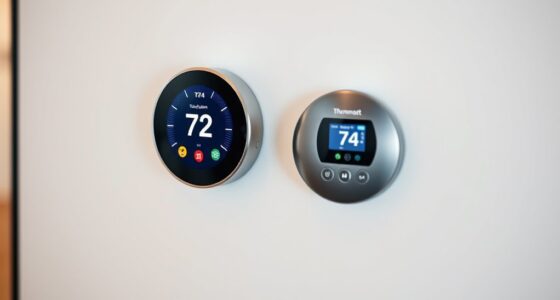
Another important aspect is the user interface of these devices. Modern smart thermostats feature intuitive displays and app controls that make adjusting humidity settings straightforward. You can easily select your desired humidity range or enable specific modes designed to optimize indoor air quality. Some models even provide real-time feedback on current humidity levels, so you always know what’s happening in your home. This transparency empowers you to make quick adjustments and maintain ideal comfort without fuss.
Furthermore, many smart thermostats integrate with other smart home devices, such as humidifiers, dehumidifiers, or air purifiers. This integration allows for automated responses to changing conditions, ensuring your indoor air remains balanced without constant manual intervention. For example, if your thermostat detects high humidity, it can communicate with a connected dehumidifier to kick in automatically, relieving you from constantly monitoring and adjusting settings.
In essence, your smart thermostat acts as a central hub for maintaining indoor humidity, leveraging its energy-efficient algorithms and user-friendly interface to create a healthier, more comfortable living space. By intelligently managing moisture levels, it helps prevent issues like mold growth or dry skin, all while keeping your energy consumption in check. Understanding heat pump technology is also crucial for optimizing your home’s climate control systems and enhancing overall efficiency. With these advanced features, you gain greater control over your home environment, making your living space more pleasant and healthier day after day.
Frequently Asked Questions
Can Smart Thermostats Detect Humidity Levels Without Additional Sensors?
No, smart thermostats can’t detect humidity levels without additional sensors. They rely on built-in humidity sensors to measure moisture, but sensor accuracy can vary between models. Without these sensors, the thermostat can’t monitor humidity directly. If you want precise humidity control, you’ll need to choose a smart thermostat equipped with dedicated humidity sensors or add an external sensor for better accuracy.
Do All Smart Thermostats Support Humidity Management Features?
Not all smart thermostats support humidity management features. Some act like vigilant guardians with built-in humidity sensors, while others rely on ventilation integration to control moisture. You’ll find that many models prioritize temperature control, leaving humidity as an afterthought. To truly master your environment, seek out thermostats that have dedicated humidity sensors, ensuring you’re not just chasing comfort but commanding it with precision.
How Accurate Are Smart Thermostats in Measuring Indoor Humidity?
Smart thermostats are generally quite accurate at measuring indoor humidity, thanks to high-quality humidity sensors. Their calibration accuracy guarantees reliable readings, but occasional recalibration might be necessary to maintain precision. You can trust them to monitor humidity levels effectively, helping you maintain a comfortable environment. Just keep an eye on sensor performance and recalibrate if you notice discrepancies, ensuring your thermostat provides the most accurate humidity data possible.
Can Smart Thermostats Automatically Adjust Humidity Based on Weather Forecasts?
You can actually set your smart thermostat to automatically adjust humidity based on weather forecasts, thanks to advanced weather integration features. It uses humidity sensors to monitor indoor levels and adapts accordingly, maintaining comfort while saving energy. When outdoor conditions change, your thermostat updates its settings, so you’re not caught off guard. It’s a win-win situation—keeping your home comfortable without you having to lift a finger.
Are There Specific Brands Known for Better Humidity Control Integration?
You’ll find that brands like Nest, Ecobee, and Honeywell are known for better humidity control integration. Their brand reputation and positive user reviews highlight their reliability and advanced features. These thermostats often come with built-in humidistats or compatibility with smart humidifiers, making it easier for you to maintain ideal indoor humidity levels. Choosing these trusted brands ensures you get effective, seamless humidity management tailored to your needs.
Conclusion
Imagine your smart thermostat as a skilled conductor, orchestrating the perfect harmony between temperature and humidity. With each subtle adjustment, it paints a cozy, balanced environment like a painter blending colors seamlessly on a canvas. By managing humidity levels, it creates a space that’s as comfortable and inviting as a warm, sunlit room. Embrace this technological maestro, and watch your home transform into a sanctuary where every breath feels just right.