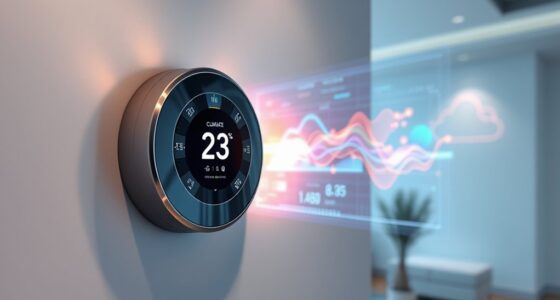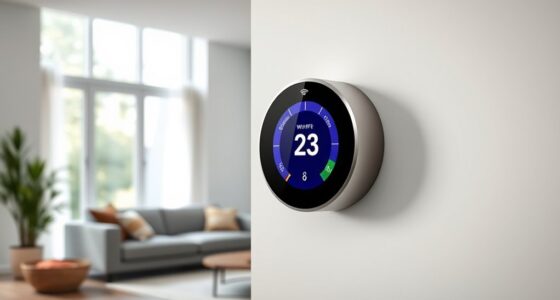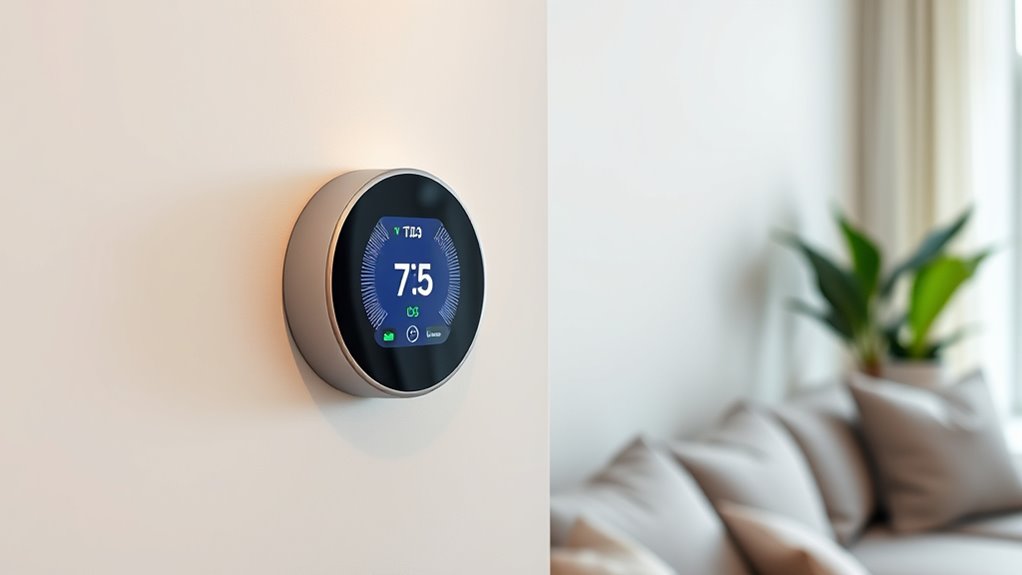

Smart thermostats learn your schedule by monitoring your daily routines, temperature adjustments, and occupancy patterns over time. They track when you wake up, leave, return, and go to bed to create a personalized plan that adjusts the temperature automatically. As you provide feedback or make manual changes, they refine their understanding to better match your needs. Keep exploring how these intelligent devices adapt effortlessly to keep you comfortable and save energy.
Key Takeaways
- Smart thermostats observe your daily routines to identify patterns like wake-up and bedtime.
- They analyze temperature adjustments over time to refine and predict your preferred settings.
- Algorithms gradually make automatic schedule adjustments based on learned behaviors.
- User interactions, such as overrides, help improve the thermostat’s understanding of your habits.
- Over time, they become more accurate and intuitive, reducing manual input and optimizing comfort.
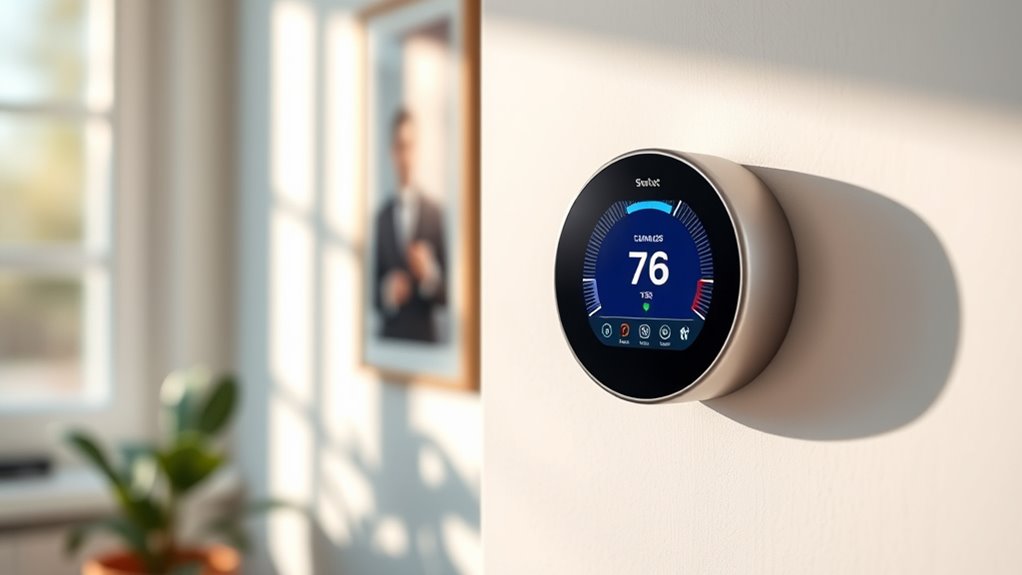
Smart thermostats have revolutionized home climate control by adapting to your daily routines. Instead of manually adjusting the temperature throughout the day, these devices learn your habits and preferences, making your home more comfortable and energy-efficient. As you go about your day, the thermostat observes when you typically wake up, leave for work, return home, or go to bed. Over time, it builds a pattern that allows it to automatically set the ideal temperature at the right times, saving you effort and money.
Smart thermostats learn your routines to optimize comfort and energy savings automatically.
When you first install a smart thermostat, it may ask you a few questions about your schedule and preferred comfort levels. From there, it begins to monitor your actions. For example, if you tend to lower the temperature before bed, the thermostat will recognize this pattern and adjust accordingly. It learns from your behavior, so you don’t have to manually change settings every day. This automatic adaptation means your home remains comfortable without constant input, and you benefit from significant energy savings by avoiding unnecessary heating or cooling when you’re not home or during times when you prefer a different temperature.
User customization is at the core of how these thermostats operate. You can set specific temperature preferences for different times of the day or week, and the device will remember them. If your schedule varies on weekends or during holidays, many models allow you to create custom modes. Some even enable remote control via smartphone apps, so you can tweak your settings on the go. This flexibility ensures that your home environment always aligns with your lifestyle, whether you’re home or away. By tailoring your thermostat’s behavior, you optimize energy use, which translates into lower utility bills and a reduced carbon footprint.
The learning feature is not only smart but also intuitive. It uses algorithms to analyze patterns, adjusting the temperature gradually rather than making abrupt changes. This smooth transition enhances comfort and prevents the energy waste associated with sudden heating or cooling. Over time, the thermostat becomes more accurate in predicting your needs, requiring less input from you. The more you interact with it—such as confirming or overriding its settings—the better it becomes at personalizing your climate control. Ultimately, a smart thermostat empowers you to take control of your home’s efficiency without sacrificing comfort, making your living space both smarter and greener.
Frequently Asked Questions
Can Smart Thermostats Adapt to Sudden, Unexpected Schedule Changes?
Smart thermostats can adapt to sudden, unexpected schedule changes through manual overrides, allowing you to adjust the temperature instantly. However, if there’s a power outage, they may lose recent data and revert to default settings. Once power is restored, most models recalibrate, but for quick adjustments, manual overrides are your best option. Keep in mind, unexpected changes might not always be perfectly learned without your input.
Do Smart Thermostats Learn Multiple Users’ Routines Separately?
Yes, smart thermostats learn multiple users’ routines separately through multi-user differentiation. They recognize individual patterns and create personalized scheduling for each person in your home. By doing so, the thermostat adjusts the temperature based on who’s present and their specific habits. This feature guarantees comfort for everyone while optimizing energy efficiency, making your home smarter and more responsive to your household’s unique daily routines.
How Secure Is My Data With a Smart Thermostat Learning My Schedule?
Your data’s pretty secure with a smart thermostat—think of it as a secret agent with a fancy disguise. Data encryption keeps your schedule, preferences, and routines locked tight, while user anonymity ensures your identity stays hidden. Sure, there’s always a tiny risk, but manufacturers usually prioritize security, making your personal info safer than a squirrel guarding its acorns. Rest easy, your data’s safeguarded—no spy novels needed.
What Maintenance Is Required for a Smart Thermostat Over Time?
You should replace the batteries in your smart thermostat when they run low, usually every year or so. Keep your device running smoothly by installing software updates as they become available, which improves performance and security. Additionally, periodically check for any calibration issues or hardware malfunctions. Regular maintenance guarantees your thermostat stays reliable, energy-efficient, and continues to learn your schedule effectively.
Are There Privacy Concerns With Smart Thermostats Collecting My Schedule Data?
Like Pandora’s box, smart thermostats can raise privacy concerns, as they collect your schedule data. You might worry about data security and who has access to this information. Rest assured, reputable brands use encryption and strict privacy policies to protect your data. However, it’s wise to review privacy settings and stay informed about how your data is handled, so you keep control over your personal information.
Conclusion
Now that you know how smart thermostats learn your schedule, you’ll appreciate their convenience even more. Did you know that these devices can reduce energy bills by up to 12%? By adapting to your routines, they not only save you money but also help the environment. So, embrace this smart technology—your home becomes more efficient and comfortable without any extra effort on your part. It’s a simple upgrade that makes a big difference.