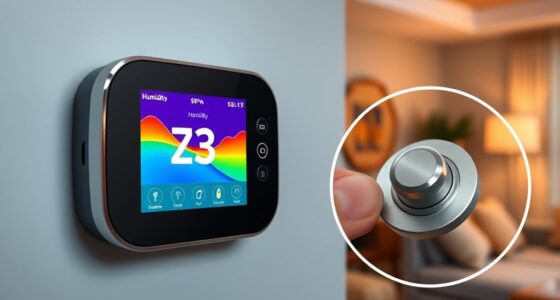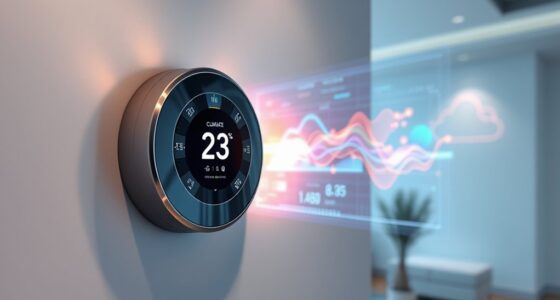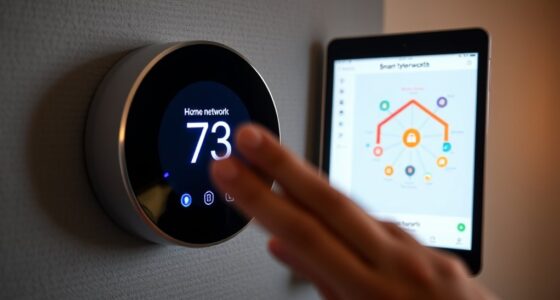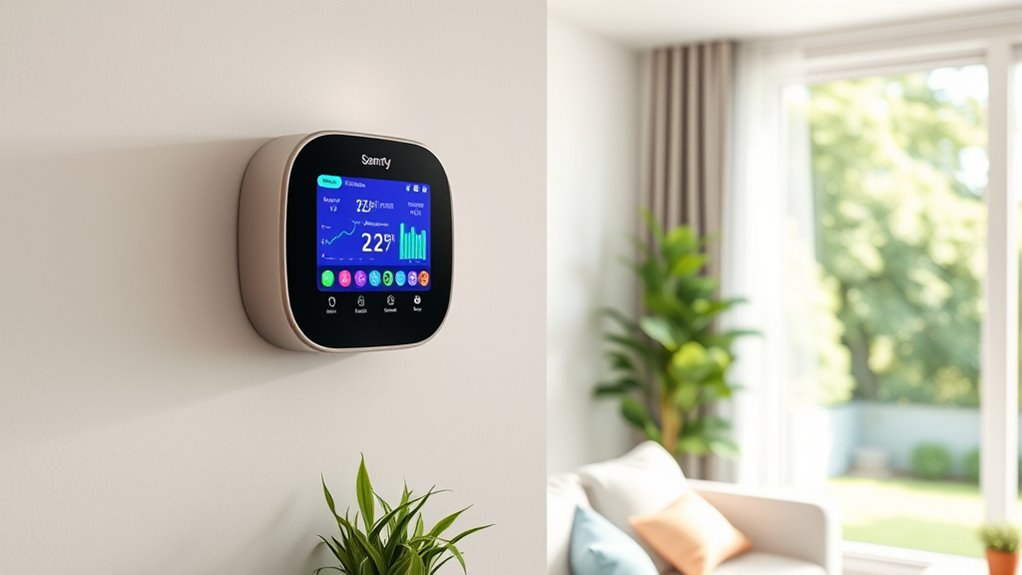

Smart thermostats give you real-time data on your home’s energy use, helping you see exactly how much power your HVAC systems consume at any moment. They identify energy-wasting patterns, allowing you to adjust settings for better efficiency and cost savings. With user-friendly insights and customization options, you’ll learn how to optimize your heating and cooling habits. Keep exploring to discover how these tools can transform your home’s energy management even further.
Key Takeaways
- Provide real-time energy consumption data for HVAC systems, allowing users to monitor usage instantly.
- Track historical energy patterns to identify waste and optimize heating and cooling schedules.
- Offer insights and alerts on high energy use or potential maintenance needs for proactive management.
- Enable customization and adaptive learning to tailor energy efficiency strategies based on user habits.
- Support remote monitoring and detailed analytics to make informed decisions about home energy management.
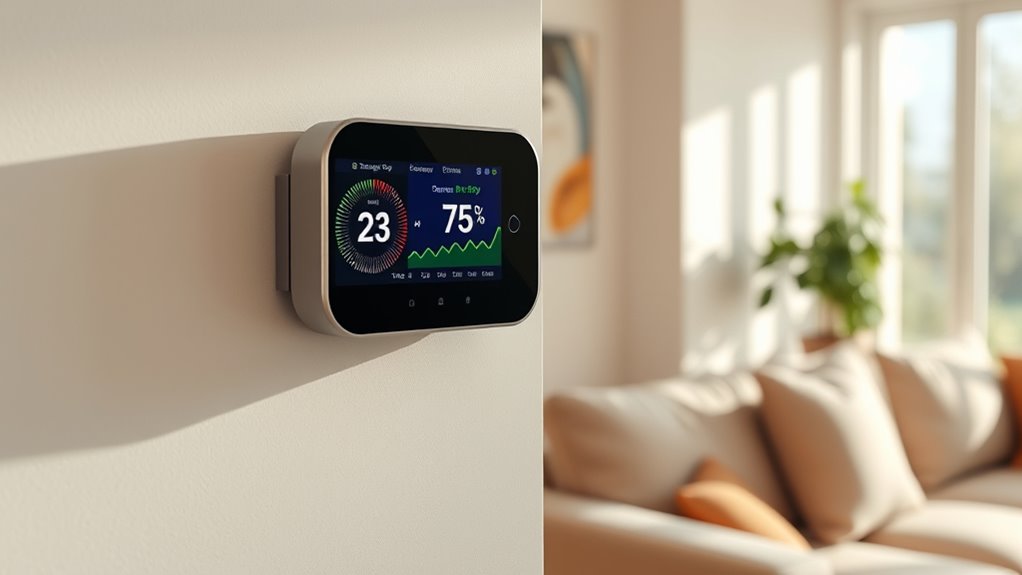
Smart thermostats have transformed the way you manage home energy, making it easier to save money and reduce your environmental impact. By providing detailed insights into your energy usage, these devices empower you to make smarter decisions about heating and cooling. When you install a smart thermostat, you gain access to real-time data that shows exactly how much energy your HVAC system consumes. This transparency helps you identify patterns and pinpoint areas where you might be wasting energy, such as heating an unoccupied room or running the system unnecessarily. With this knowledge, you can optimize your settings to improve overall energy efficiency, reducing both your bills and your carbon footprint.
Smart thermostats provide real-time energy insights, helping you save money and reduce your environmental impact.
One of the biggest advantages of smart thermostats is user customization. They allow you to tailor your heating and cooling schedules based on your specific routines and preferences. For example, you can set different temperatures for weekdays and weekends or program the thermostat to adjust temperatures automatically when you’re away or asleep. This flexibility ensures your home is always comfortable when you need it and saves energy when you don’t. Additionally, many smart thermostats learn from your habits over time, adjusting their recommendations to better suit your lifestyle. This adaptive feature means you’ll spend less time fiddling with controls and more time enjoying the comfort of your home.
Additionally, smart thermostats often come with features that provide insights beyond simple temperature adjustments. They track your energy consumption historically, giving you a clear picture of how your habits impact your utility bills. With this information, you can set goals to reduce your usage further or compare different time periods to see how changes affect your energy savings. Some models even offer tips and alerts, notifying you when your system is using excessive energy or when maintenance might be needed. These insights help you stay proactive in managing your home’s energy efficiency, ensuring your system runs smoothly and efficiently.
Furthermore, many smart thermostats incorporate noise level considerations into their design, ensuring quiet operation that doesn’t disturb your daily activities or sleep. The ability to monitor and control your home’s energy use remotely provides a level of convenience and control that traditional thermostats simply can’t match. Overall, by offering detailed insights and extensive user customization options, smart thermostats make it easier than ever to understand and optimize your home energy consumption.
Frequently Asked Questions
Can Smart Thermostats Detect Occupancy in Different Rooms?
Yes, smart thermostats can detect occupancy in different rooms through occupancy detection and room sensing features. They use motion sensors, temperature changes, and sometimes even remote sensors to identify if a room is occupied. This technology allows you to optimize heating and cooling, saving energy and increasing comfort by adjusting settings based on activity and presence in various areas of your home.
How Do Smart Thermostats Integrate With Other Smart Home Devices?
Think of your smart thermostat as a conductor orchestrating your smart home symphony. It seamlessly integrates with devices through robust integration compatibility, turning your house into a harmonious hub. You can set device automation to trigger lights, security, or music based on temperature or occupancy. This interconnected dance makes your home smarter, more efficient, and tailored to your lifestyle, all at your fingertips and in perfect sync.
What Privacy Measures Protect My Energy Usage Data?
Your energy usage data is protected by privacy policies that limit how companies share and use your information. Plus, smart thermostats use data encryption to safeguard your data both during transmission and storage. You can usually review these privacy policies to understand what’s collected and how it’s protected. Rest assured, these measures help ensure your energy insights stay private and secure, giving you peace of mind.
Are There Any Cost Savings Associated With Smart Thermostat Installation?
Yes, installing a smart thermostat can lead to significant cost reduction by optimizing your home’s energy efficiency. It automatically adjusts heating and cooling based on your schedule and preferences, preventing unnecessary energy use. Over time, these smart adjustments lower your utility bills. Plus, many models offer energy usage reports, helping you identify further savings opportunities. Overall, a smart thermostat is a smart investment for reducing costs and improving home energy efficiency.
How Often Should Firmware Updates Be Performed on These Devices?
You should perform firmware updates on your smart thermostat at least once every few months. Think of updates as essential tune-ups that keep your device running smoothly and securely. Regular update frequency ensures you get the latest features, bug fixes, and security patches. Don’t wait too long—staying current with firmware updates helps maximize your thermostat’s efficiency, reliability, and energy-saving capabilities, giving you peace of mind and superior performance year-round.
Conclusion
By choosing a smart thermostat, you gain control, gain efficiency, and gain insights. You optimize comfort, save money, and reduce your environmental impact. You monitor usage, adjust settings, and understand patterns—all at your fingertips. Embrace these devices to simplify your life, enhance your home, and empower your decisions. With a smart thermostat, you don’t just manage energy—you master it, making smarter choices every day for a better home and a better planet.