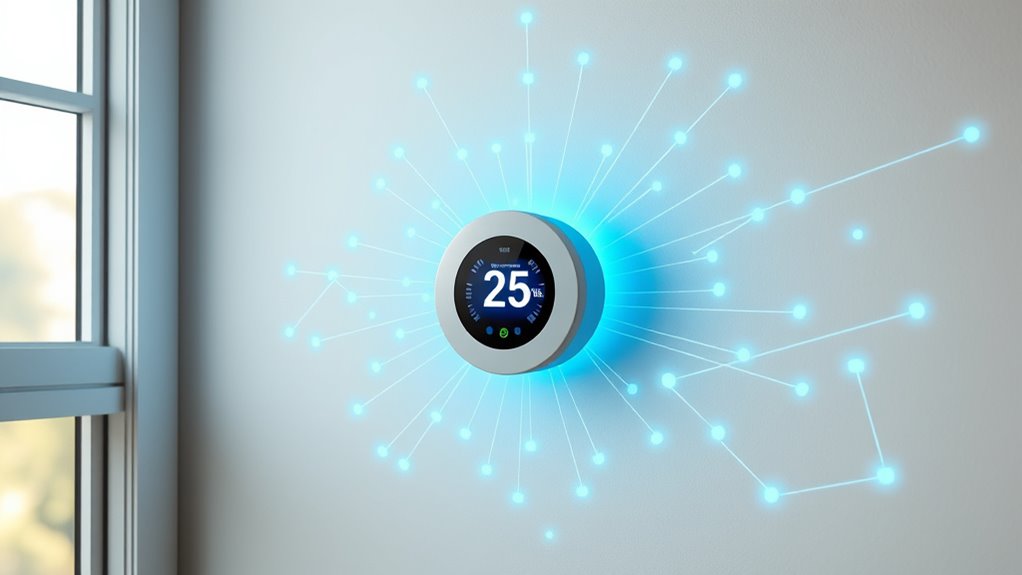

Smart thermostats and smart grids communicate actively to optimize your energy use and keep the grid stable. They respond to demand response signals, adjusting your home temperature during peak hours to reduce strain and lower costs. By working together, they efficiently utilize renewable energy, store excess power, and prevent blackouts. If you continue exploring, you’ll discover how this collaboration improves your home’s comfort while supporting a greener, more reliable energy system.

Get home appliances delivered free — and shop member deals
- Fast, free delivery on millions of items
- Access to Prime Big Deal Days deals on October 6–7
- Prime Video, Amazon Music and more included
Key Takeaways
- Smart thermostats connect with smart grids to enable demand response, adjusting home temperatures during peak energy usage.
- They receive signals to slightly modify heating or cooling, helping stabilize the grid and prevent blackouts.
- Thermostats coordinate with energy storage and renewable sources to optimize energy consumption and reduce reliance on fossil fuels.
- Their integration promotes grid stability, lower energy costs, and supports cleaner, sustainable energy systems.
- Additional home energy solutions, like smart appliances, enhance overall efficiency through coordinated smart grid participation.

Smart thermostats are transforming how you manage energy use by seamlessly connecting with smart grids. This integration allows you to participate actively in demand response programs, which help balance energy loads across the grid. During periods of high demand, the smart grid can signal your thermostat to adjust your home’s temperature slightly, reducing overall energy consumption. Instead of relying solely on your HVAC system to operate at full capacity, your thermostat collaborates with the grid to shift energy use, easing stress on power plants and reducing the risk of outages. This dynamic interaction not only benefits the grid but can also save you money through incentives or lower energy rates during off-peak times.
Smart thermostats connect with the grid to reduce energy use and save money during peak times.
Demand response is a key feature of this smart interaction. When energy demand spikes, the grid communicates with your thermostat to temporarily lower or raise the temperature, depending on the season, without sacrificing comfort. For example, during a heatwave, your thermostat might lower its cooling setpoint slightly during peak hours, easing the strain on energy resources. Conversely, in winter, it might raise the temperature a bit during high-demand periods. These adjustments are often imperceptible to you but contribute considerably to grid stability. By participating in demand response, you help prevent blackouts and reduce reliance on fossil fuels, promoting a cleaner energy future.
Energy storage also plays an essential role in this ecosystem. When the grid has excess renewable energy—like wind or solar during peak production times—your smart thermostat can help store that energy indirectly by shifting your heating or cooling loads. For example, it might pre-cool your home during times of abundant renewable energy, effectively storing that energy as thermal inertia. Later, during high-demand periods, the system reduces energy consumption without compromising comfort. This not only optimizes renewable energy use but also alleviates pressure on the grid during peak times. Some advanced smart thermostats even coordinate with home batteries or energy storage systems, allowing your household to act as a mini energy reservoir, further smoothing out fluctuations in supply and demand.
In essence, your smart thermostat isn’t just a device for controlling temperature; it’s an indispensable component of a broader, intelligent energy system. By engaging in demand response and leveraging energy storage, your thermostat helps create a more resilient, efficient, and sustainable power grid. You gain more control over your energy costs while actively contributing to a greener environment. This synergy between smart thermostats and smart grids exemplifies how technology can empower you to make smarter choices, benefiting both your household and the planet. Additionally, the use of heated mattress pads as energy-efficient heating solutions demonstrates how home furnishings can complement smart energy management strategies.
smart thermostat with demand response
As an affiliate, we earn on qualifying purchases.
As an affiliate, we earn on qualifying purchases.
Frequently Asked Questions
How Do Smart Thermostats Communicate With Smart Grids?
Smart thermostats communicate with smart grids through wireless communication, allowing them to receive real-time data and commands. You can program your thermostat to adjust your home’s temperature based on grid signals, improving energy management. When the grid detects high demand, it sends signals to your thermostat to reduce energy use temporarily. This interaction helps balance energy loads, saves you money, and promotes efficient energy use across the system.
What Security Measures Protect Smart Thermostat Data?
Your smart thermostat guards your data like a fortress, using encryption protocols to lock away your personal info from prying eyes. User authentication acts as a vigilant gatekeeper, ensuring only you can access and control your device. These security measures create a shield of trust, making sure your energy habits stay private and protected from cyber threats, so you can enjoy comfort with peace of mind.
Can Smart Thermostats Operate Without an Internet Connection?
Yes, some smart thermostats can operate without an internet connection through offline functionality. They rely on local control, allowing you to adjust settings directly on the device or via a local network. This means you can still manage your home’s temperature even if Wi-Fi is down. Keep in mind, however, that certain features like remote access and updates won’t be available without internet connectivity.
How Do Smart Grids Influence Household Energy Costs?
Imagine a dance between your home and the power grid, where smart grids guide your energy costs. They influence household expenses by managing energy price fluctuations and activating demand response programs. When demand spikes, your smart grid diminishes strain, helping lower your bills. You benefit from more stable rates and savings, as this intelligent coordination guarantees energy use aligns with grid capacity, making your household more efficient and cost-effective.
Are There Privacy Concerns With Smart Grid Data Collection?
Yes, there are privacy concerns with smart grid data collection. You might worry about how your energy usage data is utilized or shared. To address this, providers often use data anonymization to protect your identity and require your user consent before collecting or sharing your information. Staying informed about your rights and understanding the privacy policies helps guarantee your data remains secure and your privacy is respected.
As an affiliate, we earn on qualifying purchases.
Conclusion
By now, you can see how smart thermostats and smart grids work together to save energy and reduce costs. Did you know that households using smart thermostats can cut their energy bills by up to 12%? That’s a significant impact, not just for your wallet but also for the environment. Embracing this technology puts you at the forefront of efficient, eco-friendly living. So, consider upgrading your thermostat and join the smart grid revolution today.
smart home energy management system
As an affiliate, we earn on qualifying purchases.
As an affiliate, we earn on qualifying purchases.
smart thermostat compatible with solar panels
As an affiliate, we earn on qualifying purchases.
As an affiliate, we earn on qualifying purchases.
Fall yard work Picks
leaf blowers
As an affiliate, we earn on qualifying purchases.