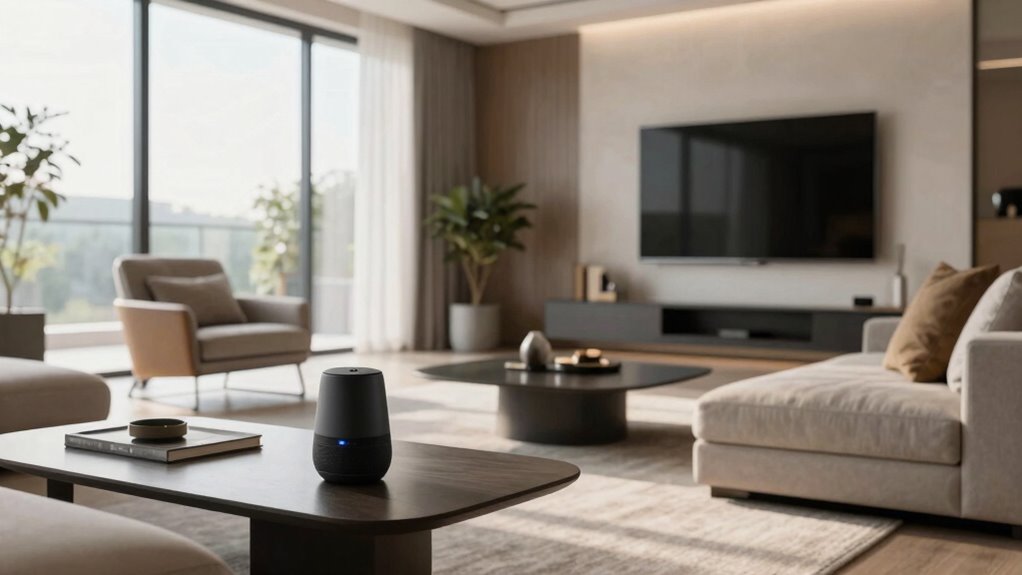

You might think flawless voice recognition is essential for a good smart home experience, but it’s less important than you believe. Most devices perform well enough for daily tasks, and perfect accuracy isn’t realistic. Instead, focus on privacy controls, device compatibility, and security features. These aspects have a bigger impact on your overall satisfaction and trust. If you want to discover why your priorities should be elsewhere, keep exploring the details that matter most.

Get home appliances delivered free with Prime
- Fast, free delivery on millions of items
- Prime Video, Amazon Music and more included
- Member-only deals all year
Key Takeaways
- Perfect voice recognition accuracy is less critical than seamless ecosystem integration and device compatibility.
- Privacy concerns often outweigh minor voice command errors in long-term satisfaction.
- Regular security updates and privacy controls are more important than flawless recognition.
- Voice assistants’ continuous listening for wake words is a manageable privacy consideration.
- Focusing on privacy, security, and compatibility yields a better smart home experience than perfect voice response.

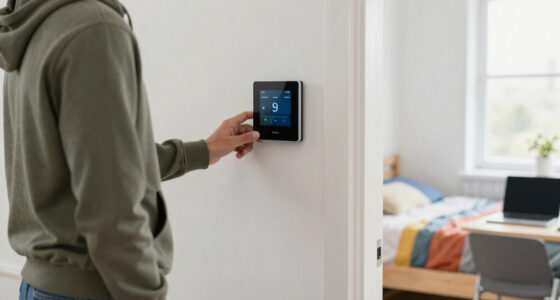
Many buyers get caught up in asking whether a device responds perfectly to voice commands, but that question matters less than they think. In reality, most devices today perform well enough for daily use, so obsessing over flawless recognition can distract from more important considerations. Instead, you should focus on how the device fits into your lifestyle, especially regarding privacy concerns and device compatibility. These factors often have a bigger impact on your overall experience and satisfaction. Acknowledging that voice recognition technology is continually improving can help set realistic expectations for performance. Privacy concerns are a significant issue because voice assistants are constantly listening for wake words. While many devices claim to prioritize privacy, it’s essential to understand what data they collect and how it’s used. If you’re wary of having your conversations recorded and stored, look for options that offer better control over privacy settings. Some devices allow you to delete voice recordings easily or disable certain data collection features. You might also consider the ecosystem’s reputation—whether the manufacturer has a history of safeguarding user data. Privacy isn’t just about avoiding intrusive advertising; it’s about feeling secure that your personal conversations aren’t being stored or shared without your consent. Additionally, understanding how voice data is stored and managed can help you make more informed decisions about device security. Regularly updating your device firmware can also enhance security features and protect against vulnerabilities. It’s also helpful to research privacy features offered by different brands to find one that aligns with your comfort level. Being aware of the data collection practices of your chosen device can further help you maintain control over your information. Device compatibility is another critical aspect that often gets overlooked in the quest for perfect voice recognition. You want a device that seamlessly integrates with your existing smart home ecosystem, whether that’s smart lights, thermostats, or security cameras. Compatibility ensures you won’t need to jump through hoops or buy additional gadgets just to make things work. Check whether the device supports the platforms and services you already use, like Google Assistant, Amazon Alexa, or Apple HomeKit. Compatibility also affects how easy it is to set up and manage your smart devices, reducing frustration and improving your overall experience.
Many buyers get caught up in the technical capabilities and overlook these practical concerns. Voice recognition technology is continually improving, but it’s unlikely anyone’s voice assistant will be perfect in every situation. Instead of fixating on flawless performance, prioritize whether the device respects your privacy and works well with your existing setup. These factors influence not only your comfort and security but also how smoothly your smart home functions daily. Remember, a device that’s compatible with your other gadgets and protects your data will serve you better in the long run than one that only responds perfectly to voice commands but compromises your privacy or creates compatibility headaches.
Products Worth Considering

Bose Lifestyle Ultra Compact Wireless Smart Home Speaker Bundle, Black

Samsung 48 4K OLED Smart TV (2026) with WireLogic 8ft Ultra High Speed HDMI Cable

Hisense E6SR Series 55-Inch 4K UHD Hi-QLED Roku Smart TV
As an affiliate, we earn on qualifying purchases.
Frequently Asked Questions
How Accurate Is Voice Recognition Technology Across Different Accents?
Voice recognition accuracy varies with accent variability, but modern technology has considerably improved. While some systems perform well with common accents, others struggle with less typical ones, leading to recognition errors. You might find that recognition accuracy depends on the specific platform and its training data. Overall, advances are closing the gap, but for critical tasks, it’s wise to test how well a voice system handles diverse accents before relying on it fully.
What Privacy Concerns Are Associated With Voice-Controlled Devices?
You should be aware that voice-controlled devices raise privacy concerns related to data security and user anonymity. These devices constantly listen for commands, which means sensitive information could be inadvertently recorded or mishandled. Companies may store and analyze your voice data, risking breaches or misuse. To protect yourself, review privacy settings, understand how your data is used, and guarantee your device’s security features are active to safeguard your personal information.
How Do Voice Commands Impact User Safety During Use?
Voice commands can impact your safety by causing user distraction, making you less attentive to your surroundings. If your device malfunctions or misinterprets commands, it could lead to unexpected actions, increasing the risk of accidents. To stay safe, avoid using voice control while driving or operating heavy machinery. Always stay alert and double-check commands to prevent device errors that might compromise your safety.
Can Voice Assistants Understand Multiple Languages Simultaneously?
You might be surprised, but most voice assistants can’t understand multiple languages simultaneously very well. Multilingual challenges and accent sensitivity often cause misinterpretations, especially when switching between languages mid-conversation. While some devices attempt to detect language changes, they frequently struggle with accents, leading to frustration. If seamless multilingual understanding is essential for you, consider devices with advanced language models, but remember, perfect accuracy still remains a work in progress.
What Is the Cost Difference Between Voice-Controlled and Traditional Devices?
You’ll find that voice-controlled devices generally cost more than traditional ones due to advanced technology and device compatibility features. The price gap varies depending on brand and functionality, but you can expect to pay a premium for seamless integration and smarter capabilities. As market adoption grows, prices may decrease, making voice-controlled options more accessible. Ultimately, investing in voice technology often offers added convenience that traditional devices can’t match.
Conclusion
So, next time you’re pondering whether voice control is the game-changer buyers claim it to be, ask yourself—are you really willing to sacrifice privacy or accuracy for convenience? The truth is, while voice technology is impressive, it’s not the ultimate decision-maker. Don’t get caught up in the hype—what truly influences your purchasing choices? Sometimes, the features that matter most are the ones you overlook in the pursuit of innovation.