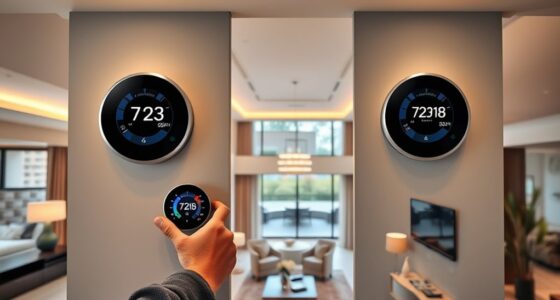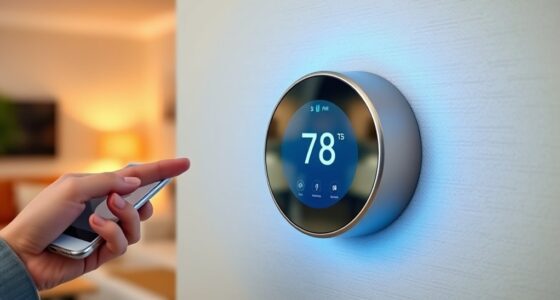
Connecting your smart thermostat to a smart irrigation system allows for seamless coordination between indoor climate control and outdoor watering, optimizing resource use. By linking these systems through Wi-Fi or compatible platforms, you can adjust watering schedules based on weather forecasts and indoor temperature settings. This integration helps conserve water, reduce energy costs, and maintain a comfortable home environment. To discover how to set this up effectively and maximize benefits, keep exploring the possibilities this smart connection offers.
Key Takeaways
- Integrate weather data to enable the thermostat and irrigation system to respond to environmental changes.
- Use smart home platforms or compatible hubs to connect and automate both systems seamlessly.
- Enable communication protocols like Wi-Fi, Zigbee, or Z-Wave for real-time data sharing between devices.
- Program adaptive schedules that adjust indoor climate and outdoor watering based on forecasted weather conditions.
- Leverage combined system data to optimize energy use, conserve resources, and maintain home comfort efficiently.
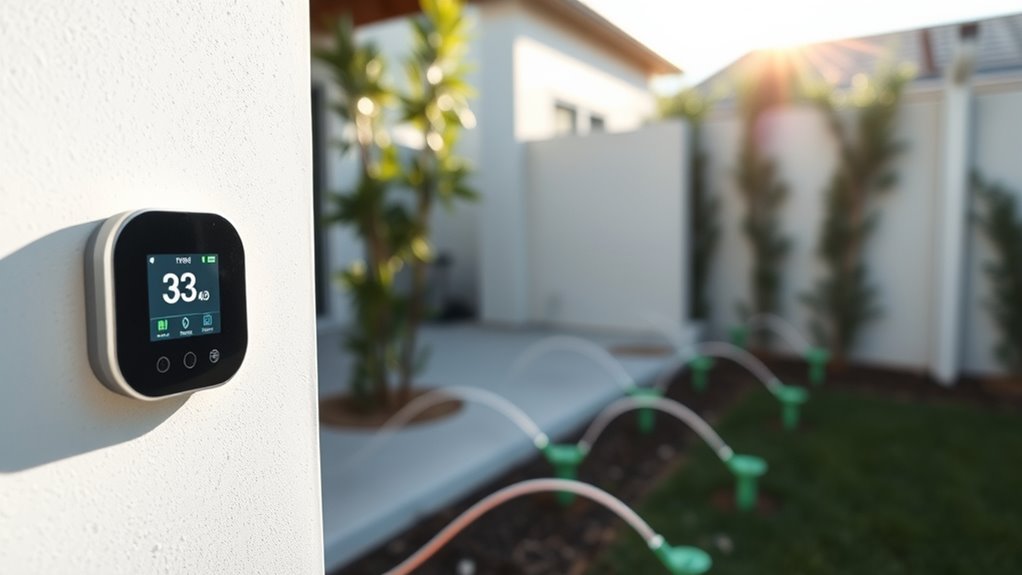
Connecting smart thermostats to smart irrigation systems can markedly enhance your home’s energy efficiency and outdoor landscape management. When you sync these systems, you create a seamless network that responds dynamically to your environment, saving you money and conserving resources. One key advantage is the ability to monitor soil moisture levels in your yard. By integrating soil moisture sensors with your irrigation system, you guarantee that your lawn and plants only receive water when they truly need it. This prevents overwatering, which can lead to runoff and wasted water, and underwatering, which stresses your plants. When paired with a smart thermostat, the system can adjust watering schedules based on indoor and outdoor temperature patterns, further optimizing water use.
Syncing smart thermostats with irrigation systems optimizes water use and energy efficiency through real-time environmental monitoring.
Weather integration plays a vital role in this setup. By connecting your smart irrigation system to local weather data—either via Wi-Fi or through a dedicated weather service—you can anticipate changes in temperature, rainfall, and humidity. For example, if rain is forecasted, your system can automatically skip watering cycles, conserving water and preventing over-saturation. Similarly, during hot, dry spells, your system can increase watering slightly, ensuring your landscape stays healthy without excess. This real-time weather responsiveness reduces manual intervention and makes your outdoor maintenance more efficient.
You also benefit from the automation that comes with weather integration. Your smart thermostat can communicate with your irrigation system to adjust indoor heating or cooling based on outdoor conditions, creating a balanced environment that minimizes energy consumption. If the weather turns unexpectedly cold or hot, your thermostat can modify its settings accordingly, ensuring your home remains comfortable while avoiding unnecessary energy expenditure. When the outdoor climate is factored into your home’s internal climate control, you get a more holistic approach to energy management.
Furthermore, these integrations allow you to set personalized schedules that adapt as conditions change. For example, during a heatwave, your system can prioritize watering during early mornings or evenings when evaporation rates are lower, and your thermostat can modify indoor temperatures to reduce cooling loads. Over time, the combined data from soil moisture, weather forecasts, and indoor climate patterns provides insights that help you fine-tune your home’s energy and water use, making your property more sustainable.
In essence, connecting smart thermostats with smart irrigation systems creates a smarter, more responsive environment. It helps you manage outdoor watering efficiently while simultaneously optimizing indoor energy consumption, all driven by real-time data and weather integration. This interconnected approach guarantees you’re not just reacting to conditions but proactively managing your home’s energy and landscape, saving resources and enhancing comfort at the same time.

Amazon Smart Thermostat – Save money and energy – Works with Alexa and Ring – C-wire required
Smart upgrade – Amazon Smart Thermostat is an easy way to switch from a traditional thermostat and help…
As an affiliate, we earn on qualifying purchases.
As an affiliate, we earn on qualifying purchases.
Frequently Asked Questions
Can I Connect Multiple Irrigation Zones to One Thermostat?
Yes, you can connect multiple irrigation zones to one thermostat, but it depends on your system’s capabilities. Some smart thermostats support zone scheduling, allowing you to control different zones individually, especially when paired with weather integration. This setup helps optimize watering schedules based on weather conditions, saving water and improving efficiency. Verify your thermostat’s compatibility and confirm it supports multiple zones for seamless management.
What Compatibility Issues Might Arise With Different Brands?
You might face brand compatibility issues when connecting different brands, as not all smart thermostats and irrigation systems work seamlessly together. Some brands use proprietary protocols or hardware, making integration difficult. Additionally, firmware updates can cause compatibility problems if either device is not updated or if updates change communication standards. Always check each device’s compatibility list and verify firmware is current to minimize these issues.
How Secure Is the Data Transmitted Between Devices?
Ever wonder how secure your data really is? The transmission between your smart devices is usually quite safe, thanks to data encryption and device authentication. These measures keep your information protected from unauthorized access. While no system is completely invulnerable, manufacturers constantly update security protocols to defend against threats. So, rest assured, your data’s security depends on choosing reputable brands that prioritize strong encryption and reliable authentication methods.
Is Professional Installation Required for Integration?
You don’t necessarily need professional installation to integrate your smart thermostat with your irrigation system. A DIY setup is often straightforward, especially with clear instructions and user-friendly interfaces. However, if you encounter issues, manufacturer support can guide you through the process. While some setups are simple enough to do on your own, professional installation might be helpful for complex systems or if you want to guarantee everything’s perfectly connected and optimized.
Can I Control Both Systems Remotely via a Smartphone App?
Yes, you can control both systems remotely via a smartphone app, turning your devices into a digital command center. With remote access and mobile control, you’ll feel like a conductor directing an orchestra from anywhere. Simply guarantee your systems are compatible and connected to Wi-Fi, then download the respective apps. This way, you’ll manage your smart thermostat and irrigation system effortlessly, keeping your home comfortable and garden lush with just a tap.

Antonki 2 Pack Soil Moisture Meter, Plant Water Meter for Gardening,Farming, Soil Tester Hygrometer Sensor for Indoor Outdoor House Plants, Flower, Lawn- No Battery Required
This soil moisture meter helps to monitoring plants soil moisture level in real time and telling you how…
As an affiliate, we earn on qualifying purchases.
As an affiliate, we earn on qualifying purchases.
Conclusion
Imagine syncing your smart thermostat with your irrigation system, just like Lisa did for her backyard. By doing so, her garden thrived without wasting water, as the system adjusted watering schedules based on temperature and weather forecasts. You can achieve the same efficiency—saving water and reducing bills—by connecting these devices. It’s a simple upgrade that makes your home smarter and your outdoor space healthier. Start exploring integrations today and watch your garden flourish effortlessly.

Rachio WiFi Smart Sprinkler Controller (8-Zone Irrigation Remote Control) – App-Based Scheduling, Local Weather Intelligence, Rain Skips, Easy DIY Install
DITCH THE DIAL – Upgrade to smart irrigation with the free Rachio app for precise, easy control.
As an affiliate, we earn on qualifying purchases.
As an affiliate, we earn on qualifying purchases.
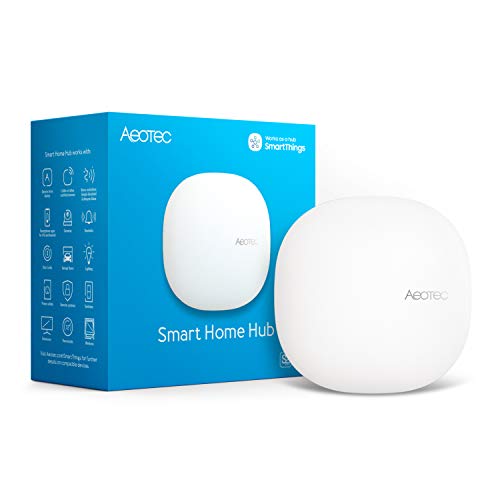
Aeotec Smart Home Hub, Works as a SmartThings Hub, Z-Wave, Zigbee, Matter Gateway, Compatible with Alexa, Google Assistant, WiFi
Connect & control your smart home — Easily link thousands of compatible devices from leading brands to create…
As an affiliate, we earn on qualifying purchases.
As an affiliate, we earn on qualifying purchases.