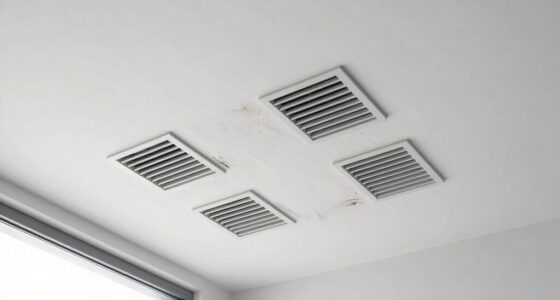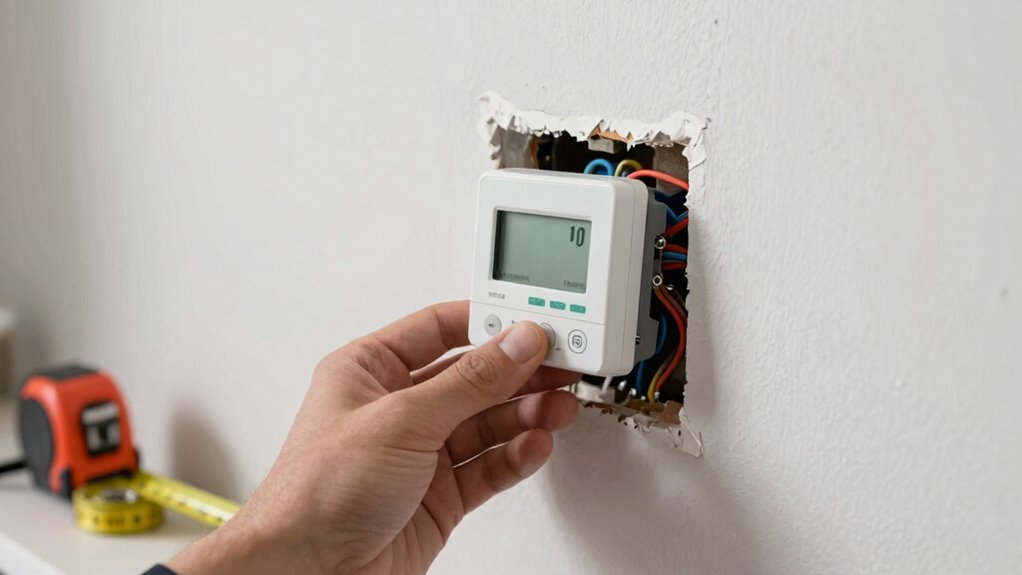

Before moving your thermostat to a new wall, check its placement for direct sunlight and drafts. Assess the existing wiring to see if it can be extended or if new installation is needed. Choose a model that fits your decor while considering local codes for compliance. Finally, verify heat sensors are correctly positioned for accurate readings. By focusing on these key factors, you’ll enhance efficiency and functionality—keep going to uncover more helpful tips!
Open a free Amazon Business account
Business pricing, bulk buying and tax-exempt orders.
As an affiliate, we earn on qualifying purchases.
Key Takeaways
- Assess the new wall’s location for direct sunlight, drafts, and heat sources to ensure accurate temperature readings.
- Check existing wiring compatibility and determine if new wiring installation is necessary for the new location.
- Ensure the thermostat’s design and size complement the room’s decor while maintaining functionality.
- Familiarize yourself with local installation codes and regulations to ensure compliance and safety.
- Evaluate the placement of heat sensors to enhance the thermostat’s accuracy and system efficiency.
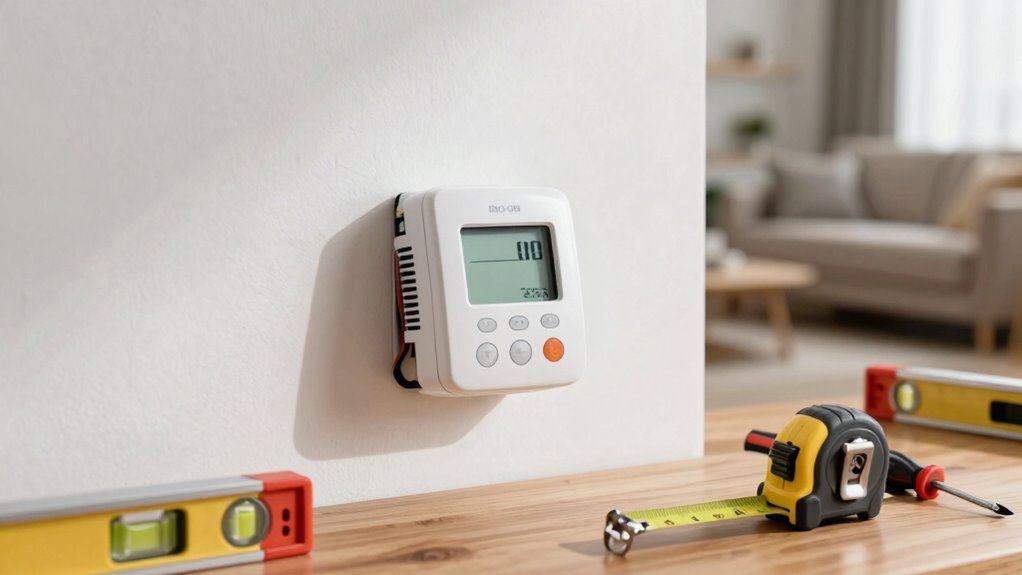
When you decide to move a thermostat, it’s important to evaluate both the location and the functionality. The right thermostat placement can markedly impact the performance of your heating and cooling systems. First, think about where you want to move it. Ideally, it should be located on an interior wall, away from direct sunlight, drafts, and any heat sources like vents or appliances. This guarantees that the heat sensors in the thermostat accurately gauge the room temperature.
Evaluating thermostat placement is crucial for optimal heating and cooling performance; choose an interior wall away from sunlight and drafts.
Wiring considerations are essential when planning the move. You’ll need to assess whether the existing wiring can be extended or if you’ll need to install new wiring. If you’re not comfortable with electrical work, consider hiring a professional. Confirm you check the compatibility of the wall where you plan to place the thermostat. Some walls may require special mounting hardware or adjustments, especially if you’re moving it to a location with different wall materials. Additionally, verifying the electrical wiring beforehand can prevent potential safety issues. Ensuring that the wiring is up to code is crucial for both safety and proper system operation.
Aesthetic factors also play a role in your decision. The thermostat should blend well with your home’s decor while still being functional. You don’t want it to become an eyesore. Consider the size, color, and style of the thermostat in relation to the new wall. It’s worth taking the time to pick a spot that satisfies both your functional needs and your design preferences. Taking into account the home’s existing decor can help you choose a placement that is both practical and visually appealing.
Before you finalize your plans, familiarize yourself with local codes that may affect thermostat installation. Some areas have specific regulations regarding electrical work and device placements. Ignoring these codes can lead to complications down the line, so it’s best to be informed. Additionally, understanding the heat sensors and how they influence thermostat accuracy can help you choose the optimal placement. Ensuring proper placement of heat sensors can improve the overall efficiency and responsiveness of your system. Properly locating heat sensors helps maintain consistent temperature readings, which is vital for efficient climate control.
Once you’ve considered all these factors, you’ll be better positioned to make a successful move. Remember, the goal is to enhance the efficiency of your thermostat while making sure it looks good and complies with local regulations. Taking the time to evaluate these aspects will save you from potential headaches later.
Moving a thermostat isn’t just about changing its location; it’s about optimizing your home for comfort and efficiency. By carefully considering thermostat placement, wiring considerations, wall compatibility, heat sensors, aesthetic factors, and local codes, you can create an environment that works for you. With the right approach, you’ll enhance your home’s climate control and enjoy a better living space.
As an affiliate, we earn on qualifying purchases.
Frequently Asked Questions
Can I Move a Thermostat Without Professional Help?
Yes, you can move a thermostat without professional help. Just make certain you’re comfortable with basic wiring and tools. Start by following DIY thermostat tips to guarantee a safe relocation. Consider the new wall’s location and verify it’s away from drafts and direct sunlight. Always turn off the power before starting, and double-check your connections. With careful planning and attention, you can successfully relocate your thermostat on your own.
What Tools Do I Need for Moving a Thermostat?
To move a thermostat, you’ll need a few essential tools. Grab a screwdriver for removing the old unit, wire strippers for handling the wiring, and a drill if you need to make new holes. Familiarize yourself with thermostat types and wiring basics to guarantee you connect everything properly. A level can help you position the new thermostat accurately. Don’t forget a voltage tester to check for any live wires before starting!
How Do I Ensure the New Location Is Suitable?
You’ve gotta make sure the new location isn’t just suitable; it needs to be perfect! Check for temperature sensitivity—avoid spots near vents, windows, or doors that could throw off readings. Choose a wall material that’s stable and won’t absorb heat or cold excessively. For best performance, place the thermostat about 5 feet off the ground, away from direct sunlight. Trust me, getting this right is essential for your home’s comfort!
Will Moving the Thermostat Affect My HVAC System?
Yes, moving the thermostat can affect your HVAC system. Proper thermostat placement is essential for accurate temperature readings, which directly impacts energy efficiency. If you place it in a spot that’s too hot or cold, your system might work harder than necessary, leading to higher energy bills and uneven heating or cooling. Make sure the new location reflects the true temperature of your living space for best performance.
How Can I Hide Old Thermostat Wiring After Relocation?
Oh, the joys of seeing exposed wiring—it really adds a touch of elegance, doesn’t it? To hide old thermostat wiring after relocation, you can use several wiring concealment techniques. First, consider wall patching methods to fill in the holes left behind. Then, use paint to blend any patched areas with your wall. For a seamless look, installing a decorative cover or molding can also work wonders. Your wall will thank you!
wireless thermostat extension kit
As an affiliate, we earn on qualifying purchases.
As an affiliate, we earn on qualifying purchases.
Conclusion
Before you move your thermostat, check the wiring, consider the location, and assess the airflow. By ensuring the new spot has proper access to temperature changes, you’ll help maintain efficiency. Remember to turn off power before you start, measure twice to avoid mistakes, and secure it properly once it’s in place. Moving your thermostat can optimize comfort and efficiency, so take your time and enjoy the process of creating a better living space!
As an affiliate, we earn on qualifying purchases.
As an affiliate, we earn on qualifying purchases.
NFL season / tailgating Picks
team gear
As an affiliate, we earn on qualifying purchases.