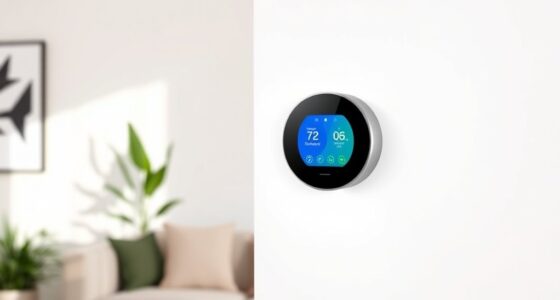
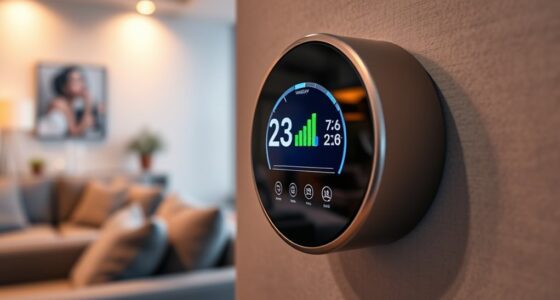
Many myths about smart thermostats suggest they’re complicated, expensive, or not effective, but that’s not true. These devices are designed to be easy to install and user-friendly, often paying for themselves within a year through energy savings. They can be used by anyone, regardless of tech skills, and help cut your energy bills without hassle. Keep going to discover how these smart devices can work for you and clear up any misconceptions.
Key Takeaways
- Installing a smart thermostat is simple and doesn’t require advanced technical skills.
- They can deliver significant energy savings, often paying for themselves within 1-2 years.
- Compatibility with existing HVAC systems is usually straightforward, with online tools to verify.
- Smart thermostats are accessible and easy to control via mobile apps, suitable for all user levels.
- Their intelligent features effectively learn habits and optimize comfort, debunking myths of limited effectiveness.

Have you ever wondered if smart thermostats are truly worth the hype? Many people hear about their advanced features and potential to cut energy costs, but some still hesitate, thinking they might be complicated or not as effective as advertised. The truth is, smart thermostats can deliver impressive energy savings, especially when you understand how they work and how easy they are to install. You don’t need to be a tech expert to enjoy the benefits; most models are designed for straightforward setup, making the changeover smooth and hassle-free.
When it comes to energy savings, a lot of myths circulate that suggest smart thermostats don’t make much difference. In reality, they can markedly reduce your energy bills by optimizing your heating and cooling schedules. Unlike traditional thermostats, which require manual adjustments and often lead to wasted energy, smart thermostats learn your habits over time. They automatically adjust the temperature when you’re away or asleep, ensuring your home isn’t heated or cooled unnecessarily. This intelligent behavior can result in noticeable savings each month, often paying for themselves within a year or two.
There’s also a misconception that installing a smart thermostat is a complicated process. While some assume it involves rewiring or technical expertise, most models are designed with user-friendly installation in mind. In fact, many smart thermostats come with step-by-step instructions, and you can typically set them up in less than 30 minutes. All you need is a compatible HVAC system and a bit of patience. If you’re worried about compatibility, manufacturers provide online tools to check if the device will work with your current setup. Plus, if you’re not comfortable doing it yourself, professional installation services are usually quick and affordable.
Another myth is that smart thermostats are only for tech-savvy homeowners or those with high-end systems. That couldn’t be further from the truth. Today’s models cater to a wide range of budgets and technical abilities. They’re designed to be intuitive, with mobile apps that let you control your home’s temperature from anywhere. This versatility makes them accessible to almost everyone, whether you’re a busy professional, a retiree, or a parent managing a hectic household. Additionally, understanding smart thermostat features can help you maximize their energy-saving potential and convenience.
Frequently Asked Questions
Do Smart Thermostats Work During Power Outages?
Smart thermostats typically don’t work during power outages because they rely on your home’s electrical system. However, some models offer power outage functionality with backup power options like batteries or backup generators. If you want continuous control during outages, consider a thermostat with built-in backup power or install a backup generator. This way, you can maintain your home’s comfort even when the power goes out temporarily.
Can Smart Thermostats Be Hacked or Cause Security Issues?
You might think it’s a walk in the park, but smart thermostats can be hacked if you’re not careful. While they do have cybersecurity risks and hacking vulnerabilities, taking simple steps like strong passwords and regular updates can keep your device secure. Don’t let the fear of security issues keep you from enjoying smart technology—stay vigilant, and you’ll be able to protect your home effectively.
Are Smart Thermostats Suitable for All Types of Heating and Cooling Systems?
Smart thermostats aren’t suitable for all heating and cooling systems due to compatibility concerns. You need to check if your system supports system integration with the specific thermostat model. Some older or specialized systems may require additional wiring or adapters. Before purchasing, review your system’s specifications and compatibility guidelines to guarantee smooth installation and operation, avoiding potential issues with system integration.
How Much Do Smart Thermostats Typically Cost?
Smart thermostats typically cost between $100 and $250, but the price variability can be huge—like a roller coaster of savings! You’ll find options at various price ranges depending on features and brand. While some basic models are budget-friendly, advanced versions with smart home integrations can cost more. Consider your needs and budget carefully to choose a thermostat that offers the best bang for your buck.
Do Smart Thermostats Require Professional Installation?
Smart thermostats often don’t require professional installation, especially if you’re comfortable with DIY projects. The installation complexity varies by model, but many are designed for easy DIY installation, allowing you to replace your old thermostat with minimal tools and steps. However, if your system is complex or you’re unsure, hiring a professional ensures proper setup and compatibility. Always check the manufacturer’s instructions to determine if DIY installation is feasible for you.
Conclusion
Now that you’ve debunked these myths, you can confidently embrace smart thermostats without fear. They’re not some sci-fi gadget from a Jules Verne novel, but practical tools that save energy and money. Don’t let misconceptions keep you stuck in the Stone Age of heating and cooling. With a little research, you’ll see how these devices are your modern-day “Aladdin’s lamp,” ready to make your home smarter and more efficient. Time to turn the page and upgrade!